
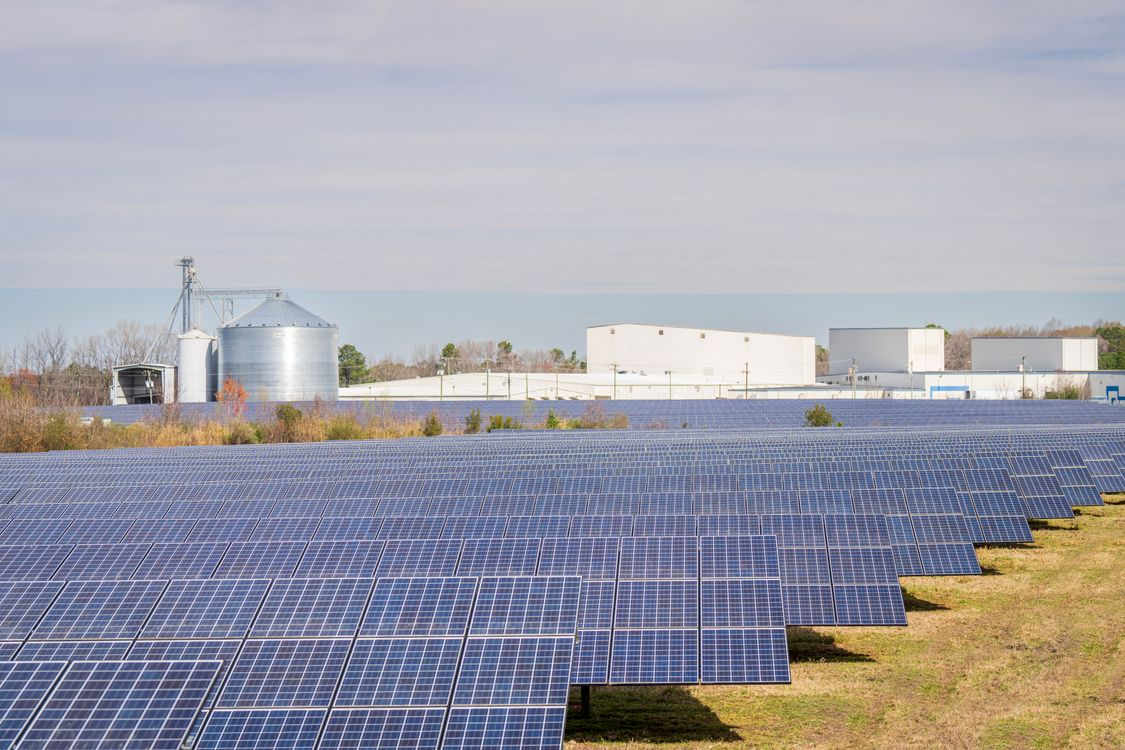
IN Brief:
- Recurrent Energy reports commercial operation at its 200 MWp Villameca photovoltaic project in Spain.
- The developer forecasts annual electricity production of approximately 359,172 MWh, subject to operating conditions.
- Battery storage at Villameca is being explored and has not been confirmed as installed or operational.
Recurrent Energy has announced the start of commercial operation at its 200 MWp Villameca photovoltaic project in Castilla y León, Spain. The generating facility has reached an operational milestone rather than another planning or construction announcement, and the company expects it to produce approximately 359,172 MWh of electricity in a typical year.
The developer, a subsidiary of Canadian Solar, announced the milestone on 15 October 2026. It estimates that annual generation will be equivalent to the needs of more than 100,000 homes and could avoid approximately 57,000 tonnes of carbon dioxide emissions. These are forecasts using assumed consumption and emissions comparisons; neither figure constitutes measured performance from a completed year of operation.
Villameca adds to the company’s Spanish solar portfolio as it works towards approximately 1 GW of operational photovoltaic capacity in the country by the end of 2026. The forecast portfolio total depends on the progress of other projects, and must not be treated as capacity already generating at the date of the announcement.
Commercial operation marks a specific development threshold. It indicates that the plant has entered the stage in which electricity can be produced under the applicable operating arrangements, although actual output still varies with sunlight, equipment condition and grid constraints. It does not establish that every hour of future generation will match the plant’s rated peak output.
The 200 MWp rating identifies the photovoltaic array’s nominal peak capacity under standardised test conditions. Annual electricity production is a different quantity, measured in megawatt-hours. Dividing the forecast 359,172 MWh by the stated installed capacity gives approximately 1,796 equivalent full-load hours a year, a way to express energy yield relative to rated power.
Those calculated hours do not describe a period in which the plant operates continuously at full output. Solar generation changes across the day and the seasons as solar irradiation and module temperature vary. The yield of an operating plant also depends on inverter availability, maintenance interventions, electrical losses and any restrictions on the export of electricity.
Photovoltaic cells convert incident light into direct current electricity, which is collected from module strings and directed through the plant’s electrical conversion equipment. Inverters produce alternating current for export to the connected network, while transformers and switchgear provide the required voltage interface and electrical protection.
The conversion process has operating limits. Inverter sizing, equipment temperatures and the power available from the arrays affect how much electricity can be delivered at any given moment. The peak photovoltaic rating should not therefore be mistaken for a verified continuous alternating current export capability or a guaranteed network injection.
Recurrent Energy has not supplied a complete public equipment schedule with the October commercial operation statement. Specific inverter models, export limits, transformer ratings and the final electrical protection configuration should not be asserted without supporting project documentation.
The company is also assessing potential integration of battery storage at Villameca. That work remains prospective: the announcement does not confirm that a battery has been procured, constructed or commissioned, and it provides no verified battery power or energy rating for the site.
A battery could absorb some electricity during periods when photovoltaic output is available and deliver it later, subject to the system’s state of charge, power rating, energy capacity and connection permissions. The actual benefit would depend on charging strategy, dispatch opportunities and round-trip energy losses, alongside any market and regulatory requirements.
Future hybridisation would also require coordinated controls. Solar output, battery charging and battery discharge must remain within the limitations of the plant’s connection and conversion equipment. Without an agreed design and commissioning programme, it would be premature to describe Villameca as an operating solar-and-storage facility.
Spain’s expanding fleet of photovoltaic installations creates particular attention around the relationship between daytime generation and electricity demand. Large quantities of solar output can coincide across installations, while transmission conditions and market prices change independently of sunlight availability. These are system considerations rather than measured constraints reported specifically at Villameca.
Routine asset management now becomes important to maintaining performance. Operators monitor generated energy and equipment availability, inspect module connections and electrical equipment, and address faults that affect production. Comparing plant measurements with irradiation conditions can help distinguish weather-related changes from performance deterioration.
The company’s projected annual output provides a benchmark for subsequent reporting. A complete operating history will be required to assess how generation compares with the forecast, and potential storage development will remain a distinct milestone unless Recurrent Energy confirms the necessary investment and engineering decisions.
The announcement establishes that Villameca has progressed into commercial generation with 200 MWp of photovoltaic capacity. Its realised annual yield, the performance of its electrical systems and any eventual battery installation will be determined by operating records and later development announcements.