IN Brief:
- POWERGRID has confirmed full commissioning of its Rajasthan Phase-III Part-C1 transmission package, effective 22 September 2026.
- The project comprises a 765/400 kV Ramgarh substation, 765 kV double-circuit line, STATCOM equipment and associated bay extensions.
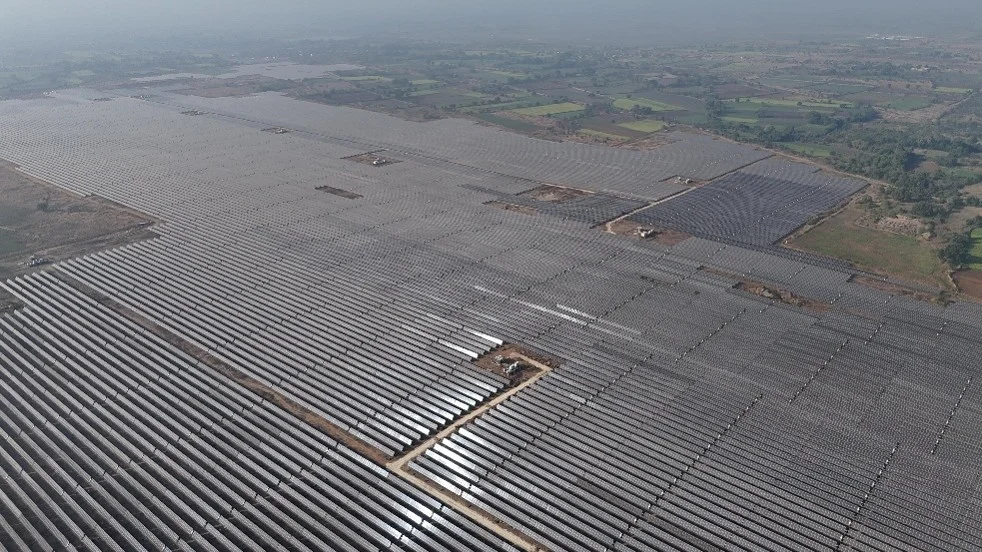
- POWERGRID originally designed the Ramgarh package to facilitate evacuation of approximately 2.9 GW from the Ramgarh renewable complex within a wider 20 GW programme.
Power Grid Corporation of India (POWERGRID) has confirmed commercial operation of its Rajasthan Phase-III Part-C1 transmission project, comprising a new 765/400 kV substation at Ramgarh, a 765 kV double-circuit transmission line and associated voltage-control infrastructure. Commercial operation took effect on 22 September 2026, with the company receiving the formal notification on 11 October.
The Notification for Commercial Operation was dated 7 October and received by POWERGRID on 11 October, confirming a retrospective effective date of 22 September. The recognised date establishes the project’s formal commercial milestone for the completed transmission assets.
The Ramgarh package forms part of Rajasthan’s wider programme for evacuating electricity from renewable energy zones with a planned aggregate generating capacity of 20 GW. Its own engineering scope is intended to facilitate evacuation of approximately 2.9 GW from the Ramgarh renewable complex into India’s interstate transmission system.
The 20 GW designation identifies the wider Rajasthan renewable energy evacuation programme, while the 2.9 GW figure describes the generation evacuation requirement associated with Ramgarh. The power that can be transferred over the new line will depend on conductor and equipment ratings, voltage limits and prevailing network operating conditions.
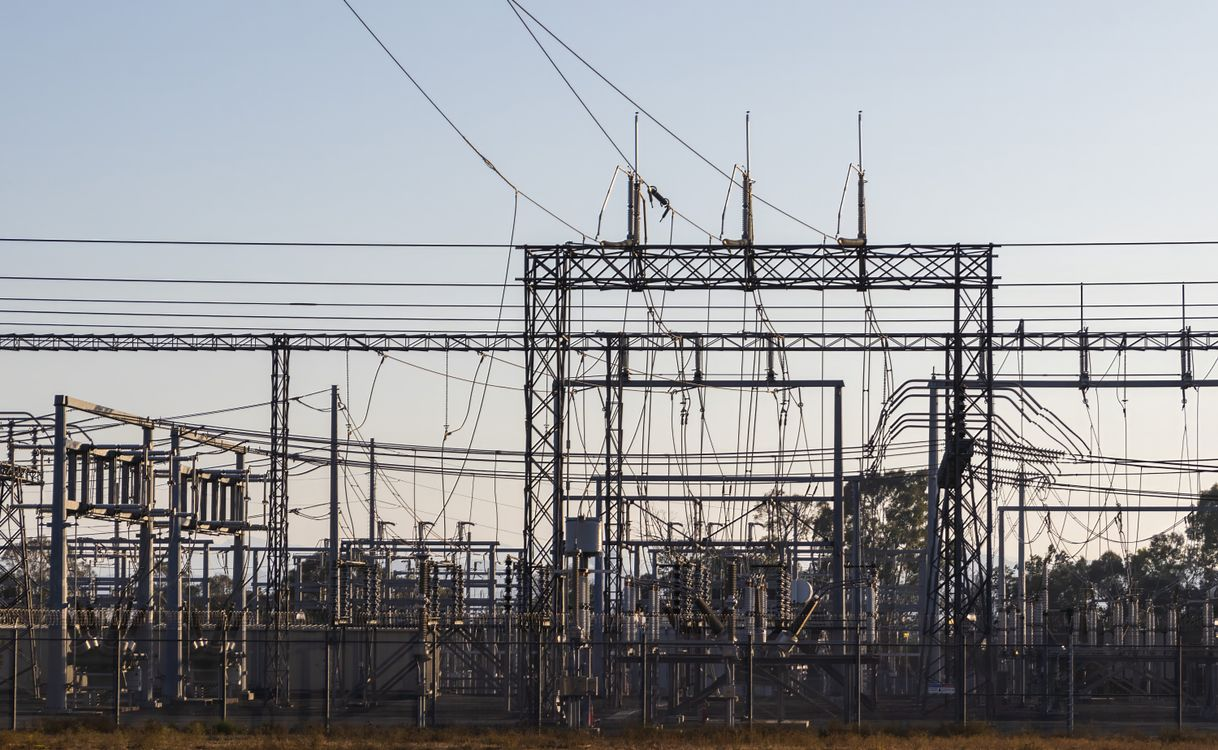
The new 765/400 kV pooling substation provides an interface between different levels of the extra-high-voltage electricity network. It is intended to collect and transmit electricity from renewable generation developments in a region where substantial solar and wind capacity is being added to the grid.
High-voltage transmission allows power to be carried over long distances with lower current than would be required at lower voltage for an equivalent power transfer. Because resistive losses depend on the square of current, operating at higher transmission voltages is important where large amounts of electricity must be transported between geographically separated generation and demand centres.
The Ramgarh project includes a 765 kV double-circuit overhead line connecting towards the existing Bhadla-III transmission infrastructure. The double-circuit configuration provides two electrical circuits along the route, although the capacity and permitted operating conditions of each depend on conductor ratings, equipment limits and wider network stability requirements.
The installation also involves bay extensions at existing substations. These provide the switching, measurement and protection equipment needed to connect the new transmission assets into the established network. Proper coordination is necessary because an electrical fault or switching operation on one part of the system can affect equipment beyond the immediate location.
Transformers at the 765/400 kV substation provide the means of exchanging electrical power between voltage levels. Their ratings and operating arrangements govern the permissible loading of the transformation equipment, while circuit breakers and associated protection systems allow affected sections of the network to be isolated when abnormal conditions arise.
The Ramgarh scope includes a static synchronous compensator (STATCOM), which uses power electronic conversion to absorb or supply reactive power according to transmission-system voltage conditions. This equipment helps regulate voltage as renewable output and network flows change.
Reactive power influences voltage in alternating-current electricity systems and must be managed alongside active power transfers. A STATCOM can change its reactive power output in response to measured voltage conditions, providing a means of supporting the network as generating output and power flows vary.
Long extra-high-voltage circuits develop varying reactive power conditions as loading changes because their capacitance and inductance affect network voltage. Connecting or disconnecting generation can also change local voltage. Compensation equipment must respond within the permitted operating range to maintain acceptable network conditions.
The substation, transmission circuits and compensation equipment must therefore operate as an integrated system. Protection settings, switching procedures, control interfaces and telecommunications must be coordinated so that the transmission network can respond correctly to faults, equipment outages and changes in generating output.
Before commercial operation, installed transmission equipment must undergo electrical tests and functional checks, including verification of protection operation and the interfaces between new and existing substations. The recognition of commercial operation establishes that the project has reached its formal operating milestone, although the latest disclosure does not provide a test-by-test account of commissioning.
POWERGRID secured the project through India’s tariff-based competitive bidding mechanism. The transmission assets were originally assigned to POWERGRID Ramgarh II Transmission Limited, a special purpose vehicle established to implement the scheme under a build, own, operate and transfer arrangement.
The project company was subsequently amalgamated into POWERGRID Vataman Transmission Limited with effect from 1 March 2026, following a Ministry of Corporate Affairs order issued earlier in the year. The restructuring changed the corporate vehicle through which the transmission assets are held without changing the engineering purpose of the development.
POWERGRID’s original implementation programme envisaged an eighteen-month delivery period for the substation and line infrastructure, with a longer period for the STATCOM equipment. The actual recognised commercial operation date falls later than those initial expectations, although the company has not provided a detailed explanation of the construction or commissioning timetable in its latest disclosure.
Across the wider Rajasthan renewable energy evacuation programme, separate transmission packages, pooling substations and network reinforcements have their own construction and commissioning schedules. Individual solar and wind developments must also complete their respective connection and commissioning requirements before delivering electricity through the expanded network.
Rajasthan’s renewable energy zones require sufficient network capacity to carry electricity beyond local generation centres. New transmission infrastructure can reduce connection constraints and provide additional routes for delivering power to other regions, although the amount transferred at any moment remains dependent on generation output, demand and the condition of the surrounding grid.
With Phase-III Part-C1 commercially operational, POWERGRID can incorporate the completed Ramgarh infrastructure into its transmission operating arrangements. Its contribution to renewable power evacuation will be determined by the generation connected to the system and the performance of the wider interstate network, rather than the nominal capacity of any single renewable energy project.