IN Brief:
- OEG will supply temporary generating equipment for offshore converter station commissioning and wind turbine installation.
- Five 200 kVA generators and two 300 kVA units will operate in synchronisation to supply up to 1,400 kVA.
- Separate 150 kVA generators and mountable 3,000-litre fuel tanks will support work on turbine transition pieces.
OEG has secured a contract from Ørsted to provide temporary electrical power during construction and commissioning of the 2.9 GW Hornsea 3 offshore wind farm. The company’s scope includes electricity supplies for offshore converter station commissioning and wind turbine installation, using different generating arrangements developed for the operating requirements of each activity.
The offshore converter station package comprises five generators rated at 200 kVA each and two rated at 300 kVA. All seven units will operate in synchronisation aboard a jack-up vessel, supplying temporary power of up to 1,400 kVA during the commissioning programme.
The generators have a combined individual nameplate rating of 1,600 kVA, while OEG specifies a maximum temporary supply of 1,400 kVA for the commissioned arrangement. These are distinct measures: the first is the sum of the individual generator ratings, and the second is the announced working supply capability. OEG has not disclosed the operating conditions or engineering margins used to establish that difference.
Synchronised operation allows multiple generating units to supply a common electrical distribution system. Before units can operate in parallel, their voltage, frequency and phase conditions must be coordinated. Load-sharing controls then determine how the connected equipment contributes to the electrical demand, while protection arrangements must respond to faults and abnormal operating conditions.
Dividing the supply between several generators provides a modular arrangement capable of accommodating changes in the temporary electrical load. Individual units can potentially be brought into or taken out of service in accordance with the system design, although the permissible operating sequences and any redundancy provisions have not been specified for the Hornsea 3 installation.
The contract expresses the generator ratings in kilovolt-amperes, a measure of apparent electrical power. The corresponding real power, expressed in kilowatts, depends on the power factor of the connected loads. Consequently, the 1,400 kVA supply rating cannot be interpreted as an equivalent 1,400 kW output without further electrical information.
Temporary power is needed because offshore converter installations must undergo construction, integration and commissioning activities before their permanent electrical systems can operate in their final configuration. Equipment used for control, protection, communications and auxiliary services may need a reliable electricity supply while the primary conversion and export infrastructure is undergoing testing.
Hornsea 3 will use high-voltage direct-current transmission to export electricity generated by its offshore turbines. Power collected through the wind farm’s alternating-current array network will be converted for transmission towards shore, where the onshore converter infrastructure will return it to alternating current for connection to Britain’s electricity network.
The project has two offshore converter stations, both of which were installed by September 2026. Ørsted announced completion of the second offshore installation on 22 September, following installation of the first earlier in the year. The structures incorporate jackets anchored to the seabed and topsides containing the equipment required for the offshore electrical conversion system.
The converter station development involves Aibel and Hitachi Energy, with the offshore structures fabricated through an international manufacturing and installation programme. Their installation represents a major physical construction milestone, but the completed structures still require electrical and control system testing before they can enter normal operating service.
Commissioning involves verifying individual equipment functions and their interactions with the wider electrical installation. Protection systems must identify defined fault conditions, control systems must respond correctly to operating commands, and auxiliary equipment must remain available throughout the relevant testing sequences. OEG’s temporary generation package will supply electricity for activities within that programme.
The company has not disclosed the individual loads assigned to its generators or the detailed temporary distribution architecture. These arrangements will depend on the construction vessel, commissioning sequence and electrical requirements of the equipment being tested. The temporary installation must also be coordinated with the site’s electrical safety procedures and the responsibilities of the various commissioning contractors.
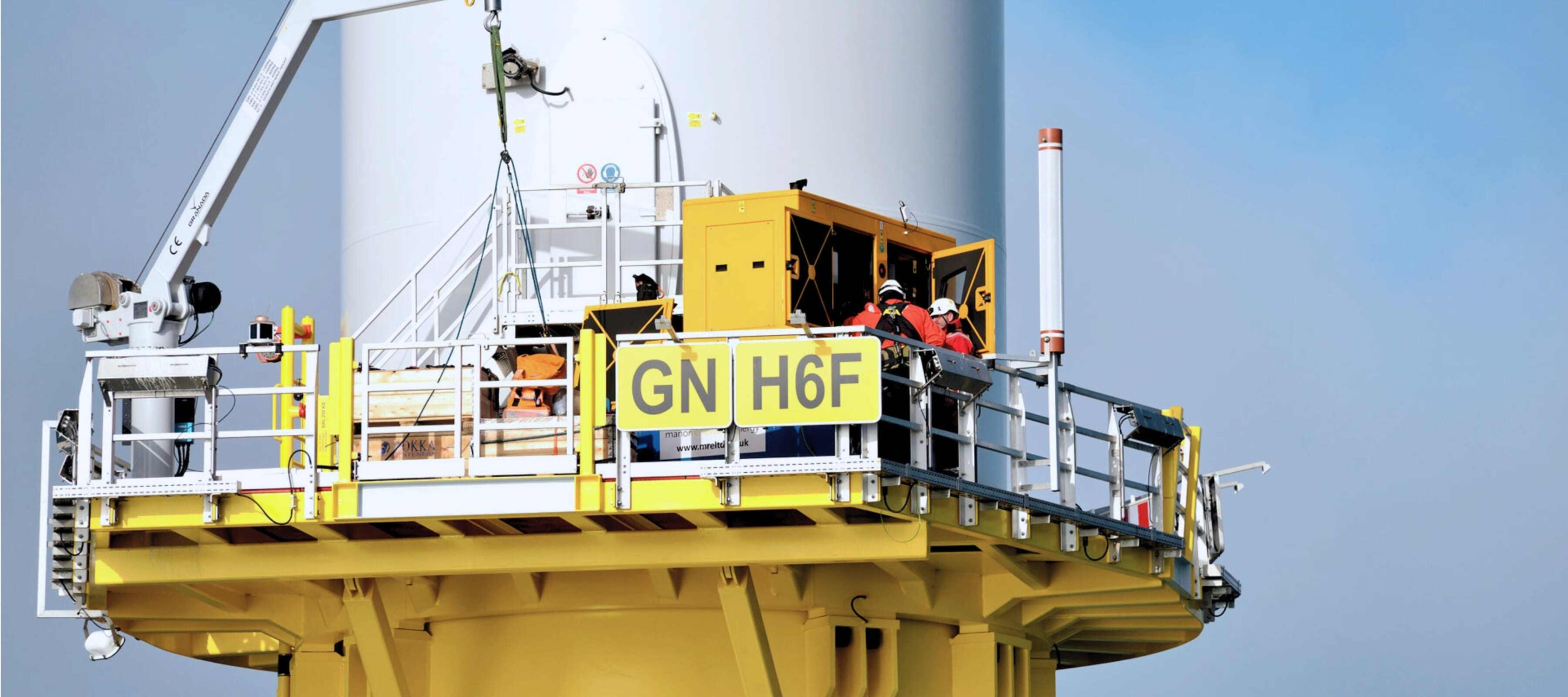
OEG’s second equipment package will support installation and commissioning of the wind turbines. This uses generators rated at 150 kVA, paired with specially designed mountable fuel tanks holding 3,000 litres. The modular equipment is intended to occupy limited space on the turbine transition pieces, where access, working areas and supporting equipment must be accommodated within the offshore structure.
A transition piece connects a turbine support structure with the equipment and access arrangements required above the waterline. During installation, the available working area may need to accommodate personnel, lifting operations and temporary electrical services. Reducing the footprint of generating and fuel storage equipment can help preserve space for other construction activities.
The precise number of 150 kVA units and their total combined power rating have not been disclosed. OEG has also not published the anticipated operating hours, fuel consumption or emissions associated with either temporary generating package. These characteristics will depend on the final deployment and commissioning arrangements rather than the stated equipment ratings alone.
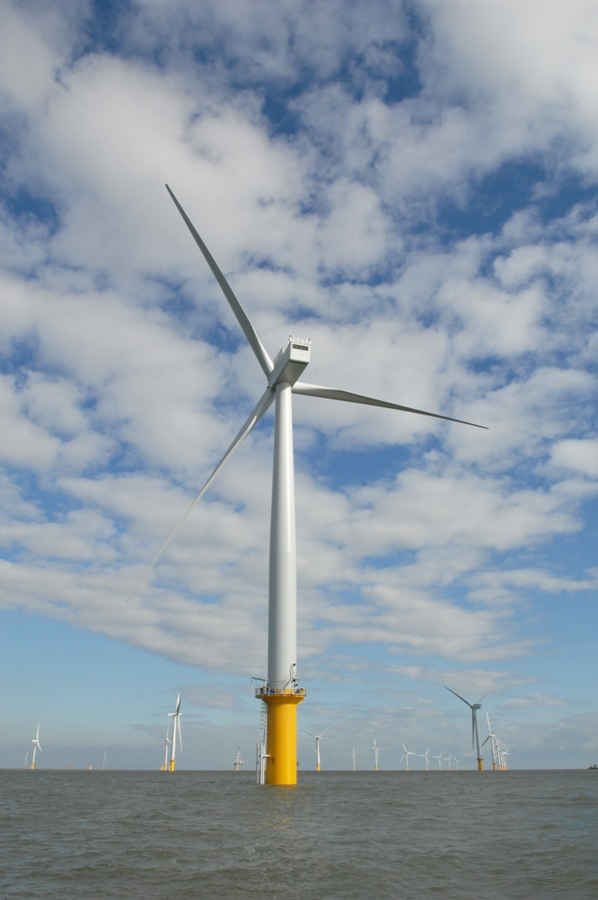
Hornsea 3 is being developed with 197 offshore wind turbines, each designed to operate at a boosted rating of 15 MW. Siemens Gamesa is supplying the SG 14-236 machines, while offshore foundation installation began during 2026. Once completed, the wind farm will have generating capacity of approximately 2.9 GW.
The scale of the electrical infrastructure reflects the distance between the generating site and the mainland. Hornsea 3 lies around 160 kilometres from the Yorkshire coast, while its onshore converter station is located near Swardeston in Norfolk. The export cable system and the associated onshore connection will transfer electricity generated offshore into the wider transmission network.
OEG previously supported the construction phases of Hornsea 1 and Hornsea 2, providing temporary power services for the earlier developments in Ørsted’s Hornsea zone. The latest award extends that relationship to offshore converter commissioning as well as turbine installation at Hornsea 3.
The company has not disclosed the new contract’s value, duration or exact equipment mobilisation date. Its generating systems will be deployed according to the offshore construction programme, with their period of use governed by the electrical commissioning and turbine installation activities they are intended to support.