IN Brief:
- Nordex has received orders for 35 turbines with combined capacity of around 228MW across several European projects.
- The package spans N175/6.X, N163/6.X, and N149/4.X machines, with service agreements lasting up to 25 years.
- Selected turbines will use cold climate configurations and Nordex's Advanced Anti-Icing System to reduce icing related generation losses.
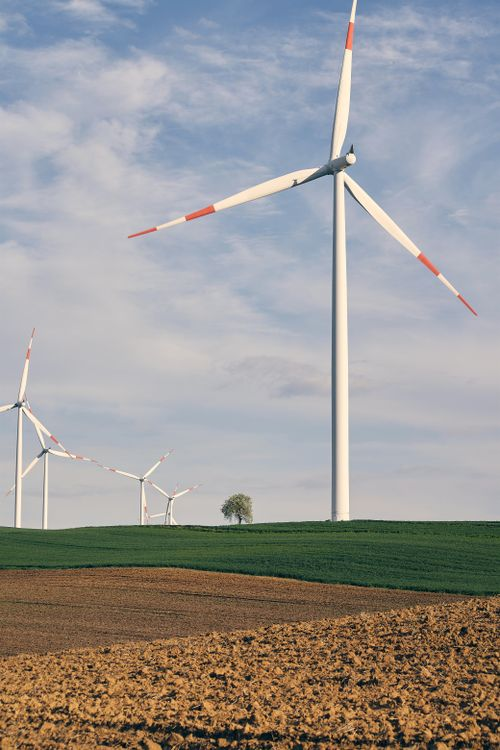
Nordex Group has secured orders for 35 onshore wind turbines with combined capacity of around 228MW across projects in South, Central, and Eastern Europe.
The orders were received at the end of September and cover three turbine families: the N175/6.X, N163/6.X, and N149/4.X. Nordex has not disclosed the customers, individual projects, or countries involved, but the contracts include turbine supply and installation together with service agreements lasting up to 25 years.
Using several turbine types within the same order package allows project developers to select different combinations of rotor diameter, rated output, and operating characteristics for individual sites. Wind speed distribution, turbulence, hub height, acoustic restrictions, grid limits, and transport constraints can all affect which machine produces the strongest lifetime yield at a particular location.
The N175/6.X sits at the larger end of the package. Built on Nordex’s Delta4000 platform, it uses a rotor measuring 175 metres and a single piece blade measuring 85.7 metres. Nordex says the larger swept area allows the machine to produce between 7% and 14% more energy than its N163/5.X and N163/6.X sister models at typical low and medium wind locations, with the difference rising to as much as 22% during lighter wind conditions.
A larger rotor does not simply increase nameplate capacity. Greater swept area allows more energy to be extracted from the wind at lower speeds, which can raise the capacity factor at sites where stronger winds are relatively infrequent. The final design still has to remain within structural, acoustic, and grid constraints, so Nordex offers operating modes that alter the relationship between power output, loads, and sound emissions.
The N163/6.X provides another 6MW class option within the Delta4000 range, while the N149/4.X gives developers a lower rated alternative where project conditions favour a smaller rotor or different loading characteristics. Common platform architecture can retain established control, manufacturing, and service elements while adapting the rotor and operating envelope to individual wind farms.
Selected turbines in the latest order package will be supplied in cold climate configuration and equipped with Nordex’s Advanced Anti-Icing System. The system uses electrical resistance heating elements beneath the blade surface to remove ice, while meteorological sensors on the nacelle detect icing conditions and trigger operation automatically.
Icing can alter blade aerodynamics and reduce energy production, while heavier accumulation can require a turbine to stop. Nordex says its system can reduce associated production losses by up to 80% by allowing turbines to remain operational during suitable icing conditions. Activity can also be monitored through the turbine’s supervisory control and data acquisition system.
The engineering case varies between projects because blade heating consumes electricity and the expected recovery depends on the severity and frequency of icing. Developers therefore need to compare anticipated production losses without heating against the energy used by the system and any additional equipment, maintenance, and loading considerations.
Nordex says it has used its anti-icing technology particularly in Nordic markets, where prolonged winter conditions can make the economics more material. The latest contracts extend that capability into a wider package of South, Central, and Eastern European orders, although the manufacturer has not identified which projects will receive it.
The 228MW package is separate from the 175MW of European orders announced by Nordex at the end of September. That earlier group covered 34 turbines for projects in France, Portugal, and Spain, whereas the latest contracts involve 35 machines across a different set of undisclosed projects.
The two announcements show how Nordex is filling its European order book with several turbine configurations rather than one standard specification. Different rotor sizes and power classes remain necessary as wind development moves into sites with increasingly varied wind resource, planning limits, transport constraints, and network conditions.
Nordex has commissioned more than 64GW of wind capacity in more than 40 markets since 1985. Its current onshore portfolio is concentrated in the 4MW to 7MW plus range, with the Delta4000 architecture supporting several rotor, tower, and operating configurations.
Customers and project timetables for the new 228MW order package remain confidential. Installation and commissioning dates will therefore depend on later project disclosures, but the service agreements already extend the commercial relationship for as long as 25 years after the turbines enter commercial operation. Those service commitments also extend operational responsibility well beyond equipment delivery.