IN Brief:
- Saft has signed contracts with Axpo covering 122MWh of battery storage at two French sites.
- Orbec will provide 41MW/92MWh and Bois Paillet 14MW/30MWh using Intensium Flex battery containers.
- The systems will combine battery storage, power conversion, energy management, and digital monitoring for market and grid services.
Saft has secured two contracts from Axpo to supply 122MWh of battery storage across projects in Normandy and Centre-Val de Loire, giving the French power system two new assets designed for energy arbitrage and ancillary services.
The larger Orbec project in Normandy will provide 41MW of power and 92MWh of storage, while Bois Paillet in Centre-Val de Loire will provide 14MW/30MWh. Deliveries are scheduled for early 2027, and the contracts mark the first battery storage projects undertaken jointly by Saft and Axpo in France.
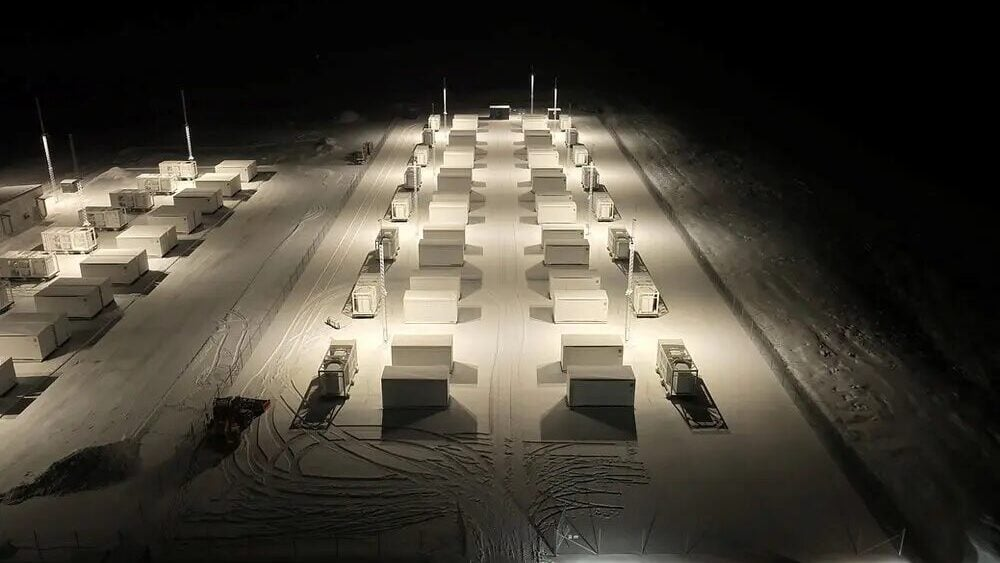
Orbec will use 18 Intensium Flex battery containers, while Bois Paillet will use six. Saft’s announced scope covers integrated battery systems together with power conversion equipment and advanced energy management, rather than supplying cell containers as standalone components.
The Intensium Flex platform uses lithium iron phosphate cells in 20 foot containers with liquid cooling. Saft’s current specification provides up to 5.1MWh in each container, with modular configurations allowing several units to be connected in parallel to build larger storage plants.
The batteries operate on direct current, whereas the electricity network operates on alternating current. Power conversion equipment controls energy transfer between the two, using bidirectional inverters so that electricity can flow into the battery while charging and back towards the grid during discharge.
An energy management system then coordinates when that conversion takes place. It has to account for market instructions, state of charge, equipment limits, and the services committed by the plant, while battery management systems monitor variables including current, voltage, temperature, and cell condition inside the containers.
Saft says both French projects will also use its I-Sight digital platform for supervision, performance management, and maintenance. That information is operationally important because a storage plant’s commercial value depends on being available when a scheduled trade or grid instruction requires it to respond.
The systems are intended to combine energy arbitrage with ancillary services. Arbitrage involves charging during lower value periods and discharging when electricity prices are higher, while ancillary services can require rapid changes in active power to help keep supply and demand balanced.
Those uses compete for the same finite state of charge. A battery committed to a grid support service may need to retain sufficient stored energy or spare charging capacity rather than taking every available wholesale price opportunity. Optimisation therefore involves managing several possible revenue streams within the technical limits of the battery.
Orbec’s 92MWh rating against 41MW of output gives it an energy to power ratio of a little over 2.2 hours, while the 30MWh Bois Paillet system is slightly above two hours at its 14MW rating. Both therefore sit between very short duration response assets and the larger batteries now being developed for several hours of sustained discharge.
The Intensium Flex equipment itself can be configured for longer applications. Saft lists its current platform for operating durations from two to eight hours, with building blocks rated from 3.4MWh to 5.1MWh and maximum DC charge or discharge power of up to 2.5MW per container.
Liquid cooling is used to control cell temperature during repeated charge and discharge cycles. Temperature affects battery ageing, performance, and safety, so keeping cells within their intended operating range becomes particularly important where an asset may cycle frequently in response to market prices and grid service instructions.
Saft’s use of lithium iron phosphate reflects the increasing adoption of that chemistry in stationary storage, where volumetric energy density is only one design consideration. Cycle performance, thermal management, cost, container footprint, and the ability to meet the required power profile all contribute to the final system architecture.
The Axpo projects follow other battery additions in the region. Axpo recently commissioned a 50MW battery at Gurtnellen in Switzerland, while COMAX France commissioned a separate 57MW/114MWh portfolio across ten French sites during August.
Containerised battery systems can reduce the amount of battery assembly required on site because key components are integrated and tested before delivery. The completed plants still require civil works, cabling, protection, power conversion, transformers where needed, controls, and grid compliance work before they can enter commercial operation.
Neither Orbec nor Bois Paillet is operational yet. The current milestone is the award of battery system contracts, with equipment delivery scheduled for early 2027. Installation, connection testing, and commissioning will follow before Axpo can dispatch the projects into French power and ancillary service markets.