IN Brief:
- Germany’s approved capacity mechanism carries estimated support costs of €15.6bn to €35.2bn through 2045.
- Competitive procurement will cover generation, storage, demand response, existing assets, new capacity, and qualifying cross-border resources.
- Long-term contracts carry 2045 climate-neutrality requirements, while new gas plants seeking 15-year support must be hydrogen-ready.
The European Commission has approved Germany’s planned market-wide capacity mechanism under EU State aid rules, clearing a framework intended to secure sufficient dependable electricity capacity from 2031 as the generation mix becomes more renewable and less reliant on coal.
The mechanism is expected to cost between €15.6bn and €35.2bn through 2045, depending on auction results. It will pay eligible resources for dependable availability rather than electricity output alone, creating a revenue stream for capacity that may run relatively infrequently but must be available when the system is tight.
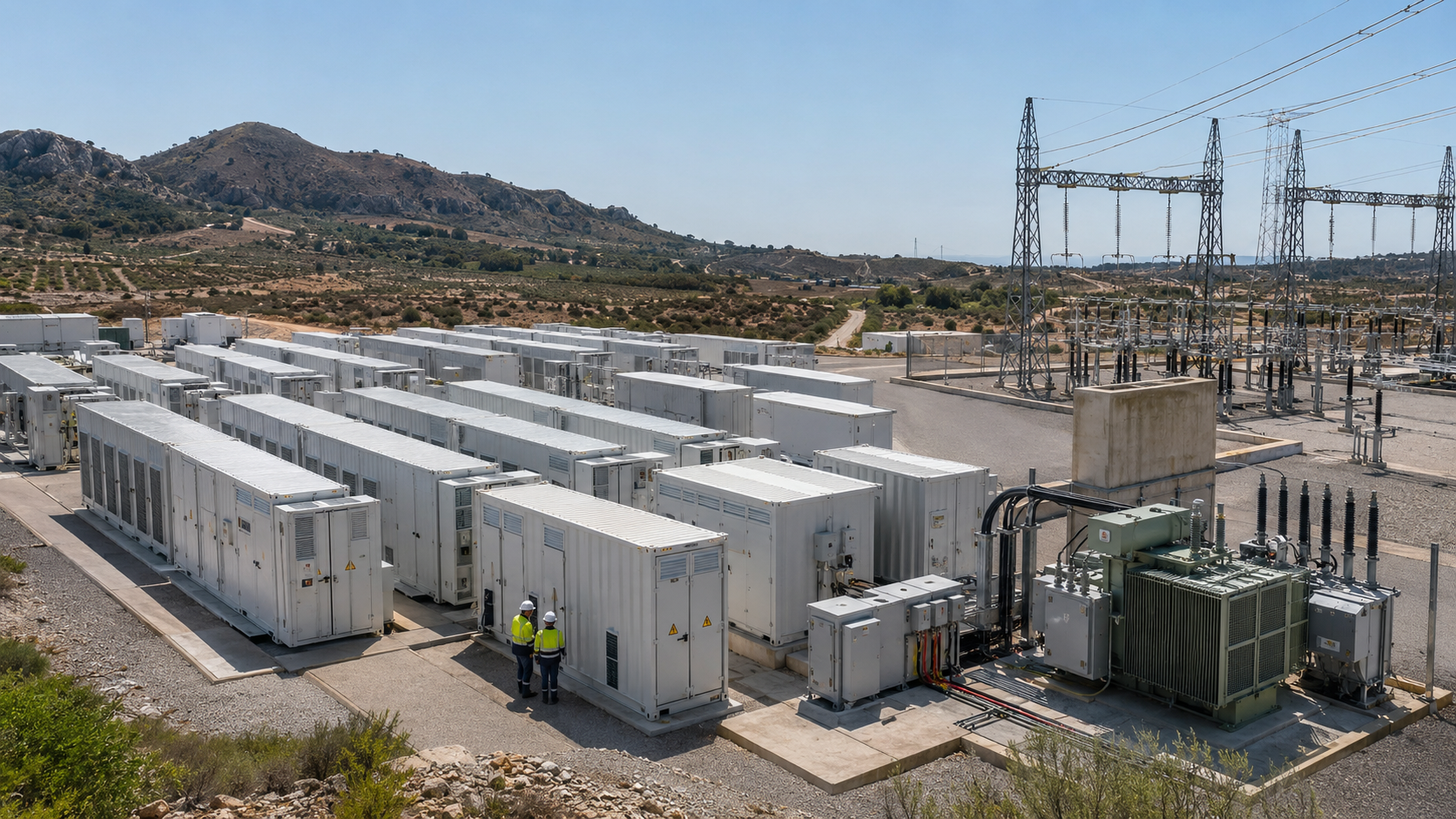
Participation is intended to be technology-neutral. Generation, battery and other storage, demand-side response, existing assets, new capacity, and qualifying cross-border resources will be able to compete, with the amount procured linked to Germany’s reliability standard rather than an arbitrary volume.
Contracts can run for up to 15 years. Capacity receiving long-term support will have to operate on a climate-neutral basis by 2045, while new gas-fired plants seeking 15-year contracts must be hydrogen-ready, tying security-of-supply support to a later fuel-conversion requirement.
The approval also sits alongside Germany’s nearer-term reliability procurement under the Electricity Supply Security and Capacity Act. Earlier legislation set out 11GW of staged procurement, including two 4.5GW long-duration tenders in 2026 and a further 2GW round in 2027, before the broader market-wide mechanism becomes available from 2031.
Germany is retiring conventional capacity while adding large volumes of wind and solar, yet adequacy still depends on resources that can respond during extended periods of low renewable output. Energy-only revenues can be a weak investment signal for plant or flexibility that may be essential during scarcity but earns little in normal conditions.
Capacity mechanisms address that gap by paying for availability, but the design determines whether they simply preserve existing thermal plant or create competition between different forms of flexibility. Opening the German framework to batteries and demand response gives those resources a route to compete with generation where their technical characteristics are suitable.
Storage can respond quickly and shift electricity across hours, while demand-side resources can reduce consumption instead of increasing supply. Thermal generation remains better suited to some longer-duration events, and interconnection can contribute where neighbouring systems and cross-border capacity are available at the same time. The auction therefore has to compare technologies that provide adequacy in materially different ways.
De-rating and qualification rules will be central to that comparison. A megawatt of nominal battery power cannot automatically be treated as equivalent to a megawatt from a generator capable of running for many hours, while a demand-response portfolio is only useful if customers can reliably sustain the contracted reduction when called.
Cross-border participation adds another constraint. Germany is heavily interconnected with neighbouring markets, so imported capacity can contribute to adequacy, but only where the relevant interconnectors are available and the neighbouring system is not experiencing the same scarcity event.
The Commission’s approval sets the competition framework within which Germany will decide how much dependable capacity it needs, which technologies can provide it, and how long-term support is reconciled with the country’s 2045 climate-neutrality target.
Costs will rise once the mechanism is fully operational. The Commission estimates expenditure of about €1bn to €3bn in 2031, followed by roughly €0.9bn to €2.3bn a year from 2032 to 2045, with the eventual figure determined by auction prices and the volume required to meet the reliability standard.
Those sums create an obvious requirement for competitive discipline. Paying too little risks failing to bring forward sufficient dependable capacity; paying too much transfers unnecessary cost to the system and can shield assets that would otherwise be uneconomic. Technology-neutral auctions are intended to expose that trade-off rather than settle it administratively.
The hydrogen condition for long-term gas contracts introduces a second test. Hydrogen-ready design can reduce the risk of locking new plants into unabated gas operation for their full supported life, but conversion will still depend on hydrogen availability, infrastructure, operating economics, and the technical pathway chosen by individual projects.
Germany’s first staged tenders will show how quickly new long-duration capacity can be contracted under the current legislation. The larger question comes with the 2031 market-wide mechanism, when generation, storage, flexible demand, existing capacity, and cross-border resources will have to compete inside one adequacy framework rather than in parallel policy programmes.