IN Brief:
- Germany has approved draft legislation for 11GW of new dispatchable capacity under the proposed Electricity Supply Security and Capacity Act.
- The first two 4.5GW tenders are planned for September and December 2026, followed by a 2GW tender in May 2027.
- Later technology-neutral auctions are expected to include power plants, storage systems, demand-side flexibility, and existing assets.
Germany’s Federal Ministry for Economic Affairs and Energy has advanced draft legislation to procure 11GW of new dispatchable capacity as the country develops a wider capacity framework.
The proposed Electricity Supply Security and Capacity Act, known in Germany as StromVKG, is designed to maintain reliable electricity supply when renewable generation is not sufficient. The first two tenders are planned for September and December 2026, each with a volume of 4.5GW and focused on long-duration capacity capable of supplying electricity continuously over extended periods.
A further 2GW tender for new generation capacity without the same long-duration requirement is planned for May 2027. Additional technology-neutral auctions are expected in 2027 and 2029, opening participation to power plants, storage systems, flexible demand-side resources, and both new and existing assets.
The legislation still has to pass through the Bundestag and obtain European Commission approval under state aid rules. Germany and the European Commission reached a basic agreement on the capacity provisions in January 2026, giving the draft law a policy foundation while leaving the final approval process to follow.
Germany is trying to maintain system reliability while moving away from coal-fired generation and toward a power system dominated by wind and solar. The country is targeting an 80% renewable share in power consumption by 2030 and climate neutrality by 2045. As conventional thermal capacity retires, the system needs resources that can respond when renewable output remains low for sustained periods.
The first auction rounds are expected to favour assets capable of long-duration availability, including hydrogen-ready gas-fired power plants. Subsidised plants will be required to become climate-neutral by 2045, with hydrogen conversion forming part of the longer-term plan. Separate auctions for converting power plants to hydrogen operation are expected in 2027.
Storage and demand flexibility will also move further into the supply security framework. The May 2027 tender without the long-duration criterion gives batteries and other flexible assets a clearer route into capacity procurement, while later technology-neutral auctions will widen participation further. The staged structure reflects the different reliability services provided by dispatchable generation, storage, flexible demand, and existing assets.
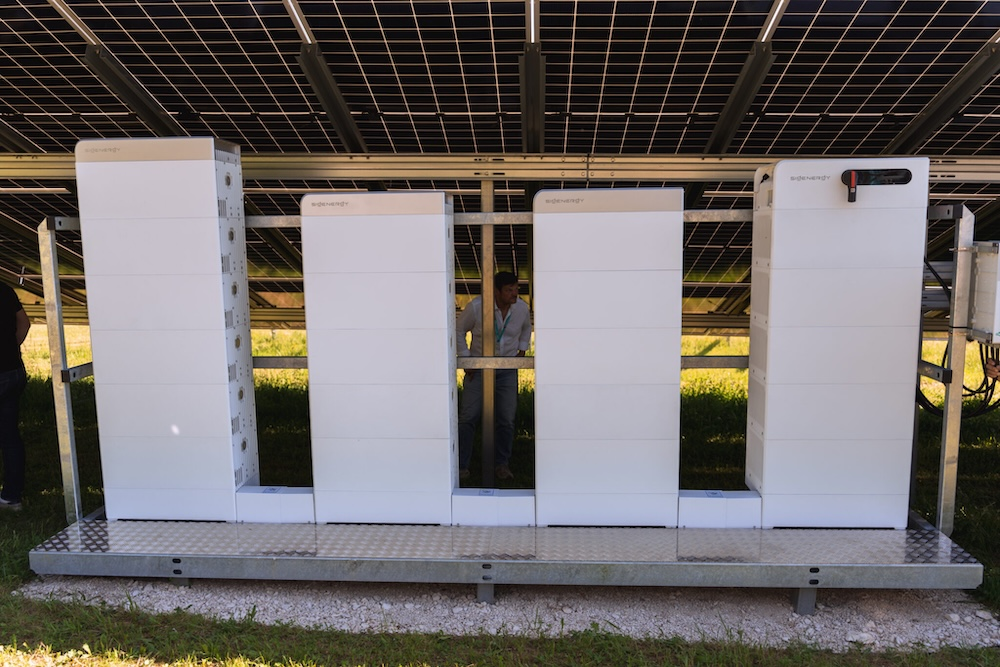
Germany’s storage market is already expanding quickly. German storage revenues are forecast to exceed €17bn in 2026, with large-scale batteries among the strongest growth segments. BayWa r.e.’s operations contract for the 137MW/282MWh Alfeld battery system shows grid-scale storage becoming a more substantial operating asset rather than a niche ancillary service project.
Capacity procurement creates an investment signal for resources that may operate relatively rarely but must be available when system conditions require them. Energy-only revenues can be difficult to rely on where assets are expected to run for limited hours, especially if their value is tied to reliability rather than regular generation.
The technical challenge extends well beyond replacing coal capacity with gas capacity. Germany needs a portfolio able to manage low wind and solar periods, network constraints, industrial electrification, data-centre demand, electric mobility, heating electrification, and changing cross-border flows. Dispatchable generation will form part of that mix, alongside storage, flexible loads, interconnectors, and grid automation.
New plants and large storage assets also have long delivery chains. Permitting, financing, grid connection, equipment procurement, construction, testing, and commissioning can take years. Grid connection queues, transformer availability, turbine procurement, construction capacity, and hydrogen-readiness requirements will all influence how quickly capacity awarded in late 2026 can become operational.
The draft law also reflects a wider European shift in power system design. Renewable-heavy systems require flexibility across different time scales: seconds for frequency response, minutes for balancing, hours for solar shifting, and days or longer for weather-driven renewable shortfalls. No single technology covers those requirements economically, pushing capacity frameworks toward mixed portfolios rather than single-technology solutions.
Germany’s first tenders will test whether the design can bring forward enough capacity while keeping the system open to storage, demand response, and lower-carbon conversion pathways. The auction structure, eligibility rules, and state aid approval process will determine how quickly the framework turns into investable projects.