IN Brief:
- US utility-scale battery storage reached nearly 52GW after 8.3GW was added during the first half of 2026.
- Installed power capacity has grown at an average annual rate of around 70% during the past three years.
- Developers report another 54GW planned through 2028, increasingly linking battery deployment with solar generation and system flexibility.
Utility-scale battery storage capacity in the United States has reached nearly 52GW after operators added 8.3GW during the first half of 2026, extending a three-year period in which installed battery power capacity grew at an average annual rate of about 70%.
The figures from the US Energy Information Administration show how quickly grid batteries have moved from a relatively small balancing resource into a material part of the national generating system. Operational nameplate capacity stood at 43.6GW at the end of 2025 before additions during the first six months pushed the total close to 52GW.
Developers are reporting a further 14GW scheduled to enter service during the second half of 2026, followed by 26GW in 2027 and 14GW in 2028. If those projects are completed as planned, the next two and a half years would add another 54GW of battery power capacity.
Those figures are project schedules rather than guaranteed additions. Interconnection delays, financing, permitting, equipment availability, construction performance, and changes in market economics can all move or cancel announced projects before commercial operation.
The headline gigawatt figure also measures power rather than stored energy. A battery rated at 100MW can deliver 100MW at full output, but the time for which it can sustain that discharge depends on its energy capacity, operating limits, and state of charge.
That makes duration increasingly important as storage becomes a mainstream grid resource. Short-duration batteries can respond rapidly to frequency events and brief price spikes, while longer-duration installations are better suited to covering sustained evening peaks or shifting large quantities of renewable electricity across several hours.
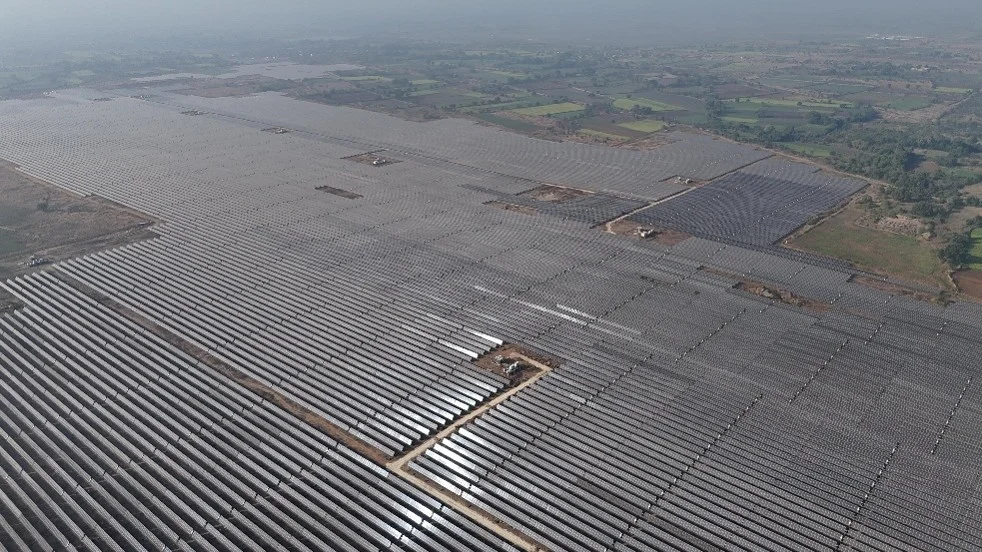
Solar generation remains one of the main drivers of US storage growth. Several of the country’s largest battery developments are paired with photovoltaic plants, allowing electricity generated during high-output daylight periods to be stored and released after solar production falls.
The Bellefield Solar and Energy Storage Farm in California illustrates the scale now being reached. The project began operating in December 2025 with 500MW of photovoltaic generation and 500MW of battery power capacity, with plans to double both elements in a further development phase scheduled for November 2026.
If that expansion is completed, Bellefield would become the largest US battery installation by nameplate power capacity. Other major hybrid schemes include Florida Power & Light’s Manatee Solar Energy Center, which combines 75MW of solar with 409MW of storage, and the Gemini project in Nevada, where 690MW of photovoltaic capacity is paired with 380MW of batteries.
Pairing batteries and solar can make better use of a grid connection. Photovoltaic output is concentrated around the middle of the day, when many other solar plants are also generating heavily. A battery can charge behind the same point of connection during those hours and discharge later, changing the timing of the electricity delivered without increasing the solar array’s total generation.
That can reduce renewable curtailment where midday output would otherwise exceed local demand or network capacity. It can also reduce the rate at which conventional generation has to ramp upwards in the evening as solar production declines.
The economics depend heavily on location and market design. The difference between charging and discharging prices has to cover round-trip energy losses, battery degradation, maintenance, financing, and market charges. Capacity payments, ancillary services, tolling agreements, and resource-adequacy contracts can provide additional revenue streams.
Individual batteries can also perform several technical roles, but those services compete for the same physical capacity. A plant holding energy back for a later peak may have less capacity available for earlier energy-market trading, while a battery committed to frequency response may need to preserve headroom in both its charging and discharging directions.
Grid connection is becoming one of the more important development constraints. A large battery behaves as both a load and a generator, meaning system studies have to assess the impact of charging as well as discharging. In a congested area, an inappropriate charging schedule can worsen a constraint even if later discharge would help the network.
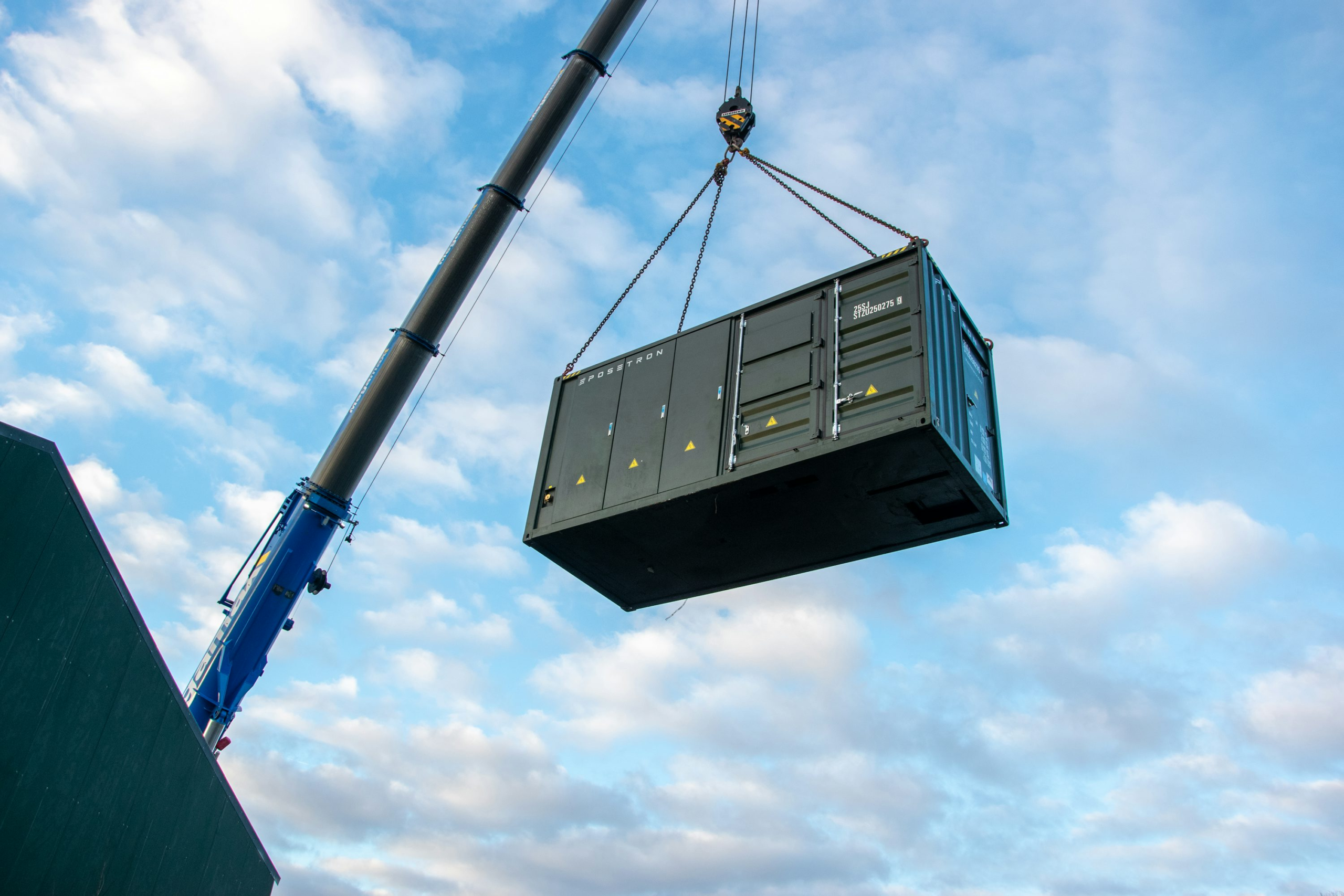
Equipment requirements also extend well beyond the battery cells. Utility-scale systems require high-power inverters, transformers, medium- and high-voltage switchgear, protection equipment, supervisory controls, thermal management, fire detection, communications, and software capable of coordinating large numbers of battery modules.
As total installed capacity rises, the collective behaviour of those controls matters at system level. A fleet measured in tens of gigawatts can alter net-load ramps, reserve requirements, wholesale pricing, transmission flows, and the dispatch schedules of gas, hydro, and other flexible generators.
State-of-charge management becomes particularly important. A battery that empties before a system’s tightest hour may have traded profitably but provide little support when reserve margins are most constrained. Conversely, holding too much energy in reserve can leave commercially valuable flexibility unused.
The projected growth through 2028 will make those operating decisions more consequential. Another 54GW would more than double the capacity that was online at the end of 2025, assuming the reported project pipeline reaches commercial service broadly as scheduled.
Growth on that scale pushes storage beyond the role of an occasional balancing tool. Transmission planners, generation operators, and market designers increasingly have to assume that large battery fleets will be charging during some periods and injecting power during others, with the timing influenced by both system requirements and commercial incentives.
The next important measure will therefore be performance rather than another round-number capacity record. A 50GW-plus fleet has to remain connected, thermally managed, adequately charged, and correctly dispatched through the periods when the wider electricity system actually needs its flexibility.