IN Brief:
- The IET has welcomed stronger interim product requirements for plug in solar systems.
- It continues to recommend assessment of the existing installation by a competent electrician before connection.
- Older wiring, protective devices, extension leads, and multiple units remain central technical concerns.
The Institution of Engineering and Technology has maintained its position that a competent electrician should assess an existing installation before a plug in solar system is connected.
The IET welcomed the Government’s decision to strengthen the Interim Product Specification covering plug in photovoltaic equipment, including additional requirements, testing, and user information. It does not consider product controls sufficient to address every risk within the building’s electrical installation.
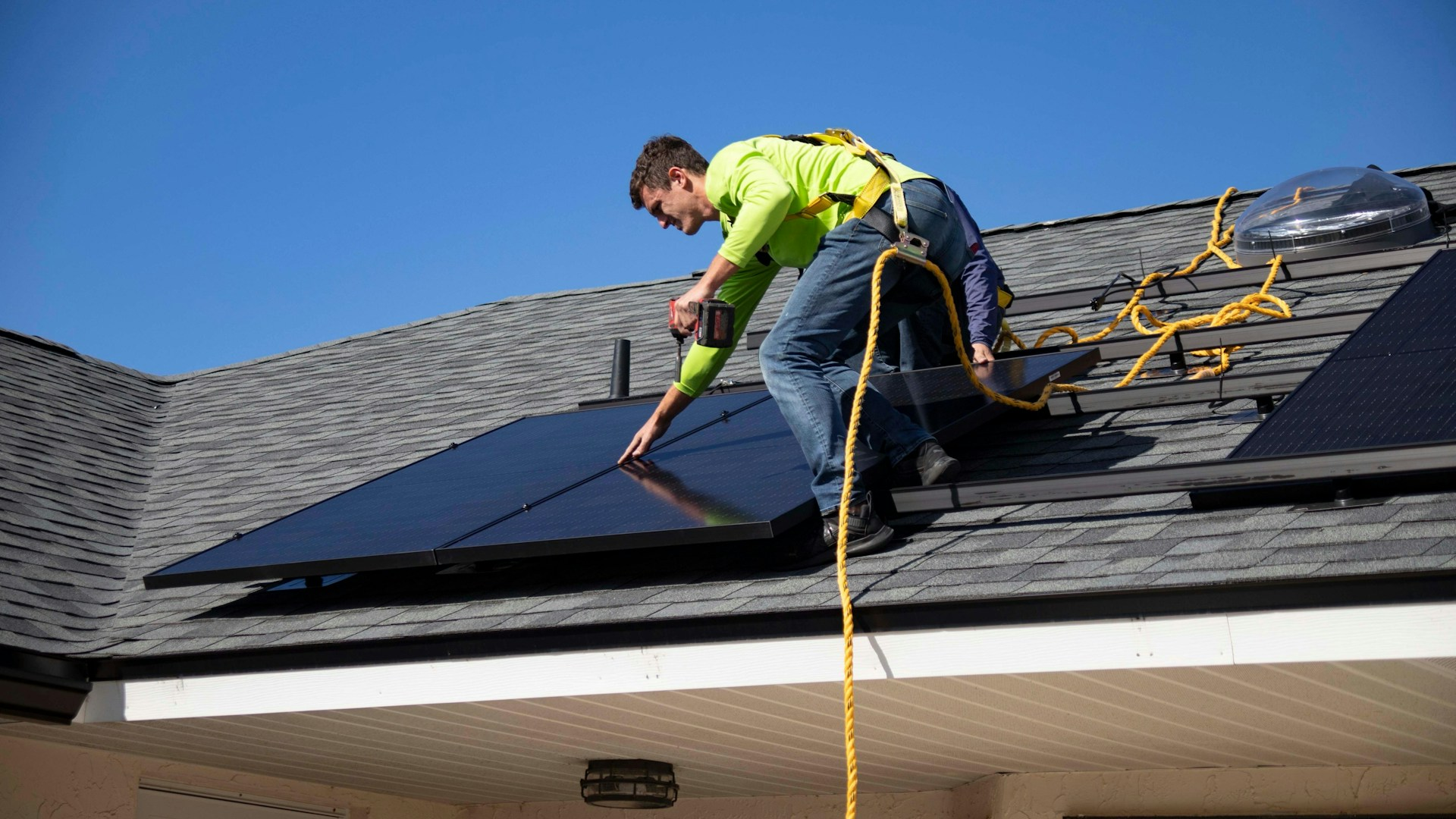
Plug in solar systems connect small photovoltaic modules and an inverter to an existing final circuit through a plug and socket arrangement. Their intended simplicity reduces installation work, but several technical decisions move away from a conventional designed PV installation and towards the product, the user, and the existing circuit.
Older wiring, unsuitable protective devices, extension leads, noncompliant products, and limited user understanding remain among the concerns. Identifying the correct circuit and its protective equipment may also be difficult without technical knowledge or reliable labelling.
An existing socket circuit may have been installed decades before local generation was contemplated. Cable size, protective device type, connections, polarity, earthing, residual current protection, and general circuit condition therefore need to be established rather than assumed.
Multiple plug in systems introduce further complexity. Product testing may establish the behaviour of one unit, but several devices operating on separate circuits can alter current flows and fault conditions across the property.
Safe disconnection also depends on predictable behaviour when the mains supply is lost or a protective device operates. The inverter must cease energising the installation under the required conditions, while users and workers need to understand what remains live on the product side.
Product compliance cannot verify the host installation
A compliant product can control its own output, anti islanding operation, connectors, enclosure, and internal protection. It cannot determine the condition of every socket, cable joint, consumer unit, protective device, or earthing arrangement into which it may be connected.
Conventional solar PV is designed as a fixed generating installation with defined isolation, protection, circuit arrangements, testing, commissioning, labelling, and distribution network notification. Plug in equipment seeks a simpler route, but generated current still enters an installation whose protection was designed around established assumptions.
An assessment by a competent electrician would allow the condition and suitability of the circuit to be checked before connection. The scope would need to remain proportionate while identifying defects or arrangements that could make local generation unsafe.
Extension leads and multiway adaptors present an obvious concern because they add flexible cable and additional connectors outside the fixed installation. Their use can also obscure which circuit supplies the product and whether that circuit has appropriate protection.
Labelling and user instructions must remain understandable over the product’s full life. A future occupant, electrician, emergency responder, or maintenance worker may otherwise have no indication that generation is connected through a socket.
Distribution network visibility remains important even where each unit has a modest rating. Large numbers of systems can alter local voltage and reverse power flow, while notification and product data allow network operators to understand cumulative deployment.
Earlier warnings from electrical industry bodies concentrated on wiring condition, protective devices, network visibility, product standards, and liability. The revised specification addresses part of that agenda, while the IET continues to place the host installation within the safety assessment.
Market surveillance will provide another test because products can enter through online marketplaces and international supply routes. Ensuring that every inverter, connector, cable, enclosure, and instruction set meets the specification will require traceable conformity and effective enforcement.
Responsibility also needs to remain clear when equipment is sold directly to consumers. Manufacturers control product design and instructions, retailers control what is placed on the market, users determine how it is connected, and electrical professionals may later encounter the installation during unrelated work.
Plug in solar can broaden access to small scale generation, particularly where a conventional rooftop system is impractical. Low power, however, does not remove the need to preserve the protection, earthing, and safe isolation of the existing installation.
A workable regulatory route will need product standards, installation assessment, user information, notification, and market surveillance to operate together. Simplifying the connection process cannot depend on transferring unidentified risk to occupants, electricians, network operators, or emergency services.