IN Brief:
- TCL Packaging’s 1,176 panel rooftop array is expected to offset approximately 26% of site electricity use.
- The Telford factory consumes 1.4GWh annually and handles flammable solvents within its production processes.
- SolarEdge safety and optimisation equipment supports the complex multiorientation roof design.
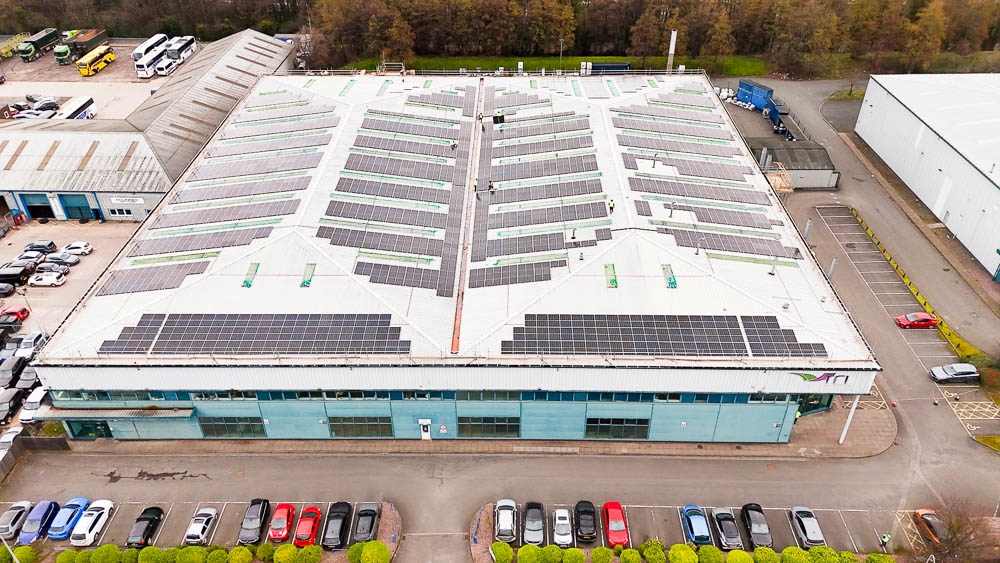
TCL Packaging has installed a 1,176 panel rooftop photovoltaic system at its flexible packaging factory in Telford, with annual carbon savings forecast at approximately 95 tonnes.
The factory consumes around 1.4GWh of electricity each year through energy intensive printing, laminating, converting, and associated production operations. The completed solar system is expected to offset approximately 26% of that consumption.
Mypower delivered the project using SolarEdge DC optimised inverter technology. The equipment was specified during tendering to satisfy safety requirements set by TCL Packaging’s insurers, landlord surveyors, and fire risk assessors.
Fire strategy carried particular weight because the manufacturing operation uses substantial volumes of flammable solvents. The final design combines electrical generation with functions intended to detect abnormal connections, reduce DC voltage during shutdown, and interface with the building alarm system.
SolarEdge Sense Connect monitors connector temperatures to identify conditions associated with poor or deteriorating connections. Arc fault detection and prevention functions provide another layer of supervision across the DC installation.
SafeDC is designed to reduce module voltage to touch safe levels when the inverter or AC supply is shut down. Mypower also installed a SolarEdge Firefighter Gateway connected to the building’s fire alarm panel, allowing an alarm signal to initiate rapid shutdown across the photovoltaic system.
The roof contains east, west, and south facing areas as well as chimneys and other obstructions. Power optimisers installed beneath each panel pair allow modules with different orientations and shading conditions to operate with greater independence than a conventional string arrangement.
This configuration allowed panels to be installed across approximately 80% of the factory roof. Shading on one section can reduce output from the affected modules without imposing the same reduction across every panel connected to the wider string.
Industrial solar design extends beyond installed capacity
A rooftop photovoltaic system at a process site must be assessed against the hazards, operations, and maintenance requirements of the building. Module count and inverter capacity describe generation potential, but they do not establish compatibility with the fire strategy or production risks below.
DC circuits remain energised whenever modules receive sufficient light. Isolation at the inverter does not remove voltage from the entire array, which affects firefighter access, roof maintenance, fault response, and work on nearby building fabric.
Module level shutdown changes that condition by reducing voltage closer to the source, although dependable operation relies on correct installation and continued communication between the relevant components. Cable routing, connectors, optimiser placement, inverter settings, alarm integration, labelling, and commissioning all influence the shutdown sequence.
Connector quality remains another important control point. Photovoltaic arrays contain numerous DC connections exposed to temperature cycling, weather, mechanical movement, and long service periods.
Poor assembly, incompatible connector components, contamination, or inadequate strain relief can increase resistance and local heating. Temperature monitoring can provide earlier warning, but trained installation, approved components, correct assembly, inspection, and maintenance remain essential.
The complex roof also illustrates the difference between simple annual yield modelling and buildable design. Obstructions create shade and constrain access, while different orientations shift output across the day.
An east, west, and south facing array can produce a broader generation profile than one south facing plane, improving alignment with industrial demand during operating hours. Module level optimisation allows the design to use roof sections that would be less productive within a conventional string arrangement.
High daytime consumption strengthens the self consumption case because electricity generated and used behind the meter avoids part of the imported energy cost without relying entirely on export revenue. The forecast 26% offset means most production demand will remain grid supplied, but solar can reduce daytime imports throughout the system’s operating life.
TCL Packaging previously considered rooftop solar when the expected payback period was around seven years. Higher electricity prices have since improved the projected return, although actual performance will depend on generation yield, tariffs, self consumption, downtime, degradation, cleaning, inverter availability, and future production demand.
A comparable warehouse rooftop installation at Liberty Wines combined SolarEdge equipment with commercial loads and electric vehicle charging. The Telford project places greater emphasis on fire risk, insurer requirements, and a more obstructed industrial roof.
Long term operation will require the safety case to remain aligned with changes to the factory. Roof alterations, new penetrations, relocated plant, revised fire zones, or replacement alarm equipment can affect the photovoltaic installation.
Updated drawings, labels, emergency procedures, and maintenance access should follow any building change. Safety functions must also be tested and maintained rather than assumed to remain effective after commissioning.
The project integrates rooftop generation with the electrical and fire safety systems of an operational manufacturing site. Energy output and cost reduction will be judged alongside dependable shutdown, fault visibility, maintainability, and compatibility with the processes beneath the roof.