IN Brief:
- An unnamed Canadian utility has signed a five-year agreement, while an unnamed US storage owner has signed for one year.
- The 70 MWh covered by the contracts will receive RESolve energy management and plant controller support, with operational technology cybersecurity services.
- US rules concerning security risks in specified bulk-power equipment remain under development following an August 2026 executive order.
RES has signed two North American service agreements covering battery storage control systems and operational technology cybersecurity. A Canadian electricity utility has contracted the company for five years, while a US renewable energy and storage owner has agreed a one-year term. The agreements cover a combined 70 MWh of battery storage and involve RESolve, the supplier’s platform for energy management, power plant control and monitoring.
Both customers remain unnamed, with project locations, contract values and the split of storage capacity between the two agreements undisclosed. The 70 MWh figure describes stored energy, while an installation’s instantaneous electrical output is expressed in megawatts. RES has announced continuing software and controls support for the assets, rather than a contract to build another 70 MWh of storage capacity. The agreements were confirmed on 16 November.
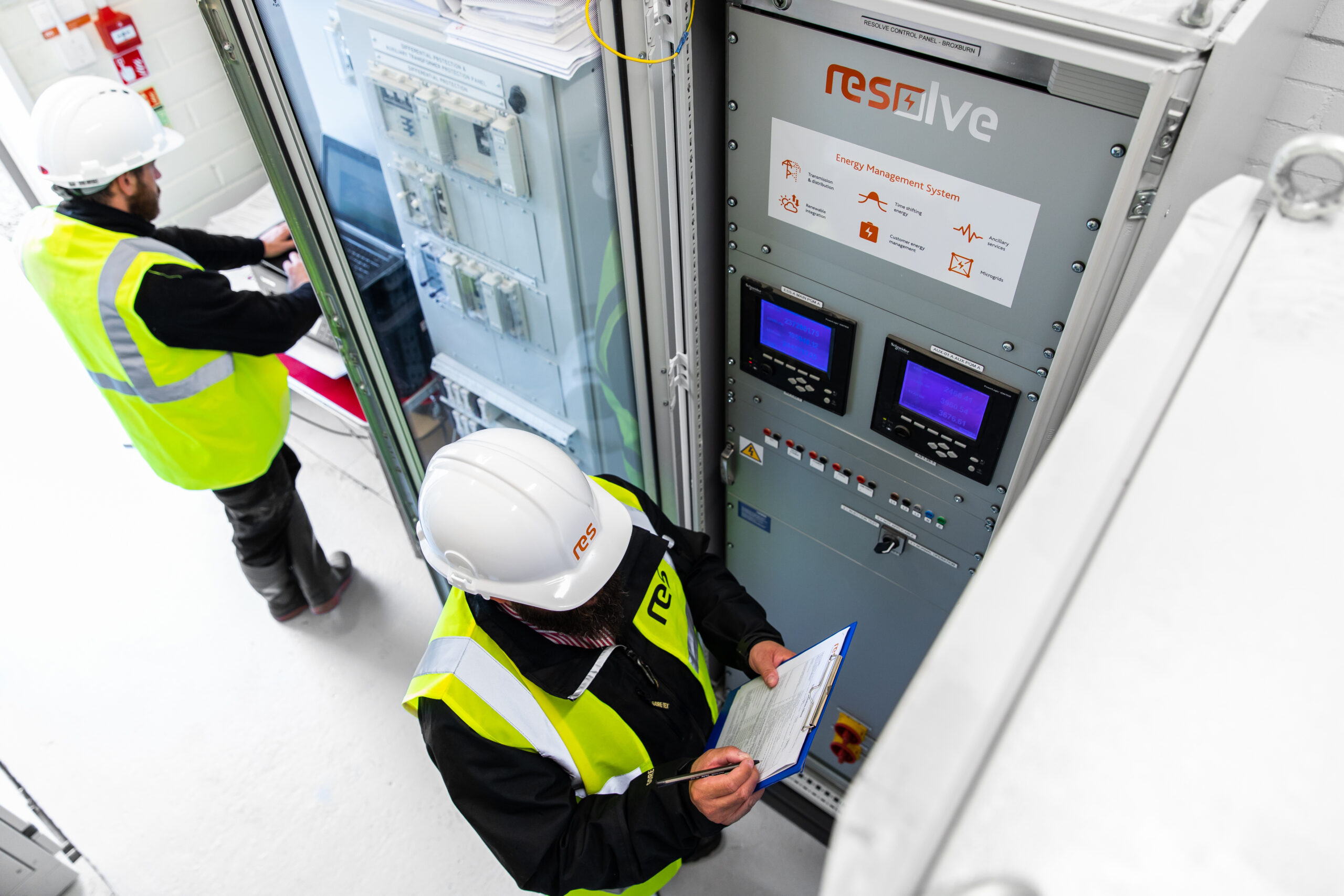
RESolve brings together the energy management system, or EMS, and a power plant controller, or PPC, to coordinate battery operation. RES will maintain these systems and provide wider control support. Its operational technology team will also work on protecting equipment interfaces from cyber threats, controlling access and keeping software up to date. The services place operational reliability and the security of connected equipment within the same support arrangement.
An EMS determines how a battery plant should charge and discharge within its technical and commercial constraints. It can translate dispatch schedules, market commitments and state-of-charge limits into operating instructions. The PPC then coordinates plant equipment in accordance with those instructions and the requirements of the grid connection. Its functions include control of active and reactive power and management of voltage-related setpoints, within the limits established by protection settings and equipment capability.
Storage sites typically combine battery modules, inverters, protection devices, meters and communications equipment from multiple vendors. The inverter exchanges power between the battery’s DC system and the AC network, while supervisory controls manage dispatch and measure the response. Reliable operation depends on consistent interfaces, accurate metering and suitable control priorities. A change to a battery management system, an inverter firmware package or a communications gateway can alter how the complete plant responds.
RES describes RESolve as modular and vendor-agnostic, using industrial automation hardware and supporting storage, solar and hybrid plants. Its architecture provides on-site and remote interfaces, together with fleet-level monitoring. The latest agreements extend continuing technical support to the controls already associated with the contracted storage assets. RES has not disclosed the exact software modules, hardware models or third-party equipment used by either customer.
Software maintenance is part of the asset’s operating regime because grid codes, communications standards and market participation arrangements can change during its service life. Updates to control software must be tested against the interaction between dispatch instructions, inverter responses and site protection. An untested change can affect plant availability or performance even if the individual component being updated continues to operate normally. Configuration records and change control therefore support both fault diagnosis and compliance.
The cybersecurity work concerns operational technology that can affect physical plant behaviour. Remote maintenance accounts, engineering laptops and vendor access routes may reach devices that change operating limits or issue setpoints. Restricting privileges, maintaining logs, reviewing access permissions and applying security updates are practical elements of managing that exposure. RES has not specified the authentication method or network architecture that will be used at the two sites.
In the United States, the regulatory background is developing under Executive Order 14421, issued on 26 August 2026. The order addresses national security risks involving specified foreign-supplied equipment and technology used by the bulk-power system. It authorises restrictions when the required determinations are made and directs the Department of Energy to prepare implementing rules, as needed, within 120 days. DOE has been gathering industry input while defining the scope and application of those powers.
The order addresses connected transmission and generation infrastructure within its stated scope, including certain control equipment and associated technologies. It does not establish a blanket prohibition on all foreign-made battery components, nor does the announcement identify any prohibited equipment at the contracted sites. Application of future rules will depend on the equipment, transaction, ownership links and regulatory findings concerned. The Canadian utility operates under a separate national regulatory framework.
Both contracts will require traceable software versions, system settings and authorised-user records, alongside procedures for resolving faults when equipment suppliers share responsibility for controls. A disturbance at a battery site might originate in battery hardware, inverter response, communications or a dispatch command; the operating records need enough detail to establish which part of the system changed.
RES states that it has operated battery storage projects since 2014 and provides operational services for about 1 GW of storage assets. That figure measures power capacity across its existing services portfolio, rather than the energy capacity involved in the two new contracts. The company has also operated in the US for 28 years. The newly signed agreements add customer-specific support commitments of different duration to its North American digital operations.
The service arrangements will run for one and five years respectively, with detailed maintenance schedules and responsibility boundaries not disclosed. Their execution will involve coordination between RES, plant owners and the equipment manufacturers whose devices the control platform supervises. The contracts extend RES’s role from battery dispatch software into ongoing control maintenance and cybersecurity, while final US bulk-power security requirements continue through the federal rulemaking process.