IN Brief:
- Parapet has completed EPC works for Alerion’s 32MWp Dănești photovoltaic facility in Călărași County, Romania.
- Around 50,000 modules rated at 640Wp are installed across 51 hectares, with projected annual production of 52GWh.
- The plant forms part of a seven-project contract covering approximately 80.8MWp of photovoltaics across Romania and Italy.
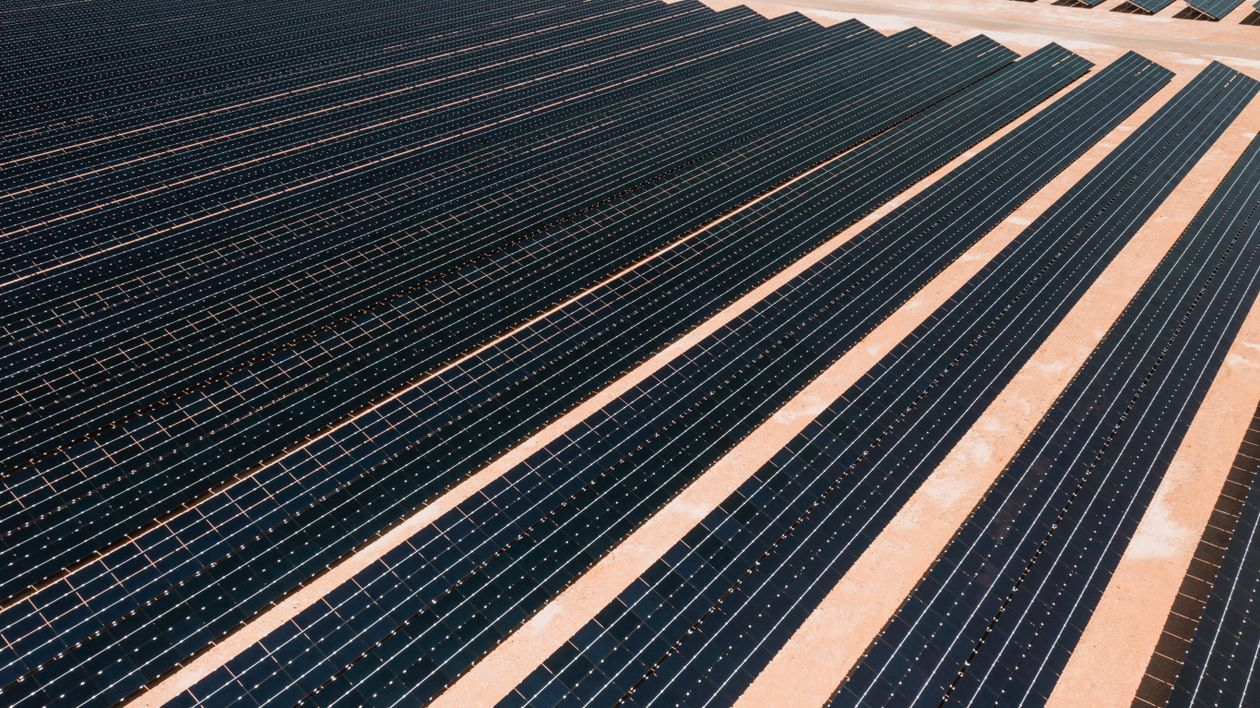
Parapet has completed the 32MWp Dănești photovoltaic plant in Romania’s Călărași County for Italian renewable energy producer Alerion Clean Power. The installation occupies approximately 51 hectares and has about 50,000 photovoltaic modules, each rated at 640Wp. Annual electricity generation is estimated at 52GWh, although that figure is a forecast rather than measured output across a full operating year.
Parapet delivered the project for Alerion subsidiary Conti Energie Verde under a contract covering seven solar developments in Romania and Italy, with its responsibilities extending from engineering and balance of system procurement to installation, testing and commissioning. The agreement was awarded in November 2025, and the latest milestone concerns completion of this construction scope. A separate date for the start of commercial electricity sales at Dănești has not been confirmed.
Across approximately 50,000 photovoltaic modules, each with a stated rating of 640Wp, Dănești has a combined module capacity of 32MWp under standard test conditions. That direct current figure is distinct from the power the inverters and grid connection can export as alternating current, and no independently verified AC export limit has been published for the site. The AC export figure remains unverified, even though the module rating is established.
Although the array is rated at 32MWp, electricity production changes through the day and across the seasons as irradiance, temperature, shading and equipment availability vary. The estimate of 52GWh a year consequently incorporates assumptions about those conditions, as well as conversion losses between the modules and the metering point and any limits imposed on export. The annual estimate captures periods with different levels of generation instead of assuming continuous operation at the peak module rating.
From the solar array, direct current flows through connected module strings and collection circuits towards the plant’s power conversion equipment, which produces alternating current for the network connection. Transformers can then raise the voltage to the level required by the grid operator. Parapet’s scope covered the balance of system infrastructure, although the project specifications released for Dănești do not identify the individual inverter models, transformer capacities or connection voltage at Dănești.
With thousands of modules feeding common electrical circuits, cable losses, equipment temperature limits, isolation and overvoltage protection all influence the amount of power that can be transferred safely. The same network of circuits creates dependencies during commissioning: individual equipment checks have to be followed by verification that the installed connections, control equipment and protection functions operate within the approved design. Those requirements cannot be established from the DC module rating alone.
Alongside the electrical installation, mounting structures carry the photovoltaic modules under wind and other environmental loads while leaving access for inspection and repair. Parapet’s original contract covering seven projects refers to single-axis tracking across the wider programme, but the final mounting arrangement at Dănești has not been separately confirmed. Its forecast output should therefore not be linked to a specific tracker model or control strategy without evidence from this installation.
As installation moves into testing and commissioning, the electrical circuits and monitoring systems must be checked against the completed design, including their insulation, isolation, protection and control arrangements. These are standard types of verification for a utility scale photovoltaic plant; the actual test programme depends on the approved equipment and connection requirements. Parapet has confirmed testing and commissioning in its contracted scope, but individual test results and a signed grid acceptance record have not been published.
The Dănești development sits within Parapet’s November 2025 agreement for seven projects totalling approximately 80.8MWp, alongside Sass Maor, Ambiez, Sant’Agata, Torremaggiore, Gavorrano and Grottole Verga. Each site has its own ground conditions and electricity network interface, so the common EPC relationship leaves each installation with its own grid arrangements, mounting requirements and construction timetable. Dănești’s completion should be treated as a milestone within the programme, not completion of all seven installations.
Using its forecast annual production, the developer estimates that Dănești could generate electricity equivalent to the consumption of approximately 20,000 households and avoid about 24,000 tonnes of carbon dioxide emissions. Those figures depend on assumptions about household demand and displaced electricity generation, while actual output and emissions effects will vary in operation. Neither comparison represents measured energy delivered or carbon dioxide displaced during a completed operating year.
Alerion has also completed work on the separate Răcari solar development in Romania during 2026, extending its activity beyond the Dănești site. The two facilities have distinct generating capacities, equipment and grid arrangements, and photographs or performance data from one should not be used to represent the other. At Dănești, Parapet’s completion milestone establishes the construction status, while subsequent operating performance will be shaped by network acceptance, availability and weather.
Once the completed plant begins accumulating metered generation data, its actual output can be assessed against the 52GWh annual estimate and its 32MWp installed module capacity. The commercial operation date and AC export limit have yet to be confirmed independently, however, so neither should be inferred from the completion of EPC works. Those outstanding facts will distinguish the plant’s installed equipment from its authorised contribution to the electricity network.