IN Brief:
- Greenvolt Power has arranged €284m of project financing through eight banks for its Gurbănești wind farm.
- The developer states a 253.1MW project capacity and a planned installation of 42 wind turbines.
- Gurbănești belongs to the Wind Rose programme with Ialomița, while commercial operation is targeted by the end of 2027.
Greenvolt Group, through its Greenvolt Power subsidiary, has secured €284 million of project financing for the 253.1MW Gurbănești wind farm east of Bucharest in Romania. The development is under construction, with commercial operation targeted by the end of 2027. Eight financial institutions are participating in the financing package, which will support delivery of the generating plant and its associated infrastructure.
Eight lenders are participating in the €284 million financing: UniCredit, Erste Group Bank, Banca Comercială Română, Siemens Financial Services through Siemens Bank, Société Générale, BRD, ING Bank and Alpha Bank. Greenvolt has not detailed their individual commitments or repayment terms. Funding has therefore been confirmed for the construction programme, while the precise financial allocations and remaining electrical delivery milestones have not been disclosed.
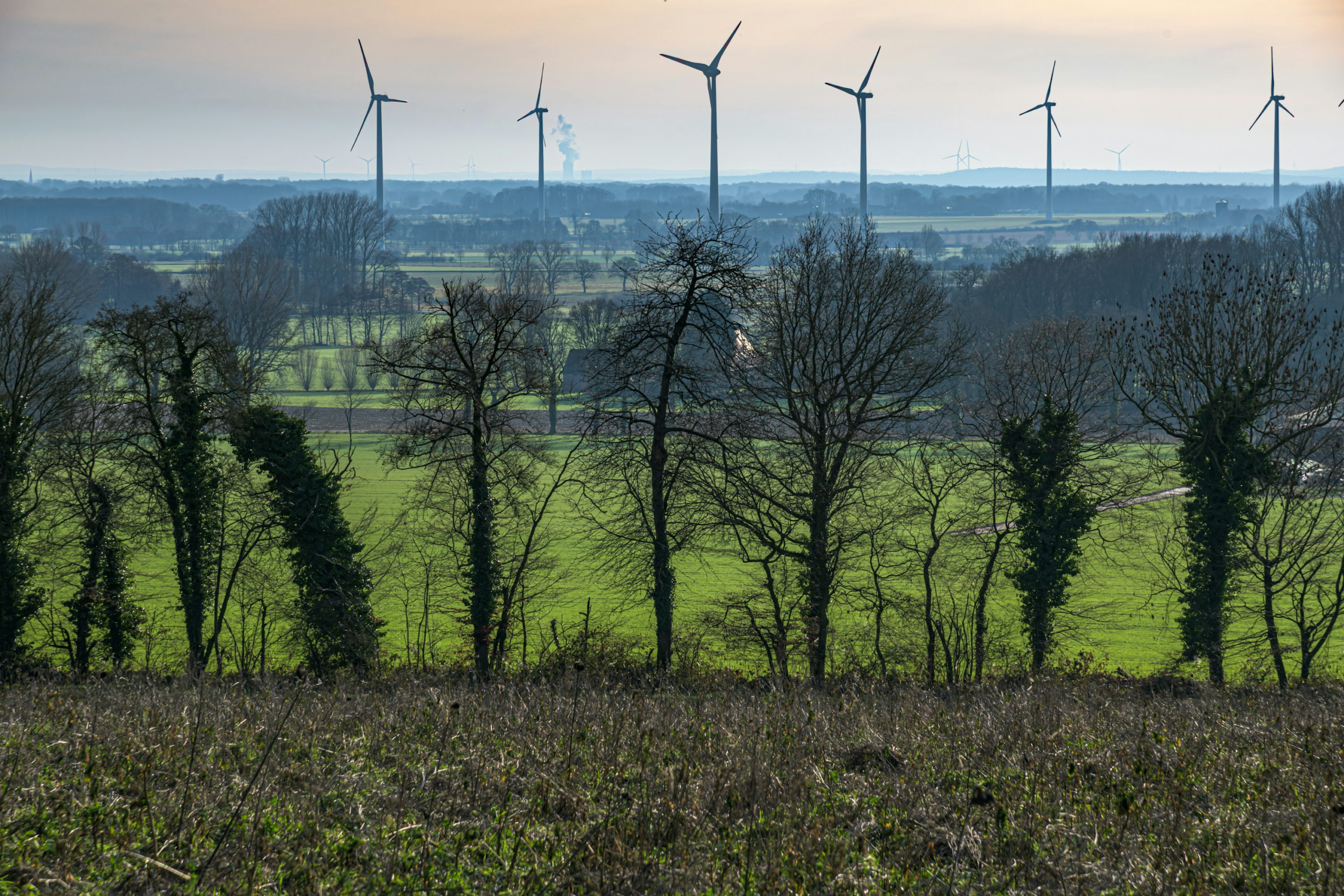
Within the funded development, Greenvolt plans to install 42 wind turbines and reports total project capacity of 253.1MW, alongside individual turbine ratings of 6.1MW. Multiplying those individual ratings gives 256.2MW, creating a discrepancy with the stated project capacity that has not been reconciled. The reported overall capacity is retained as the developer’s figure without claiming that the component ratings sum to it.
An authorised export limit or equipment derating can sometimes explain a difference between turbine nameplate ratings and the capacity attributed to a wind farm. Neither explanation has been established for Gurbănești, however, and the available turbine and connection ratings are insufficient for a more precise calculation. The declared project capacity and the separately quoted turbine ratings remain distinct pending further technical detail from Greenvolt.
Gurbănești forms part of Greenvolt’s Wind Rose programme, which includes the Ialomița wind project, also stated to have 253.1MW of planned capacity. Together they account for approximately 506MW in the company’s description of the programme, although construction and commissioning will proceed against separate project requirements. The combined development figure should not be confused with electricity generating capacity that is already in commercial service.
Before the wind farm can deliver electricity, access roads, crane platforms and foundations must accommodate the delivery and installation of large turbine components and the mechanical loads imposed in operation. Civil works also need to be coordinated with underground electrical collection circuits, switching equipment and the grid connection. The financing supports that construction programme, which must progress through several linked stages before the generating plant can be commissioned.
Once installed, each turbine converts energy captured by its rotor into electrical output using a generator and associated controls, with the electricity from multiple machines collected through cable circuits towards the connection point. Cable current ratings, fault levels, voltage control and protection coordination determine how that infrastructure can operate safely. Greenvolt has not published a complete substation specification or electrical collection network equipment schedule for Gurbănești.
Before the planned commercial start at the end of 2027, the plant’s switchgear, transformers, protective relays and control systems will have to be tested alongside the generating units under the approved grid connection arrangements. Checks may include the response to network conditions and operator instructions, depending on the final design. Completion of those activities and the necessary approvals, rather than installation of the turbines alone, will determine readiness to export power commercially.
Even with a declared installed capacity of 253.1MW, the project’s annual electricity output will depend on wind conditions, turbine availability and any restrictions on dispatch or export. A nameplate megawatt figure describes rated generating power; annual electricity generation also requires assumptions about hours of operation and the wind resource. Greenvolt has not provided an updated, project specific annual output forecast alongside the financing details.
Across Romania, Greenvolt reports a development pipeline comprising 707MW of wind projects, 58MW of solar generation and 209MW of battery storage at different stages of delivery. Its Greenvolt Next business also develops distributed renewable installations for corporate customers. Those activities indicate a broader market presence, although the announced €284 million financing relates to the Gurbănești wind farm rather than the entire national portfolio.
The battery projects elsewhere in that portfolio have a different electrical role from Gurbănești’s wind turbines, because they can absorb energy and discharge it later within their power and energy limits. Wind output instead follows the available resource and the operating condition of the generating plant. No battery installation has been confirmed as part of Gurbănești itself, so the storage pipeline cannot be treated as an extension of its commissioned equipment or financed works.
With the lenders identified and construction under way, Gurbănești remains targeted for commercial operation by the end of 2027, subject to completion of the wind turbines, electrical collection infrastructure and grid connection approvals. Greenvolt has not disclosed a detailed schedule for those final electrical milestones or resolved the difference between the reported turbine ratings and overall project capacity. Both remain points for confirmation as installation progresses.