
IN Brief:
- ORLEN has acquired rights to a 180MW solar and 36MW wind project.
- Nine Vestas turbines will share grid infrastructure with the photovoltaic installation.
- Construction is scheduled for 2026, with commercial operation expected during 2028.
ORLEN has completed the acquisition of a 216MW hybrid renewable energy project in Greater Poland, combining 180MW of solar generation with a 36MW wind farm behind shared grid infrastructure.
The Kazimierz Biskupi development will be delivered through two special-purpose companies acquired from Polish developers ONDE and Neo Energy Group. Both sellers will remain involved after the transaction, with ONDE acting as general contractor and Neo Energy Group managing construction.
Energa Green Development will supervise the programme for ORLEN. The arrangement preserves the original developers’ project knowledge while transferring ownership and overall oversight to the wider group.
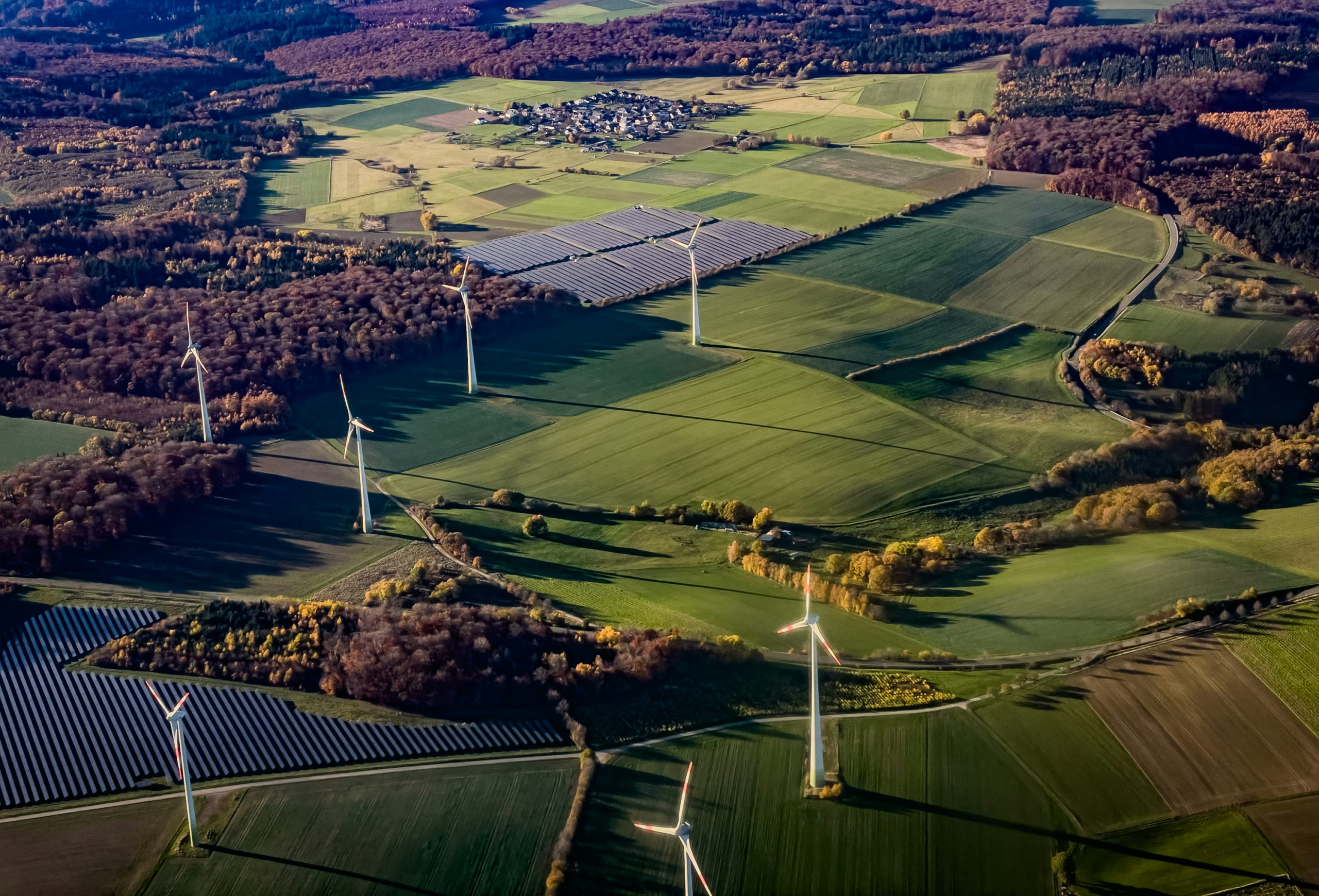
The wind element will comprise nine Vestas V136 turbines rated at 4MW each. Photovoltaics will provide the remaining 180MW, giving solar more than four-fifths of the project’s installed generating capacity.
Both technologies will use cable pooling, allowing the wind and solar installations to share connection infrastructure. The method can raise utilisation of a constrained grid connection because the two generation profiles do not normally reach maximum output at the same time.
Solar production is concentrated during daylight and varies with season and cloud cover. Wind follows a different weather pattern and can continue overnight. Combining the technologies cannot remove variability, but it can spread generation across more hours and make fuller use of cables, transformers, switchgear, protection systems, and connection capacity.
The shared connection must remain within its agreed export limit. A plant controller will monitor combined output and curtail one or both technologies when generation approaches the permitted capacity. Forecasting, metering, communications, and coordinated protection will be central to the operating model.
ORLEN expects the project to generate approximately 315GWh annually. Construction is scheduled to begin during the third quarter of 2026, with first energisation planned for early 2028 and full commercial operation expected in the second quarter of that year.
The programme leaves a relatively compressed period between the start of construction and energisation. Delivery will require coordination of civil works, turbine foundations, internal roads, solar mounting systems, module installation, collector circuits, transformers, switchgear, control systems, and the shared grid interface.
Wind and solar packages follow different construction sequences. Turbine foundations and heavy-lift installation require early logistics planning, while photovoltaic work is distributed across a large number of repeated components. Their electrical systems must converge at a common connection without creating conflicting commissioning requirements.
Kazimierz Biskupi is located about eight kilometres from ORLEN’s existing Kleczew Solar and Wind facility. Together, the two developments are expected to form a renewable cluster with combined capacity of around 485MW.
The existing Kleczew hybrid site was expanded to 250MW of solar capacity alongside 19.2MW of wind generation. Kazimierz Biskupi extends the same broad approach with another solar and wind development using shared infrastructure.
Clustering assets can create operational efficiencies where maintenance teams, monitoring systems, contractor arrangements, spare parts, and regional management resources support more than one site. The benefits depend on equipment compatibility, contractual boundaries, and whether shared systems can be managed without weakening site-specific responsibility.
Proximity does not make the developments one electrical installation. Each project must comply with its own connection agreement, protection requirements, metering arrangements, operating limits, and commissioning process. Any common control or maintenance strategy must preserve the obligations attached to each connection point.
Cable pooling has become more relevant as renewable developers encounter congested and oversubscribed networks. New generation can sometimes be added behind an existing or planned connection where technology profiles and control systems keep combined output within the agreed limit.
The method improves use of infrastructure but does not create unlimited network capacity. Curtailment can still occur when wind and solar generation are both high, and the commercial outcome depends on how often theoretical combined output exceeds the connection ceiling.
Storage could add another layer of flexibility by absorbing generation that would otherwise be curtailed, although no battery has been announced for Kazimierz Biskupi. Adding one would require a separate investment case, connection assessment, safety design, control strategy, and route to market.
Transport and site access will also influence delivery. Nine turbine sets require blades, tower sections, nacelles, hubs, transformers, cranes, and temporary road works, while the solar package will involve modules, inverters, mounting systems, cable drums, and repeated installation activity across a broad site area.
Commissioning must demonstrate that both technologies and the common controller behave correctly under changing output. Protection settings, export limitation, reactive power, communications, fault response, and metering will need to operate across the hybrid plant rather than as isolated wind and solar systems.
ORLEN’s acquisition preserves a substantial role for Polish companies through ONDE, Neo Energy Group, and Energa Green Development, while Vestas supplies the turbine platform. The next test is whether the acquired rights and delivery structure can be converted into construction quickly enough to support energisation at the beginning of 2028.
Kazimierz Biskupi adds capacity without requiring a completely separate grid route for each technology. Its performance will depend on less visible details — export controls, forecasts, availability, maintenance coordination, and the extent to which shared infrastructure is used when wind and solar output overlap.

