IN Brief:
- National Grid Electricity Transmission has begun main construction of a new 400/132 kV substation at Woolavington in Somerset.
- Balfour Beatty is undertaking the main works, with three supergrid transformers expected in early 2027.
- The development will serve Agratas's battery manufacturing facility and Gravity Smart Campus, with project completion targeted for the end of 2028.
National Grid Electricity Transmission has begun main construction of a 400/132 kV substation near Woolavington in Somerset, advancing the electrical infrastructure needed to connect the Gravity Smart Campus and Agratas battery manufacturing facility to the high-voltage transmission network.
The construction milestone was confirmed on 18 November following earlier civil engineering and site preparation. Balfour Beatty is undertaking the main works, which include installing electrical infrastructure, steel structures, and supporting equipment, with three supergrid transformers expected to arrive in early 2027.
The substation will provide the permanent high-voltage connection for the industrial development near Bridgwater. Agratas, part of Tata Group, is constructing a battery manufacturing factory with planned annual production capacity of 40 GWh, creating a substantial new electricity supply requirement.
The 40 GWh figure describes the aggregate energy storage capacity of batteries the factory is intended to manufacture each year. It is not the factory’s electrical demand or the power capacity of its grid connection, which must be established through the separate electrical design and connection arrangements.
National Grid expects the manufacturing development to support approximately 4,600 direct jobs once fully operational, with an estimated annual economic contribution exceeding £700 million in the South West. These forecasts relate to the wider industrial investment rather than employment or economic output generated by the substation alone.
The permanent connection will link the development to Britain’s 400 kV transmission system. Woolavington’s planned infrastructure includes transformation between 400 kV and 132 kV, providing an electrical interface between the high-voltage network and equipment serving the industrial site.
Supergrid transformers transfer electrical power between different voltage levels through electromagnetic induction. Their design must accommodate the anticipated operating load, insulation requirements, thermal performance, and fault conditions associated with the connected networks.
Transforming electricity to a lower voltage increases the current required to transfer the same power, subject to losses and operating conditions. The transformer ratings and downstream circuits must therefore be selected to accommodate the planned demand without exceeding their permissible loading.
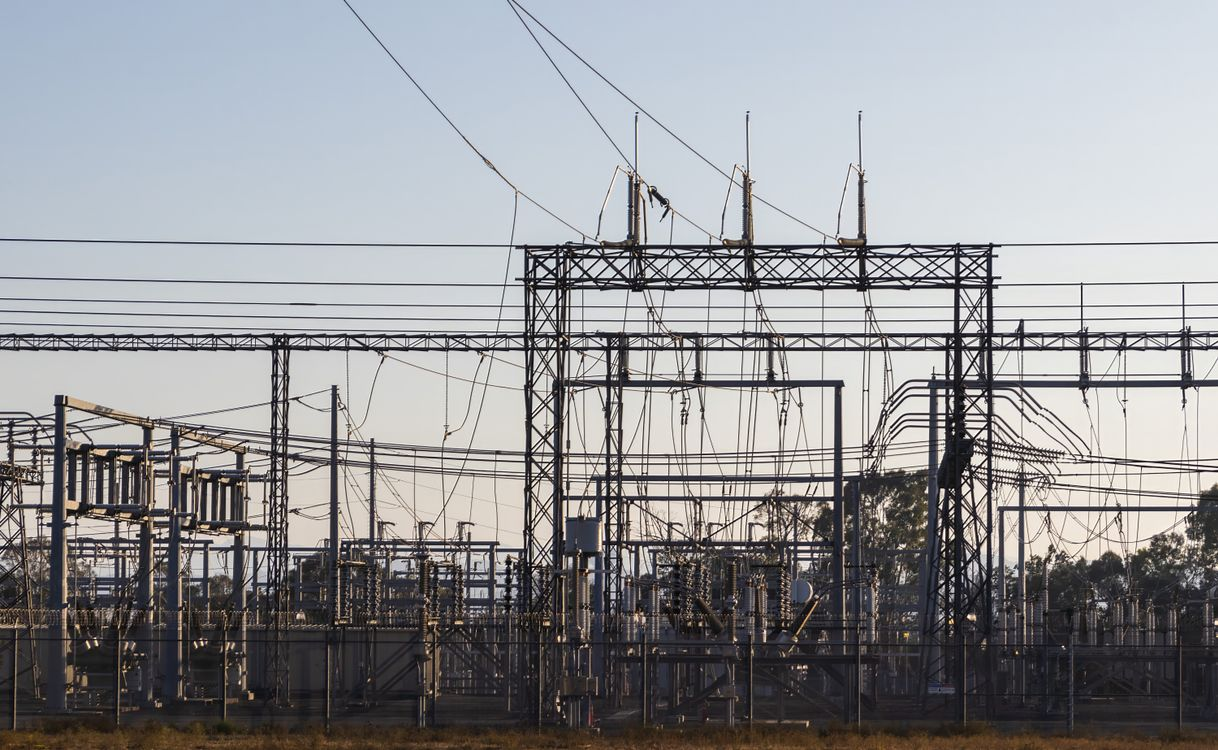
The development also includes gas-insulated switchgear at 400 kV and 132 kV. This equipment provides switching and isolation functions within enclosed assemblies, allowing the electrical circuits to be configured for normal operation, maintenance, and fault management.
Gas-insulated switchgear uses an insulating gas within its equipment enclosure, reducing the clearances required between energised components compared with equivalent open air arrangements. The precise equipment design and insulating medium must satisfy the applicable technical and environmental requirements.
The switchgear will operate alongside busbars, protective equipment, metering, and control systems. These components provide the connections and monitoring needed to transfer power while allowing individual circuits or equipment sections to be isolated when required.
Protection systems must detect electrical faults and initiate the appropriate switching operations. Their design requires coordination with the fault levels and operating characteristics of the transmission and downstream networks so that abnormal conditions can be cleared safely.
The July planning submission for Woolavington describes provision for five 460 MVA supergrid transformers, together with associated switchgear, four overhead line gantries, and supporting infrastructure. The latest construction announcement confirms that the first three transformers are expected to be delivered in early 2027.
The proposed five-transformer configuration and the announced delivery of three units describe different elements of the project programme. The planning submission establishes the scope of the proposed development, while the construction update identifies equipment scheduled for an early delivery stage.
National Grid has located the proposed substation beneath an existing high-voltage overhead line route within the Gravity development area. The arrangement is intended to connect the new facility without requiring additional pylons or overhead wires to reach the site.
The overhead connection still requires suitable gantries, conductors, switching arrangements, and protection equipment. These systems must be installed and tested before the permanent substation can be integrated with the existing transmission infrastructure.
Grid connection works have already required modifications to the site and its supporting infrastructure. Preparatory activities have included construction compounds, foundations, and work associated with the existing overhead lines, providing the basis for the main electrical construction programme.
Until the permanent substation becomes available, National Grid Electricity Distribution has installed two interim 33 kV connections to supply the Agratas development. These allow electricity to be provided during construction before the new transmission connection is commissioned.
The interim and permanent supplies serve different stages of the manufacturing development. Their respective capacities and operating arrangements must be matched to the demand at each stage rather than assuming that the temporary connections can support the factory’s eventual full production requirements.
Construction of the permanent facility requires coordination between civil engineering and electrical installation activities. Transformer foundations, switchgear buildings, cable routes, drainage, access roads, and other supporting structures must be completed to the required specifications before electrical equipment can be installed.
Large transformers introduce substantial transport and lifting requirements. Their dimensions and mass influence site access, crane arrangements, foundation design, and the sequence in which associated connections and auxiliary systems can be completed.
Transformer installation also requires integration of cooling, monitoring, control, and protection equipment. Electrical connections must be verified, and the completed assemblies must pass the relevant commissioning tests before they are authorised for energisation.
The construction process is being undertaken within the Gravity Smart Campus under a Local Development Order compliance process administered by Somerset Council. The registered application includes the electrical compounds, associated buildings, access arrangements, drainage, security measures, and landscaping.
National Grid’s plans include measures intended to manage noise, traffic, and construction impacts on nearby communities. Normal working hours are scheduled around weekday and Saturday daytime periods, with extended working possible for particular equipment deliveries or construction operations.
The company has also established a £530,000 community fund associated with the substation development. Applications are expected to open in 2027, with the fund intended to support projects benefiting communities near Woolavington and Puriton.
The permanent electricity connection forms part of the wider industrial infrastructure programme supporting the Gravity site. Its construction is proceeding alongside development of the Agratas factory, requiring the delivery schedules and electrical supply arrangements to be coordinated as industrial demand increases.
The next major equipment milestone is the planned arrival of three supergrid transformers in early 2027. Installation, testing, and commissioning activities will continue towards National Grid’s targeted completion of the substation at the end of 2028.