IN Brief:
- India intends to introduce mandatory energy storage procurement requirements for electricity distributors, with rules targeted for March 2027.
- The proposed procurement quantities and compliance conditions have not been finalised, while a separate requirement for new government renewable projects is also planned.
- A newly approved ₹145bn funding scheme supports 92GWh of future storage, including 60GWh of pumped hydro and 30GWh of battery capacity.
India is preparing mandatory energy storage procurement requirements for electricity distribution companies, as the government seeks to increase the amount of surplus renewable generation that can be retained for use during evening and nighttime electricity demand peaks.
Power Secretary Pankaj Agarwal outlined the plans at the Bharat Renewable Energy Summit in New Delhi on 5 November. The Ministry of Power intends to finalise the proposed regulations by March 2027, although the quantity of storage that individual utilities would be required to procure has not yet been determined.
The proposal would introduce a new procurement obligation for electricity distributors, which purchase power from generators and other suppliers to meet customer demand. The government has not published a final compliance formula, technology eligibility rules or implementation timetable, leaving the precise requirements subject to further development.
India has installed more than 300GW of non-fossil generating capacity, but electricity production does not always coincide with demand. Substantial solar output during daylight hours can exceed the electricity that can be consumed or transferred through the network, while demand often remains high after photovoltaic generation has fallen in the evening.
Where surplus generation cannot be used or exported, system operators may need to curtail output from renewable installations. The electricity that could otherwise have been generated is unavailable for consumption later unless sufficient storage or demand flexibility is present to accommodate it.
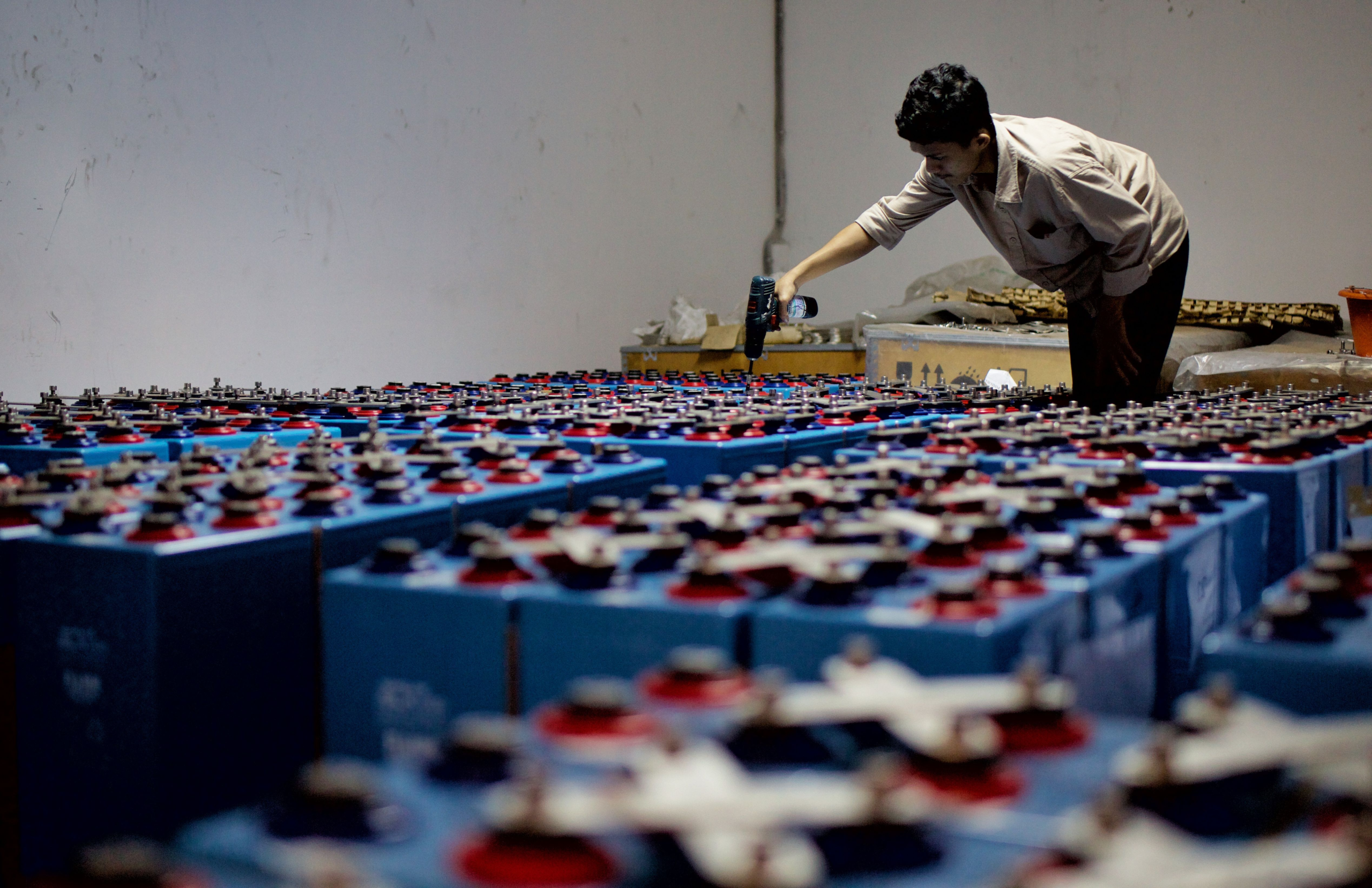
Battery systems provide one means of changing the timing of electricity delivery. They absorb electrical energy during charging, retain it within electrochemical cells and return it to the network through power conversion equipment when additional electricity is required.
The equipment’s power and energy ratings determine its potential contribution. A battery rated at 100MW and 400MWh can nominally provide four hours of electricity at maximum output, subject to its available state of charge, operating limits and conversion losses.
A storage procurement requirement expressed only in megawatts would therefore describe a different capability from one defined by megawatt-hours. Power capacity determines the maximum rate of electricity delivery, while stored energy determines how long that output can be sustained.
The government has not confirmed which measures will be used to establish the proposed obligation. Electricity purchasers could face different technical and commercial requirements depending on whether the regulations specify installed storage capacity, energy duration or another method of demonstrating access to storage.
Storage could be developed alongside renewable generating installations or as separate grid-connected facilities. A co-located battery may share elements of the generating plant’s electrical infrastructure, while a standalone installation requires its own charging, export, protection and network connection arrangements.
Connection conditions influence how much electricity a battery can absorb or export. Where local network restrictions prevent surplus renewable generation from reaching a storage installation, the availability of battery capacity elsewhere does not necessarily eliminate curtailment at the constrained generating site.
Distribution utilities would also need to establish contractual arrangements for the storage they procure. Depending on the eventual regulations, these could involve storage services supplied by external operators or other commercial structures, but the government has not yet determined the permitted compliance routes.
The proposed requirement follows a separate Cabinet decision on 4 November approving ₹145bn, equivalent to ₹14,500 crore, in viability gap funding for grid-scale electricity storage developments. The scheme covers financial years 2026/27 to 2030/31 and is intended to support storage capacity that has not yet been commissioned.
Of the 92GWh of capacity targeted by the funding programme, 60GWh is allocated to pumped storage hydropower, 30GWh to battery energy storage systems and 2GWh to alternative storage technologies. The government estimates that the supported developments could involve approximately ₹976bn of total investment.
The allocations are expressed in energy capacity rather than generating power. A 60GWh pumped storage programme could comprise installations with different turbine ratings and discharge durations, depending on their reservoir capacity, hydraulic design and operating requirements.
Pumped storage uses electricity to move water to an elevated reservoir, retaining energy through the water’s increased gravitational potential. When electricity is required, water passes through generating turbines as it returns to a lower reservoir, allowing stored energy to be converted back into electrical output.
The technology can provide substantial storage capacity where suitable geography, water resources and civil engineering arrangements are available. Its development involves reservoirs, waterways, electromechanical equipment and high-voltage connections, with project delivery dependent on environmental approvals and extensive construction work.
Battery storage uses a different infrastructure configuration. Utility-scale installations normally combine multiple battery units with power conversion systems, transformers, protection equipment and controls that coordinate the plant’s charging and discharging operations.
The choice of storage technology influences response time, discharge duration, operating flexibility and maintenance requirements. Those characteristics determine the services that an installation can provide and the circumstances in which it can support electricity supply during periods of high demand.
The approved viability gap funding scheme is intended to improve the commercial viability of eligible projects through financial support awarded under tariff-based competitive bidding. Public and private electricity distribution companies can qualify for support involving batteries and pumped storage, while qualifying alternative technology projects may involve other public or private organisations.
The funding programme also introduces a minimum 40% domestic content requirement for supported battery storage projects. The provision is intended to encourage Indian manufacturing and reduce dependence on imported storage components, although detailed compliance will depend on the scheme’s implementation arrangements.
That domestic content condition applies to projects supported under the funding programme. It should not be confused with the separate mandatory procurement requirement being developed for electricity distributors, whose final eligibility and compliance conditions have not been established.
India’s government estimates that the country will require approximately 411GWh of grid-scale energy storage by 2031/32. The newly approved 92GWh funding programme would support part of that requirement, but the target remains subject to the delivery and commissioning of individual installations.
The compulsory procurement proposal and the financial support programme address different aspects of storage deployment. A procurement requirement could establish demand for storage services or capacity, while viability gap funding reduces the financial burden associated with developing qualifying projects.
Neither measure removes the engineering work required to connect new installations to the electricity system. Transformers, electrical protection, metering, communications and power control systems must be integrated with the relevant network before batteries or pumped storage facilities can provide their intended services.
India is also considering a separate requirement for battery storage at new government solar and wind projects from July 2027. That proposal concerns renewable project development and is distinct from the wider obligation expected to apply to electricity distribution companies.
The government has indicated that additional renewable electricity tenders incorporating storage are being prepared. Their eventual technical specifications and commercial arrangements will determine how much new capacity is contracted and when individual projects can move into construction.
Storage can reduce the need for additional conventional electricity generation during some peak-demand periods by releasing energy retained earlier. Its contribution nevertheless depends on the amount of available stored electricity, the duration of the demand period and the operating conditions affecting the interconnected power system.
The Ministry of Power’s next policy milestone is the planned finalisation of the procurement rules by March 2027. Until those requirements are published, the quantities utilities must obtain and the permitted methods of compliance remain uncertain, while the separately approved funding scheme provides a framework for supporting additional storage development over the next five financial years.