IN Brief:
- Sirius will provide 200MW/800MWh of four-hour battery storage at Winschoten in Groningen.
- Hanab will deliver the 220kV high-voltage station and cable connection to the grid interface at Meeden.
- Commercial operation is targeted for Q4 2027 under a Vattenfall tolling agreement and time-dependent TenneT grid access.
Hanab Energy Solutions has been appointed by Return to deliver the high-voltage infrastructure connecting the 200MW/800MWh Sirius battery project in Groningen to the Dutch transmission network.
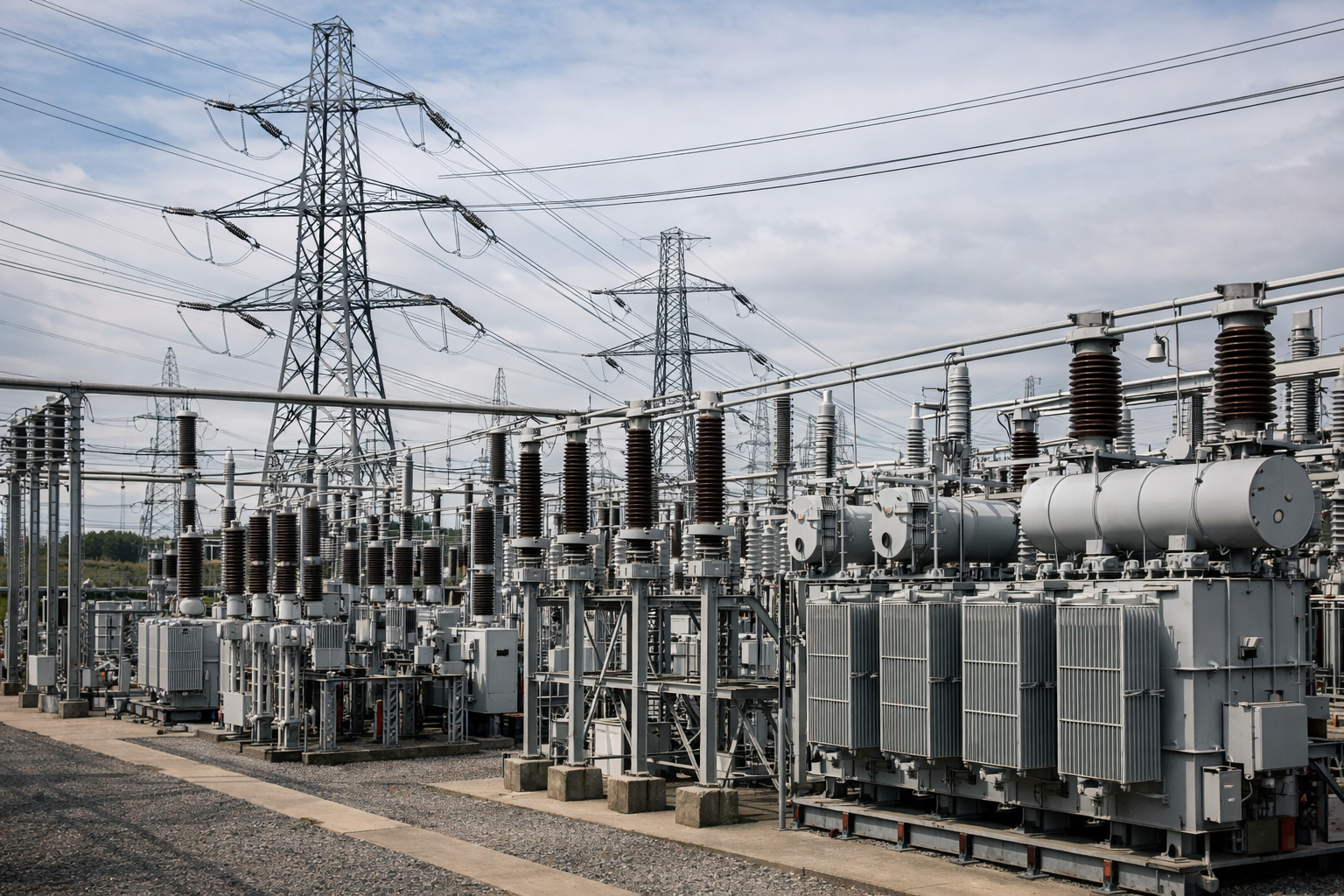
The contractor’s scope centres on a new 220kV high-voltage station and the associated cable connection between the battery site at Winschoten and the grid interface at Meeden. Hanab will cover engineering, work preparation, construction, testing, and handover of the connection infrastructure.
Sirius is a four-hour battery system, with 800MWh of stored energy available against a 200MW power rating. Return expects commercial operation during the fourth quarter of 2027, placing the 220kV package on the critical path between a financed storage project and an operational transmission-connected asset.
The battery represents an investment of approximately €180 million. It is backed by Return’s wider battery financing framework, which includes commitments of up to €400 million from ING, NatWest, Deutsche Bank, ABN AMRO, and Rabobank across the developer’s storage portfolio.
A long-term fixed-price tolling agreement with Vattenfall provides the commercial counterpart to that financing. Vattenfall will have access to Sirius’s charging, storage, and discharge capability in return for a fixed fee, allowing the utility to optimise the battery across its generation, customer, and electricity-market positions.
The financing and tolling structure was established at the end of August, together with a time-dependent transmission agreement linking operation to periods when grid capacity is available. Hanab’s appointment defines the physical work now required to connect that commercial arrangement to the high-voltage system.
A 220kV station is not a peripheral balance-of-plant item. The battery containers and power-conversion equipment have to be integrated with transformers, switchgear, protection, control, metering, communications, auxiliary supplies, earthing, and the export circuit before the storage plant can operate as one grid-compliant installation.
Protection performance is particularly important at 200MW. A fault, unintended trip, or control error can change power flow by hundreds of megawatts within seconds, so relay settings, breaker operation, communication paths, and plant-level control have to be coordinated with the transmission system operator before commercial service.
Sirius will connect to TenneT’s network under a Time-Dependent Transmission Rights arrangement. Return says the battery will adjust charging and discharging according to available network capacity, allowing it to use existing grid headroom rather than relying on unrestricted access at all times.
Storage is comparatively well suited to that form of connection because charging can often be shifted away from congested periods. Discharge can also be scheduled when the system needs additional power, although the practical operating envelope remains constrained by state of charge, market commitments, conversion losses, maintenance availability, and the limits written into the grid agreement.
The arrangement does not create new physical transmission capacity. It changes when an asset is permitted to use the network, which makes control systems and communications with the network operator part of both the engineering design and the commercial model.
For Hanab, the contract extends established high-voltage work into a storage market where connection infrastructure is becoming as significant as the battery equipment. The company already designs and delivers high-voltage stations and cable connections, while Sirius adds a large bidirectional storage interface to that portfolio.
The Dutch system provides a demanding setting for the project. Renewable generation, industrial electrification, housing, and large new electricity users are competing for network capacity, while major reinforcements require long planning, consenting, procurement, and construction cycles.
Large batteries can ease part of that pressure, but their behaviour has to reflect local network conditions. Charging during an already constrained period can add to congestion, whereas controlled charging during available windows can absorb surplus energy without requiring the same level of firm transmission access.
The connection package therefore has to support a project that is both a load and a generator. Metering and protection must operate correctly in both directions, plant controls have to respect transmission limits, and the commissioning programme must demonstrate that the station, cable, battery controls, and TenneT interface respond as intended.
Commercial operation is targeted for late 2027. Before then, the battery, power-conversion system, 220kV station, cable circuit, controls, and grid interface have to be built and commissioned in sequence, leaving the high-voltage works as one of the clearest measures of whether Sirius remains on schedule.
The latest announcement narrows the project from finance and market access to electrical delivery. Hanab now has a defined 220kV scope, and the next milestones will be visible in construction, testing, energisation, and the handover of a connection capable of moving 200MW in either direction.