IN Brief:
- Eurowind Energy has completed turbine installation at its 13-turbine, 28.6 MW Nowogródek Pomorski project in western Poland.
- The wind farm comprises Vestas V110 machines, according to the developer's project documentation.
- Grid connection remains outstanding and is targeted before year-end; installation does not mean the project is generating commercially.
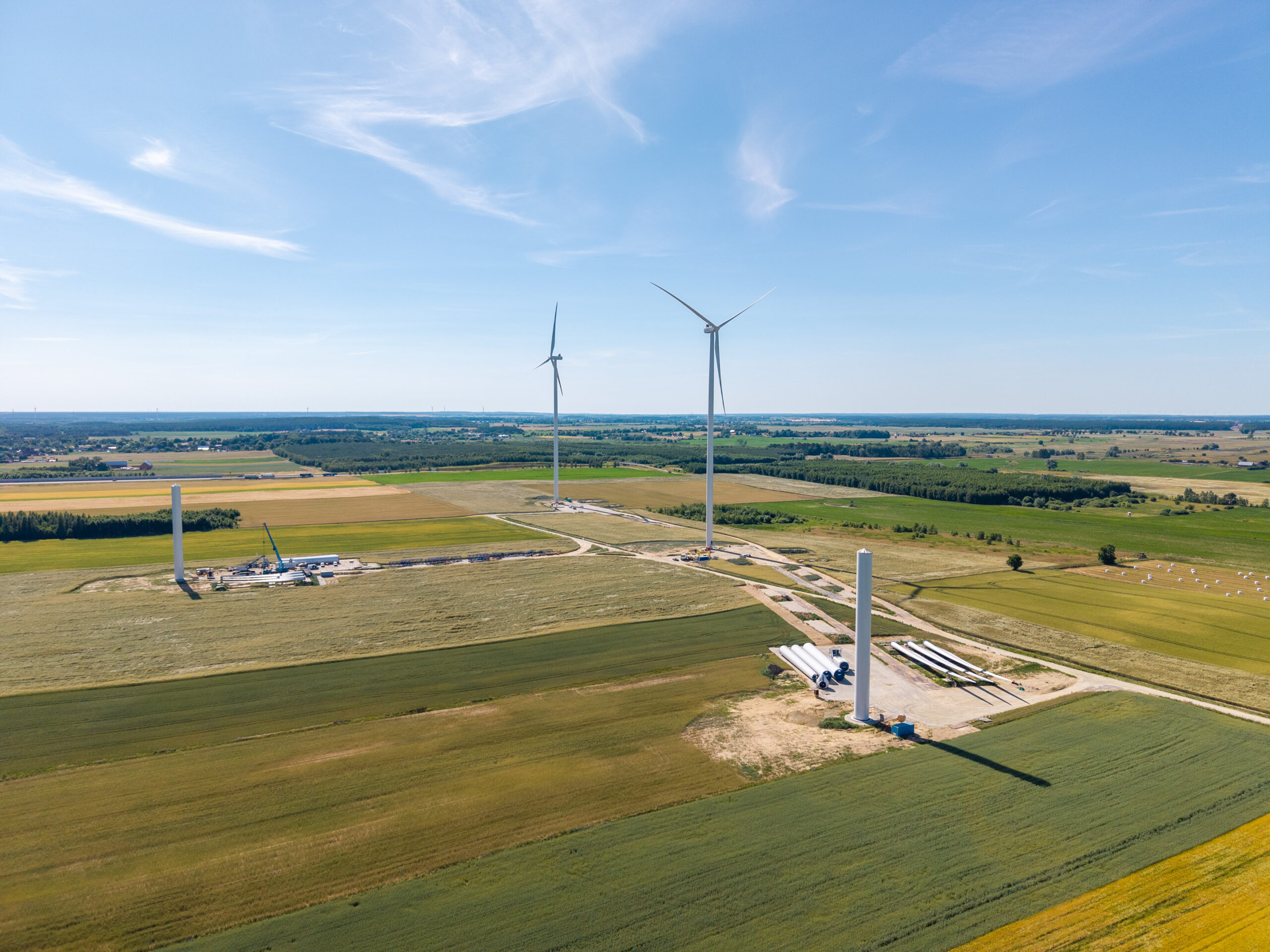
Eurowind Energy has finished installing all 13 wind turbines at its 28.6 MW Nowogródek Pomorski project in north-western Poland. The Danish developer expects to connect the wind farm to the grid before the end of 2026, with the installation of towers, nacelles and rotors now complete ahead of the remaining electrical and operating approvals.
The wind farm is being built in West Pomerania near Karsko and Trzcinna, within Nowogródek Pomorski municipality. Its current design comprises 13 Vestas V110 turbines, giving a combined generating rating of 28.6 MW, or approximately 2.2 MW per machine. The project’s turbine specification and layout follow revisions made during a development process that began more than a decade ago.
Eurowind’s November progress update identifies grid connection as the next target. Its published project timetable places permission to energise the electrical installation and provisional permission for operation in the fourth quarter of 2026. Those approvals follow the physical erection of the turbines and determine when the wind farm can begin testing and exporting electricity through the receiving network.
Each turbine’s generator supplies electrical output to the local collection system, where cables, switching and transformers connect the individual machines to the project’s export point. Before energisation, the developer must complete the relevant electrical tests, verify protection and control functions and establish that the installation can comply with the grid operator’s requirements. Rotor and tower installation is therefore a substantial construction milestone, with further integration work remaining.
The project’s commissioning sequence will also need to verify turbine controls, safety systems and the response of the whole plant to network operating conditions. A connection may be energised for testing before a power station enters normal commercial operation. Eurowind has set a year-end objective for the network connection, while earlier company material envisaged the start of electricity production in early 2027.
Eurowind first secured land agreements for the site in 2011, with a local spatial plan adopted in 2012. An environmental decision in 2013 covered an earlier concept of up to 17 turbines and 61.2 MW. The developer subsequently reduced the design and in 2023 confirmed the present 28.6 MW capacity, illustrating how a wind project can change substantially between early permissions and construction.
The project history includes a 56.1 MW grid connection approval obtained in 2021 under the earlier development pathway. The 13 turbines now installed have a lower combined rated output of 28.6 MW, and the latest company update concerns that current plant configuration. Electrical export capability will be governed by the final connection arrangements and equipment ratings, which must be verified as the site is commissioned.
Construction access roads began in the second quarter of 2025, creating routes for heavy cranes, blades, tower sections and electrical equipment. Turbine erection required completed foundations and weather windows suitable for lifting large components. With the main machines in place, work turns increasingly towards internal cabling, power-system interfaces, controls integration and the checks required to energise the wind farm safely.
Eurowind’s project documentation gives a maximum blade-tip height of 195 metres and a minimum distance of 700 metres from residential buildings. Those parameters were part of the site design and local consent process. The resulting layout must also support access for maintenance and replacement of large components during the expected operating life of the installation.
The developer estimates that the wind farm’s annual electricity production could be equivalent to consumption by around 17,000 households. The comparison depends on assumptions about wind output and household demand, with actual production to be established after commissioning. Exported electricity will vary with wind conditions, availability of individual turbines and any constraints imposed by the network connection.
Eurowind expects a service life of around 25 to 30 years. Over that period, operators will need to maintain turbine mechanical systems, electrical connections and protective equipment, while responding to component wear and changes in grid operating requirements. The project will also have continuing environmental and local obligations associated with its permits.
Completion of all 13 turbine installations moves Nowogródek Pomorski from the main erection phase towards network integration. The next measurable steps are energisation permission, connection tests and confirmation of power export. The developer’s earlier indication of production in early 2027 remains consistent with its current ambition to connect the installation before the end of 2026.
The installed 28.6 MW fleet now stands on site, with grid connection and subsequent commissioning determining when the wind farm contributes generation to Poland’s electricity system. Eurowind has not supplied an independently verified start date for routine commercial operation in its latest update.