
IN Brief:
- Envision Energy and Pulse Clean Energy are partnering on a 129MW/310MWh BESS in Wolverhampton.
- The system has been reconfigured from two-hour duration to 2.4-hour autonomy.
- The project will use Envision’s Gen 7 BESS platform, grid-forming capability, and balance-of-plant delivery scope.
Envision Energy is partnering with Pulse Clean Energy to deliver a 129MW/310MWh battery energy storage system in Wolverhampton, West Midlands.
The project was originally designed as a two-hour system and has been reconfigured to provide 2.4 hours of storage duration. Envision will supply a system-level solution using its Gen 7 BESS platform, battery technology, grid-forming capability, and AI-enabled energy systems. Its UK-based team will oversee grid integration and balance-of-plant works.
The Wolverhampton asset is designed to support renewable integration, regional grid resilience, and decarbonisation across local industrial sectors including manufacturing and logistics. It adds another sizeable project to the UK battery storage pipeline as duration, controls, and system services gain greater weight in project design.
The move from two hours to 2.4 hours reflects a wider market shift, even though the headline increase is relatively modest. Early UK batteries were often built around shorter-duration frequency response revenues. As those markets became more competitive and power system needs changed, developers began designing assets for broader value stacks. Longer duration can improve the ability to trade across price spreads, manage renewable variability, provide balancing services, and support local system resilience.
Grid-forming capability is also becoming more important. Conventional grid-following inverters synchronise to an existing voltage waveform, while grid-forming controls can support voltage and frequency stability more actively. That capability becomes more valuable as synchronous generation retires and inverter-based resources increase, although implementation depends on control settings, grid-code requirements, protection coordination, and the behaviour of the surrounding network.
Germany’s large transmission-connected storage pipeline is already moving in the same technical direction, including Eku Energy’s 1.6GWh BESS project with planned grid-forming and black-start capability. Wolverhampton is smaller, but the design trend is comparable: large batteries are increasingly specified to support system operation as well as energy arbitrage.
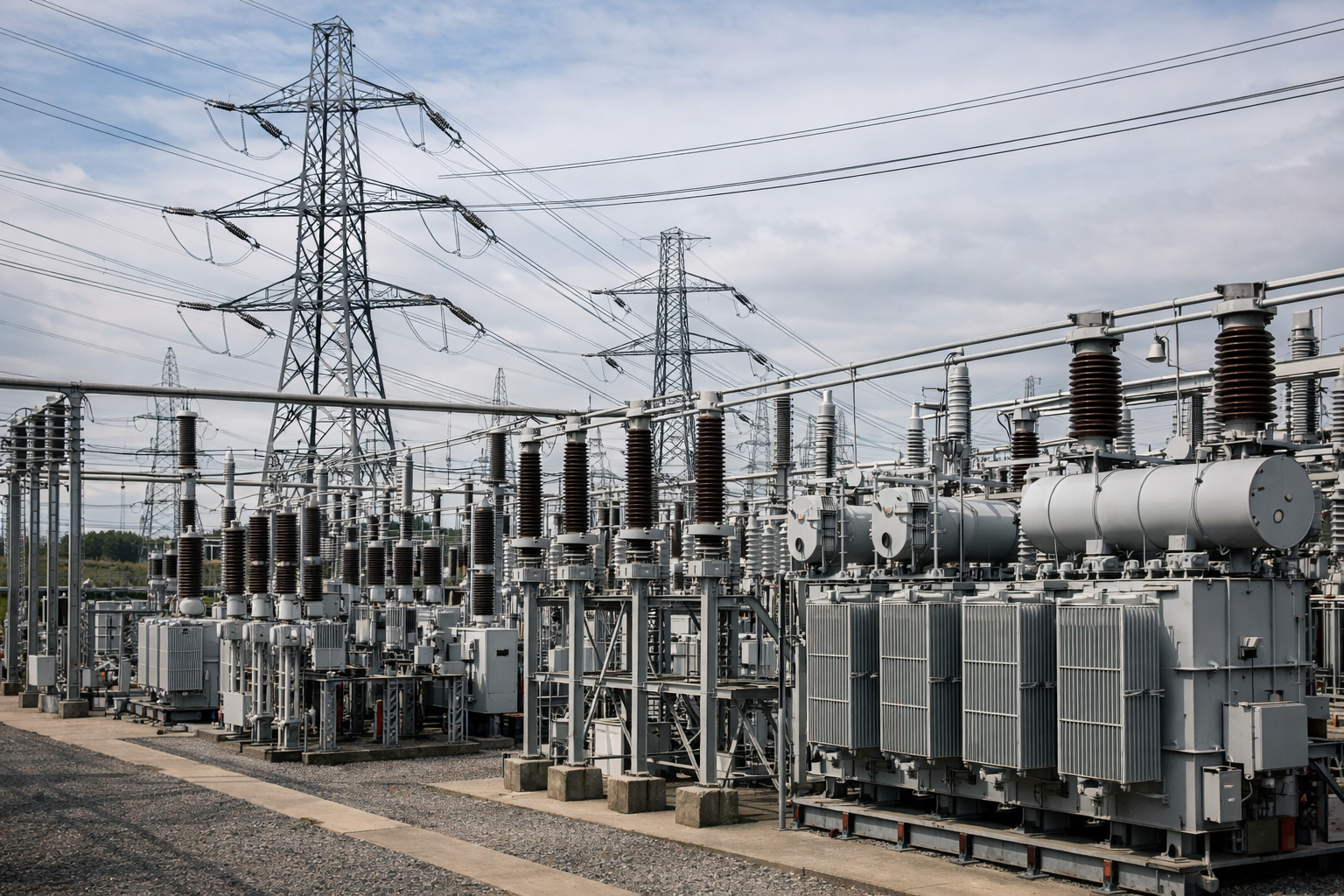
Balance-of-plant delivery is central to the project. A BESS is often described through its megawatt and megawatt-hour ratings, but the asset depends on transformers, medium-voltage switchgear, power conversion systems, protection, fire detection, thermal management, communications, civil works, metering, control software, and grid connection design. Weakness in any interface can affect availability, safety, or revenue performance.
Wolverhampton’s industrial context adds further relevance. The West Midlands has a dense mix of manufacturing, logistics, urban demand, and transport infrastructure. Battery storage in such regions can support local flexibility, reduce stress during demand peaks, and absorb renewable output when available. Commercial value will depend on market access, network arrangements, optimiser strategy, and long-term performance.
The UK storage market is also becoming more selective. Connection availability, planning conditions, fire-safety expectations, revenue uncertainty, and grid service reform all affect investment decisions. Storage projects now need clearer technical differentiation and stronger execution capability than earlier merchant assets, particularly as more batteries compete for similar market opportunities.
Envision’s role as a system-level partner reflects a procurement shift across the BESS sector. Developers increasingly seek suppliers that can integrate battery hardware, controls, grid support functions, and electrical infrastructure rather than provide containers alone. That can reduce interface risk, although it also places greater responsibility on the supplier’s ability to deliver, commission, and support the full system over time.
The Wolverhampton BESS adds capacity to the UK storage fleet, but its configuration is equally important. More duration, grid-forming controls, and integrated balance-of-plant delivery point toward storage assets designed for a more demanding grid. As electrification increases load and renewables increase variability, battery systems will be judged by controllability, resilience, and availability as much as nameplate capacity.

