
IN Brief:
- Hitachi Energy will deliver converter stations for the 600MW Elmed HVDC interconnector between Italy and Tunisia.
- The 220km link will create the first direct-current electricity interconnection between Europe and North Africa.
- The project adds transmission capacity as renewable generation, peak demand, and cross-border resilience reshape grid planning.
Hitachi Energy will deliver the converter-station package for Elmed, the 600MW high-voltage direct-current interconnector planned between Italy and Tunisia.
Running for approximately 220km, with most of the route laid as submarine cable across the Strait of Sicily, the link will connect the Italian and Tunisian electricity systems through converter stations at Partanna, in the Sicilian province of Trapani, and Mlaabi, on Tunisia’s Cape Bon peninsula.
Elmed is designed for bidirectional electricity flows, allowing power to move between the two systems as demand, generation, and grid conditions change. The project has been designated strategically important by the European Commission and is supported through the Connecting Europe Facility, reflecting the increasing role of cross-border transmission in Europe’s energy security planning.
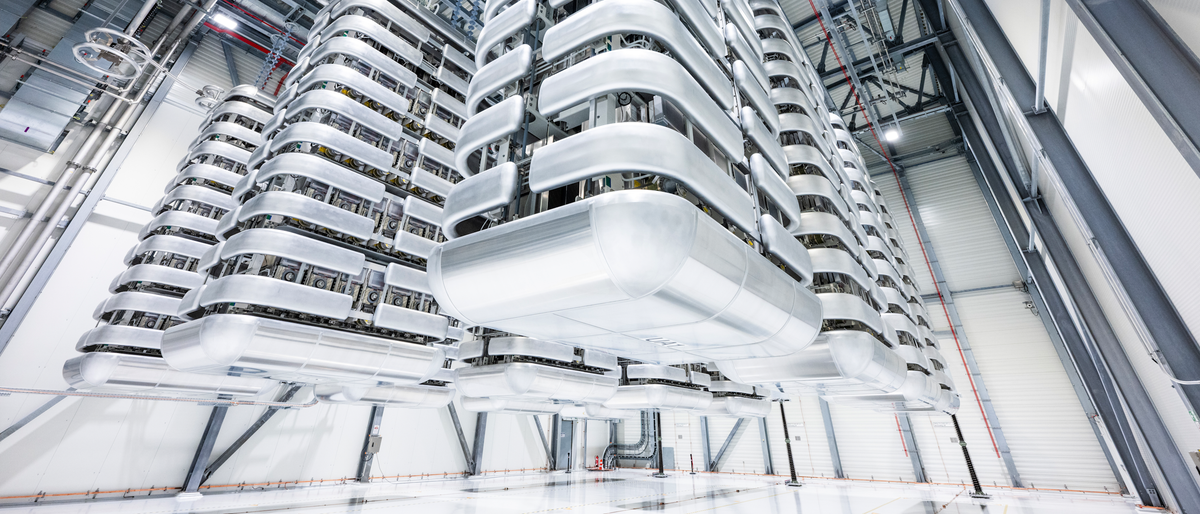
The converter-station scope includes HVDC converter valves, digital control technology, power transformers, high-voltage switchgear, system studies, engineering, supply, installation supervision, and commissioning. Civil works and auxiliary systems will be delivered separately, while the converter package forms the technical core that enables alternating-current systems at either end of the link to exchange power through a direct-current route.
Europe’s transmission expansion is no longer confined to internal reinforcement. As generation becomes more weather-dependent and more geographically dispersed, power systems need stronger transfer routes between regions, markets, and resource zones. HVDC technology is increasingly used for that role because it can carry large volumes of electricity over long distances with lower losses than equivalent AC alternatives in many subsea and point-to-point applications.
The same high-voltage supply chain pressures can be seen in broader grid equipment activity, including Hitachi Energy’s expanded alliance with Samsung for AC grid infrastructure, where transformers, substations, and associated equipment are being pulled into a larger industrial electrification cycle. Converter stations, switchgear, and digital controls are no longer peripheral plant items; they are becoming rate-limiting components in the build-out of modern power networks.
Elmed also brings North African generation potential into the European interconnection discussion. Tunisia has renewable development resources, while Italy is positioned as a transmission bridge into the wider European system. A bidirectional link can support imports during constrained periods, exports when system conditions allow, and improved resilience across connected markets.
That resilience depends on more than cable capacity. Converter stations must manage AC-to-DC and DC-to-AC conversion, grid-code compliance, harmonic performance, system protection, reactive power behaviour, and coordination with national transmission control systems. As more long-distance, offshore, and hybrid links are developed, converter engineering is becoming one of the defining technical disciplines in power infrastructure delivery.
The link is expected to become operational in the early 2030s. Its delivery will test whether Europe can translate interconnection strategy into physical transmission capacity across a project environment shaped by subsea installation risk, permitting, multi-country regulation, and high-voltage equipment availability.

