
IN Brief:
- Capalo AI will optimise European Energy's Anykščiai and Saldus hybrid solar-storage projects.
- The assets combine 71MW/170MWh of BESS with more than 140MWp of photovoltaic capacity.
- Optimisation will coordinate battery dispatch, solar generation, wholesale trading, and balancing-market participation.
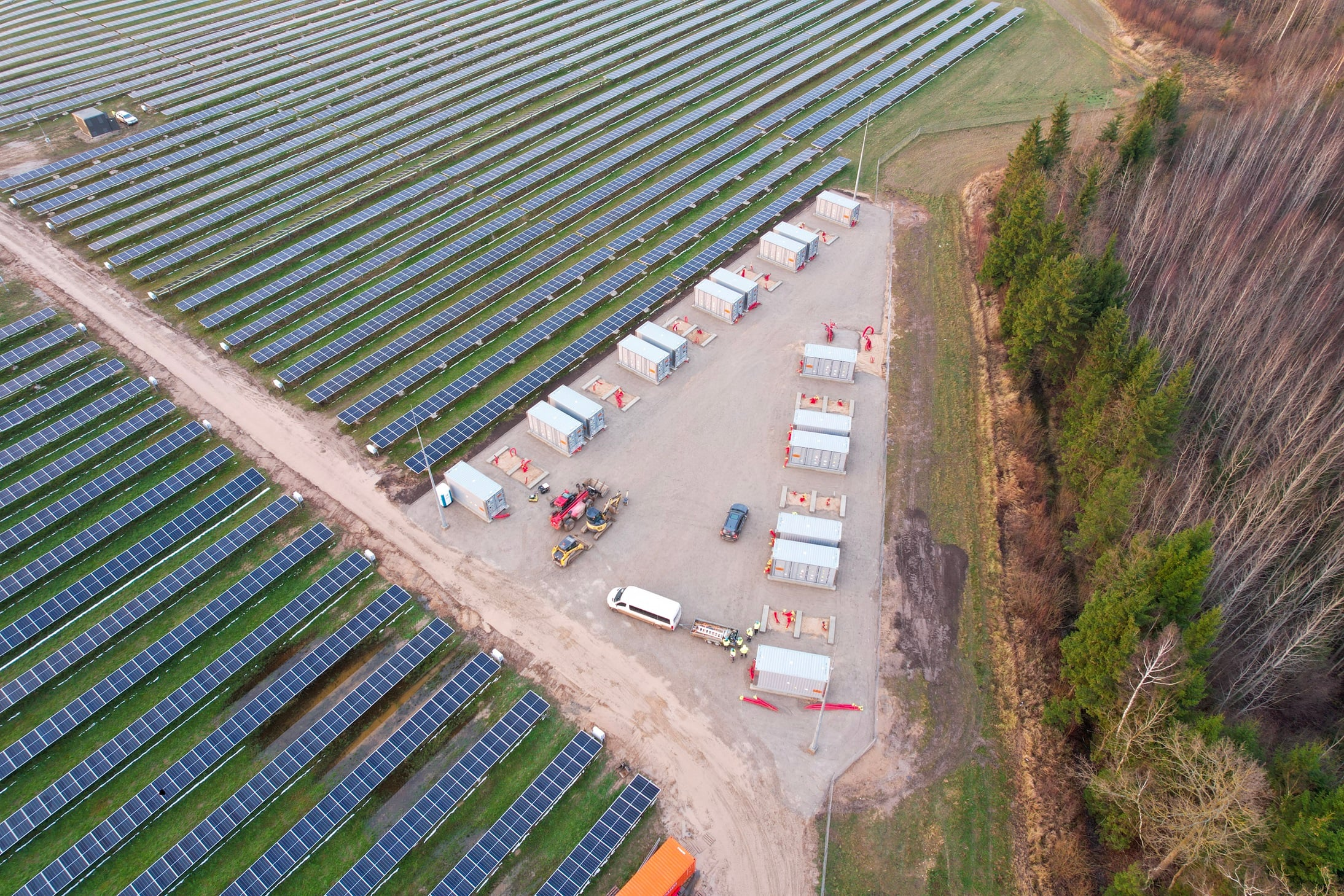
European Energy has appointed Capalo AI to optimise and trade two hybrid solar and battery projects in Lithuania and Latvia, covering more than 140MWp of photovoltaic generation and 71MW/170MWh of storage.
The agreement covers the Anykščiai hybrid park in Lithuania and the Saldus Hybrid Park in Latvia. Capalo will provide optimisation and energy-trading services across wholesale and balancing markets, coordinating the batteries with generation from the co-located solar plants.
Anykščiai combines a 25MW/65MWh battery with an existing 78MWp solar park. The hybrid facility entered operation in June, following the earlier connection of the battery to the Lithuanian grid.
The Anykščiai battery entered commissioning earlier this summer, so the current development concerns commercial optimisation rather than another physical connection milestone.
Saldus combines a 46MW/105MWh battery with 65.7MWp of solar. The disclosed capacities give the batteries nominal durations of approximately 2.6 hours at Anykščiai and 2.3 hours at Saldus when calculated at maximum rated output.
Hybrid assets need coordinated dispatch
Combining solar generation and storage behind one project boundary changes the electrical and commercial operating problem. Solar output follows irradiance, while the battery can alter when part of the site’s energy reaches the grid and can respond independently when market conditions favour charging or discharging.
The battery cannot simply shift every low-priced solar megawatt-hour into a higher-priced period. State of charge, inverter power, usable energy capacity, efficiency, degradation, grid limits, and existing market commitments define what can be moved and when.
A shared connection introduces another constraint. During strong solar production, export capacity may already be heavily used, allowing the battery to absorb some local generation rather than competing with it for the connection. At other times, the same battery can discharge through infrastructure that would otherwise be under-used.
That can improve utilisation of transformers and grid capacity without increasing the underlying connection indefinitely. The result depends on the relative size of the solar plant, battery, and connection, together with the dispatch rules applied to the asset.
Capalo’s mandate spans day-ahead, intraday, and balancing opportunities. Scheduling across those markets requires the optimiser to reserve enough battery capacity to fulfil committed services while retaining flexibility for price movements that develop closer to real time.
The problem becomes more complex when solar production is included. Forecast error can leave more or less energy available than expected, while a battery that is full before the strongest solar period has little capacity left to absorb additional production.
Degradation also places a physical cost beneath trading decisions. High throughput, deep cycles, temperature, and extended operation at extreme states of charge can all affect battery lifetime, so maximising short-term trading revenue is not necessarily the same as maximising lifetime asset value.
The two Baltic projects cannot be operated as identical batteries simply because Capalo provides one optimisation platform. Their storage durations differ, solar capacities differ, and each operates within its own local connection and market conditions.
Portfolio optimisation can still create advantages by combining information and trading capability across multiple assets. Forecasting, market access, dispatch software, performance monitoring, and settlement can be shared while site-level controls maintain each project’s technical limits.
The Baltic power market has also changed materially since Estonia, Latvia, and Lithuania synchronised with Continental Europe in February 2025. Regional system operators now manage balancing and frequency within that wider synchronous framework while renewable and battery capacity continue to expand.
Storage gives hybrid renewable projects a controllable element that solar alone cannot provide. Fast inverter response can support balancing, while stored energy can be shifted across longer intervals according to market prices and the service commitments of the plant.
European Energy’s own announcement describes the partnership as part of a wider expansion of battery and hybrid renewable projects in the Baltic region. Further deployments would increase the amount of flexible capacity managed through the same commercial and digital operating model.
For Anykščiai, the physical battery is already connected and operating alongside the solar park. The current contract therefore shifts the emphasis from construction to how effectively the asset is dispatched across several electricity markets without exceeding its technical envelope.
Saldus presents the same principle at a different scale, pairing a larger 46MW battery with 65.7MWp of solar. Both projects will now provide operating data on whether hybridisation improves the use of grid connections and renewable output once trading, degradation, and balancing obligations are included.
Solar panels and battery containers establish the physical capability; optimisation determines how much of that capability is commercially usable from one interval to the next. For the two Baltic assets, Capalo is now responsible for making those decisions against live market conditions.

