
IN Brief:
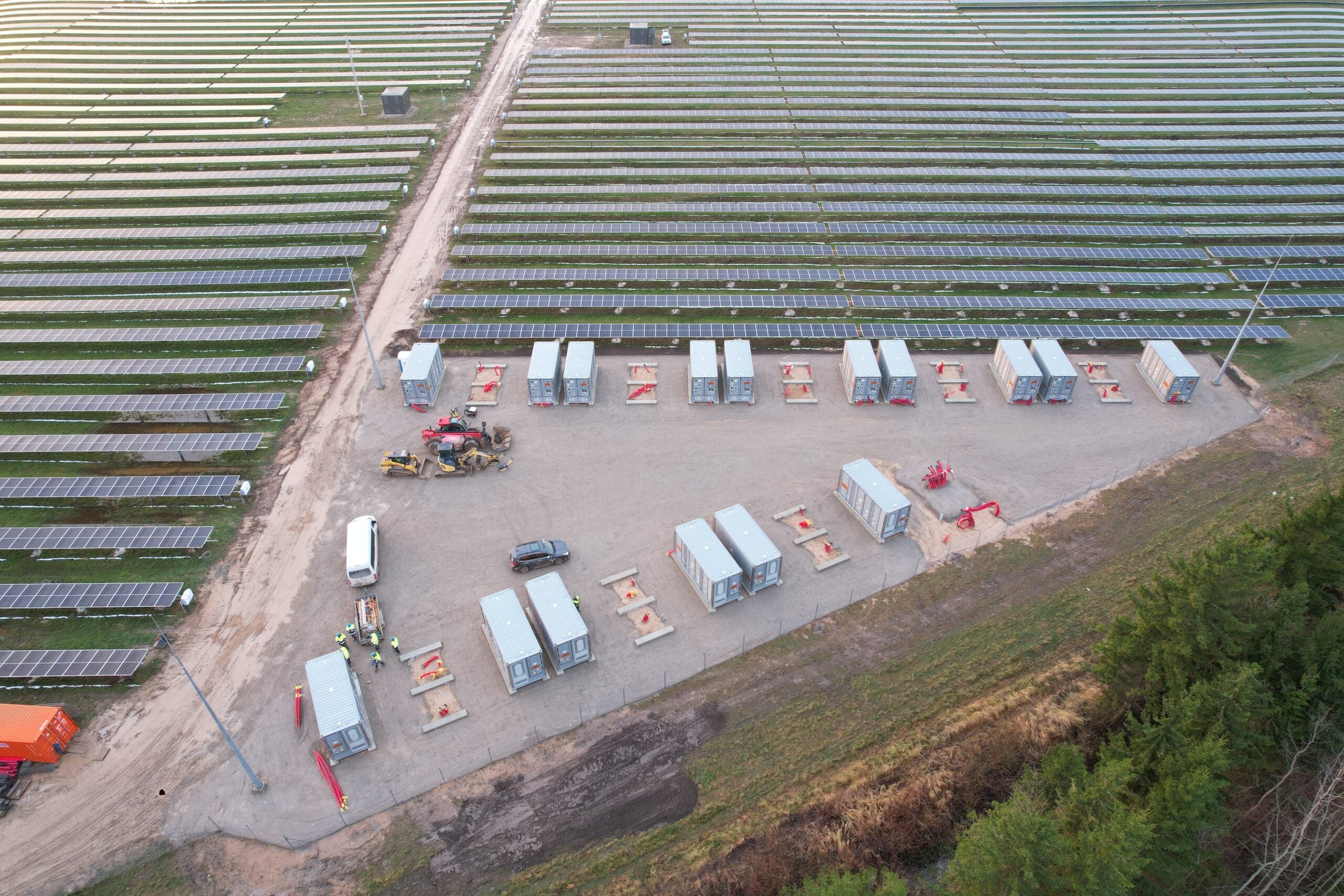
- European Energy is commissioning a 25MW/65MWh battery energy storage system in Anykščiai, Lithuania.
- The battery is integrated with the company’s existing 78.5MW solar park at the same site.
- The project will provide balancing services and grid flexibility as Baltic renewable capacity expands.
European Energy is starting operations at its first battery energy storage system in the Baltic States, integrating a 25MW/65MWh BESS with its 78.5MW solar park in Anykščiai, Lithuania.
The battery has been connected to Lithuania’s electricity grid and is expected to begin operations before the end of June. It creates one of the country’s first hybrid renewable energy facilities combining large-scale solar generation with battery storage.
The Anykščiai solar park is among the largest solar facilities in the Baltic region and has already participated in the system services market. Adding storage gives the site greater control over output, allowing electricity to be shifted, balanced, or dispatched in line with grid needs and market opportunities.
European Energy currently operates around 400MW of renewable capacity in Lithuania, with a development portfolio of roughly 800MW across solar, wind, and storage. A second Lithuanian BESS project is planned at Telšiai, where around 12MW of power capacity and 50MWh of storage is expected to connect to the grid in December 2026.
The Anykščiai project arrives as the Baltic power system continues to strengthen renewable integration and grid flexibility. Lithuania, Latvia, and Estonia are increasing domestic renewable capacity while reinforcing the operational tools needed to manage variability, balancing, and system resilience. Batteries can support that transition by responding rapidly to short-term imbalances and improving the controllability of generation already connected to the network.
Solar-plus-storage changes the operating profile of a renewable site. A standalone solar park produces according to daylight conditions and local network constraints, while an integrated battery allows part of that output to be managed more actively. Storage can reduce exposure to low-price periods, support balancing services, and improve the use of grid connections that might otherwise be constrained during peak solar output.
The same shift can be seen across broader European deployment. Recent work examining renewable and battery pipelines across Europe highlighted how curtailment, congestion, and negative pricing are pushing developers to treat storage as a core component of renewable projects rather than a later addition.
Hybrid operation requires careful electrical design. Inverters, transformers, switchgear, protection settings, metering, communication systems, and energy-management software must coordinate output from both the solar array and the battery. The project must also comply with grid-code requirements and, where it participates in balancing markets, meet availability and response obligations.
The use of storage at Anykščiai also reflects a changing view of renewable asset quality. Installed capacity and annual generation remain important, but system value increasingly depends on how a project behaves on the grid. Assets that can respond, smooth output, and support balancing have a stronger role in high-renewables systems than projects that deliver unmanaged generation alone.
The Baltic market is smaller than Germany, Britain, Spain, or Italy, yet its grid transition is strategically important. Regional interconnection, system security, and renewable build-out are all moving quickly, and battery projects provide a practical way to add flexibility without waiting for every transmission upgrade to be completed. Anykščiai gives Lithuania a working solar-plus-storage model as larger renewable portfolios move through development.

