
IN Brief:
- BRUSH Group has acquired specialist instrument transformer manufacturer D K Moriarty.
- The Colchester business has produced current and voltage transformers since 1968.
- The acquisition brings measurement and protection equipment further into BRUSH’s UK supply chain.
BRUSH Group has acquired D K Moriarty, a Colchester manufacturer of current transformers, voltage transformers, and bespoke instrument transformer equipment.
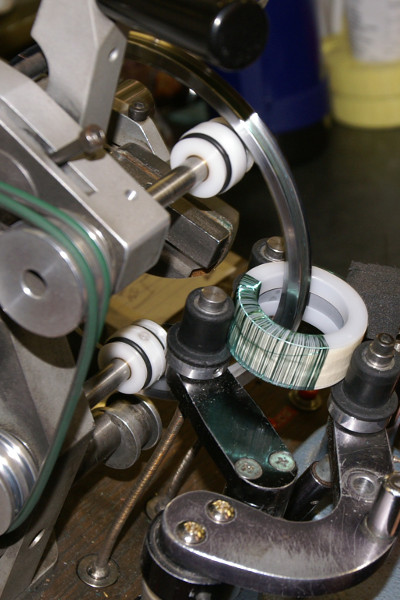
D K Moriarty has designed and manufactured instrument transformers since 1968, supplying equipment used across electricity networks, industrial systems, commercial infrastructure, switchgear, metering, and protection applications.
The company will continue operating from its existing Colchester facility and serving current customers. Financial terms have not been disclosed.
Through the acquisition, BRUSH gains direct access to additional instrument transformer engineering and production capacity, bringing a specialised component category further into the group’s domestic manufacturing operations.
Current transformers reproduce primary current at a lower, standardised secondary value suitable for meters, protection relays, and monitoring equipment. Voltage transformers perform an equivalent function for system voltage while maintaining electrical isolation.
These devices allow measurement and protection systems to operate without direct connection to primary high voltage quantities. Their accuracy, insulation, saturation behaviour, thermal rating, and transient performance must match the intended duty.
Metering transformers are selected to reproduce normal operating values within a specified accuracy class, whereas protection transformers must continue providing usable information during faults when primary currents may rise far above normal levels.
An incorrectly specified current transformer can saturate too early and distort the signal reaching a protection relay, delaying or preventing operation when rapid fault clearance is required.
Conversely, a transformer selected solely for extreme fault performance may not provide the accuracy required for sensitive metering or lower level protection functions. Core material, winding arrangement, burden, knee point voltage, ratio, and secondary resistance all influence behaviour.
D K Moriarty manufactures standard and bespoke designs, including cast resin current and voltage transformers, outdoor slip over and bushing units, core balance transformers, precision metering equipment, and multiple secondary voltage transformers.
Protection systems rely on specialised components
Instrument transformers occupy a relatively small physical part of a substation or switchboard but influence the operation of the entire protection and measurement scheme. Their interfaces extend from primary conductors to secondary wiring, relays, meters, control systems, and operational data.
Modern digital relays can perform multiple protection, monitoring, recording, and communications functions, although their decisions remain dependent on the quality of the electrical quantities supplied to them.
Remote access is also becoming more common, as shown by ZIEHL’s addition of connected monitoring and configuration to a grid protection relay. Digital capability can improve diagnostics, but it cannot compensate for unsuitable primary sensors or unreliable secondary circuits.
Instrument transformer selection must account for the complete connected burden. Relay inputs, meters, transducers, test switches, wiring resistance, and cable length all affect the load seen by the secondary winding.
Because open circuiting the secondary of an energised current transformer can produce hazardous voltage, terminal design, shorting facilities, isolation procedure, and labelling remain essential parts of the installation.
Testing extends from factory ratio, polarity, insulation, and accuracy checks to site verification of wiring, earthing, phase relationships, and protection logic. Bespoke units must also fit the available mechanical envelope and align with busbar or cable arrangements.
Domestic production can shorten communication between equipment designers, switchgear manufacturers, network owners, and protection engineers. It can also reduce delay where a project requires nonstandard ratios, dimensions, mounting arrangements, or multiple secondary cores.
Lead time pressure has increased as network reinforcement, renewable connections, industrial electrification, data centres, and transport projects demand additional switchgear and substations. Large power transformers attract most attention, but smaller specialised components can still delay an assembled system when no approved substitute is available.
Substitution is rarely straightforward because changing an instrument transformer may require renewed accuracy calculations, protection studies, insulation assessment, type testing, drawings, and customer approval.
Bringing the capability into BRUSH complements the group’s existing transformer, switchgear, engineering, and service operations. The operational benefit will depend on integrating D K Moriarty’s production resources without weakening the responsiveness of its specialist design work.
Quality continuity will be particularly important because many instrument transformers are specified for long service lives and may be installed within equipment where later replacement requires a planned outage or substantial dismantling.
Retaining the Colchester operation preserves its production knowledge and test capability. Greater access to engineering and investment resources could support capacity growth, but each product must continue meeting the British, European, or international standards specified for its application.
The acquisition strengthens a part of the electrical supply chain that can be overlooked until measurement, metering, or protection equipment cannot be commissioned. Network reliability ultimately depends on secondary systems receiving an accurate and dependable representation of primary conditions.

