IN Brief:
- AECOM is part of the Worley-led team carrying out engineering, cost estimating, execution planning, and project-readiness work.
- The proposed Meaford pumped-storage facility would provide approximately 1,000MW of generation and 10,600MWh of energy storage.
- Federal impact assessment is progressing in parallel, while the project's current indicative programme places operation in 2035.
AECOM has detailed its engineering role on the proposed Ontario Pumped Storage Project at Meaford, where it forms part of a Worley-led team working on the next phase of development for the 1,000MW long-duration storage scheme.
AECOM’s scope includes front-end engineering and design, cost estimating, execution planning, and project-readiness activities. TC Energy had previously named AECOM alongside Worley and EllisDon as part of the project team in August, with the 4 September AECOM announcement providing further detail on the company’s engineering remit.
The proposed facility is expected to provide approximately 1,000MW of generation capacity and 10,600MWh of energy storage. On a simple energy-to-power calculation, that represents around 10.6 hours of nominal discharge at rated output before operating constraints and system losses are taken into account.
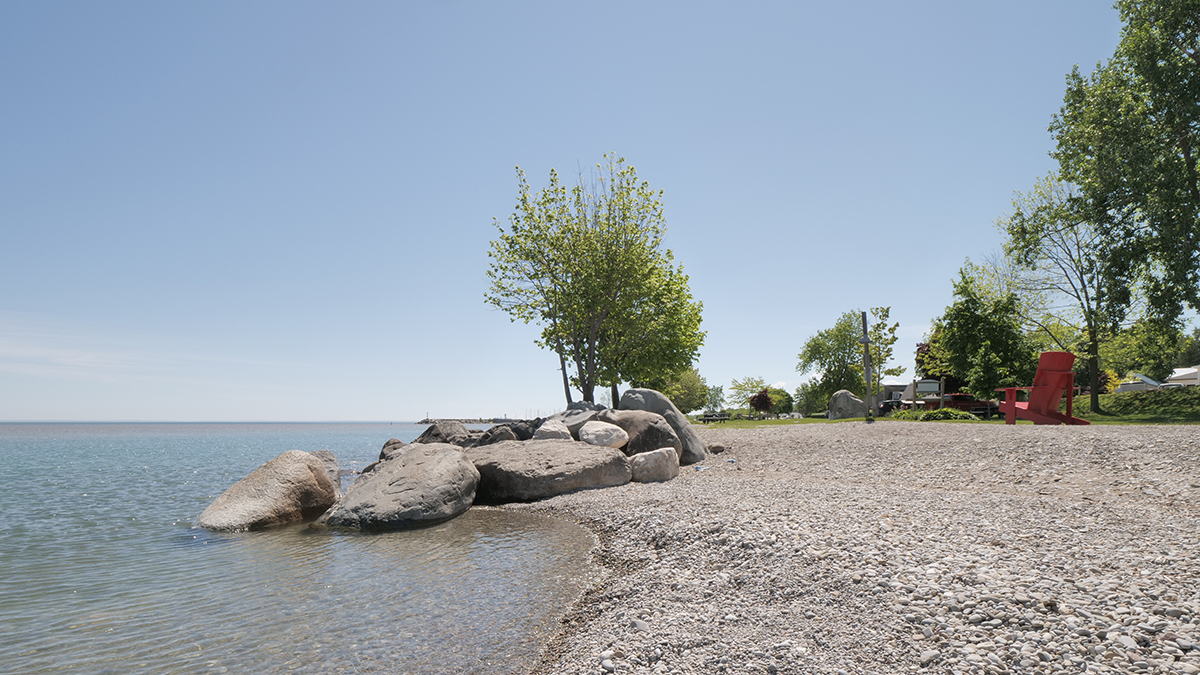
TC Energy and prospective partner Saugeen Ojibway Nation are developing the project predominantly on federal land at the Canadian Army’s 4th Canadian Division Training Centre north of Meaford, Ontario. Georgian Bay would act as the lower reservoir, with water pumped to a purpose-built upper reservoir when electricity is available for storage.
During periods when additional electricity is required, water would be released through the generating equipment and returned to Georgian Bay. The system stores energy as gravitational potential rather than through electrochemical cells, allowing substantially longer discharge periods than most lithium-ion battery projects currently being deployed on power networks.
The engineering work is progressing alongside the federal regulatory process. On 1 September, the Ontario Pumped Storage Project confirmed that the Impact Assessment Agency of Canada had issued Tailored Information and Studies Guidelines and a Notice of Commencement for the Impact Statement phase.
TC Energy will continue technical studies and engagement while preparing the Impact Statement, which will document potential project effects and proposed mitigation measures. The assessment is one of several major development processes that have to progress before a construction decision can be reached.
The design has already changed in response to environmental and community feedback. The current concept uses tunnels beneath the Georgian Bay lakebed to reach deeper water rather than placing intake infrastructure in sensitive near-shore areas.
Lower inlet and outlet structures would be raised from the lakebed, with reduced water-withdrawal velocities and fixed screens intended to reduce effects on fish and aquatic habitat. The powerhouse and principal pumping and generating equipment are also planned largely underground.
Those arrangements illustrate why pumped storage has a development profile very different from containerised battery storage. The storage medium is inexpensive and long-lived, but the project requires major civil works, waterways, excavation, turbines, generators, transformers, switchgear, protection systems, and a high-capacity grid connection.
Front-end engineering therefore carries considerable weight in the investment decision. Geological conditions, hydraulic design, equipment sizing, tunnelling methodology, powerhouse configuration, electrical connection, construction access, and environmental requirements can each alter cost and programme substantially if uncertainty remains late in development.
AECOM’s work on estimating and execution planning sits directly alongside those technical decisions. The team has to determine not only whether the plant can perform electrically but how a project of this scale can be constructed, commissioned, and integrated without unresolved interfaces undermining the later programme.
Long-duration storage addresses a different system requirement from the majority of battery projects now being commissioned. Lithium-ion systems are particularly effective for rapid response, balancing, ancillary services, and intraday energy shifting, but many are configured around one to four hours of stored energy.
A project capable of supplying close to 1GW for roughly 11 hours can move considerably larger quantities of electricity between periods. That gives pumped storage potential value during extended demand peaks or prolonged periods when generation and consumption are poorly aligned.
The process is inherently lossy: more electrical energy is used to pump water uphill than is recovered during generation. Its economic and system case therefore depends on the value of moving electricity in time rather than creating additional energy.
That can become increasingly useful where large volumes of generation are available during lower-demand periods but the system requires more power later. Nuclear output, renewable generation, transmission constraints, and changing demand profiles can all create conditions in which stored energy has greater value several hours after it was originally produced.
Ontario’s electricity demand outlook provides part of the development context. The Independent Electricity System Operator’s 2026 Annual Planning Outlook forecasts net annual electricity demand in its reference scenario to grow by 65% by 2050, with economic growth, electrification, and new large loads contributing to the increase.
The high-demand case is considerably stronger, but even the reference scenario implies additional generation, transmission, and flexibility investment. Storage alone cannot meet that requirement, yet it can allow existing and future generation to be used at different times and reduce the need for every source to follow demand directly.
The project remains in development rather than committed construction. Its current published programme places provincial and federal environmental assessment processes between 2026 and 2029, construction between 2029 and 2035, and operations from 2035.
Those dates remain indicative and depend on regulatory approvals, engineering, commercial arrangements, and future investment decisions. The project developer also makes clear that the facility is proposed rather than an approved operating asset.
The significance of the current engineering phase lies in reducing enough uncertainty for those later decisions to be made on firmer ground. A 1GW pumped-storage scheme cannot be advanced on headline capacity alone; hydraulic performance, underground construction, grid integration, environmental design, cost, and execution strategy all have to converge before a project of this scale can move towards site delivery.