IN Brief:
- The Aunslev solar project near Nyborg is operating with approximately 31MWp of installed photovoltaic capacity.
- The roughly 28-hectare plant is expected to generate around 36GWh annually, equivalent to the consumption of more than 8,000 households.
- Earlier hybrid-PPA plans described an 8.4MW/16.8MWh co-located battery, but current project reporting says storage still requires permission.
Momentum Energy Group has commissioned its Aunslev solar park near Nyborg in eastern Denmark, bringing a photovoltaic development of approximately 31MWp into operation after construction and testing during 2026.
The facility covers roughly 28 hectares of former agricultural land and is expected to generate around 36GWh of electricity annually. That production is equivalent to the annual consumption of more than 8,000 households, giving the project a significant local contribution despite its comparatively modest scale beside utility developments in southern European markets.
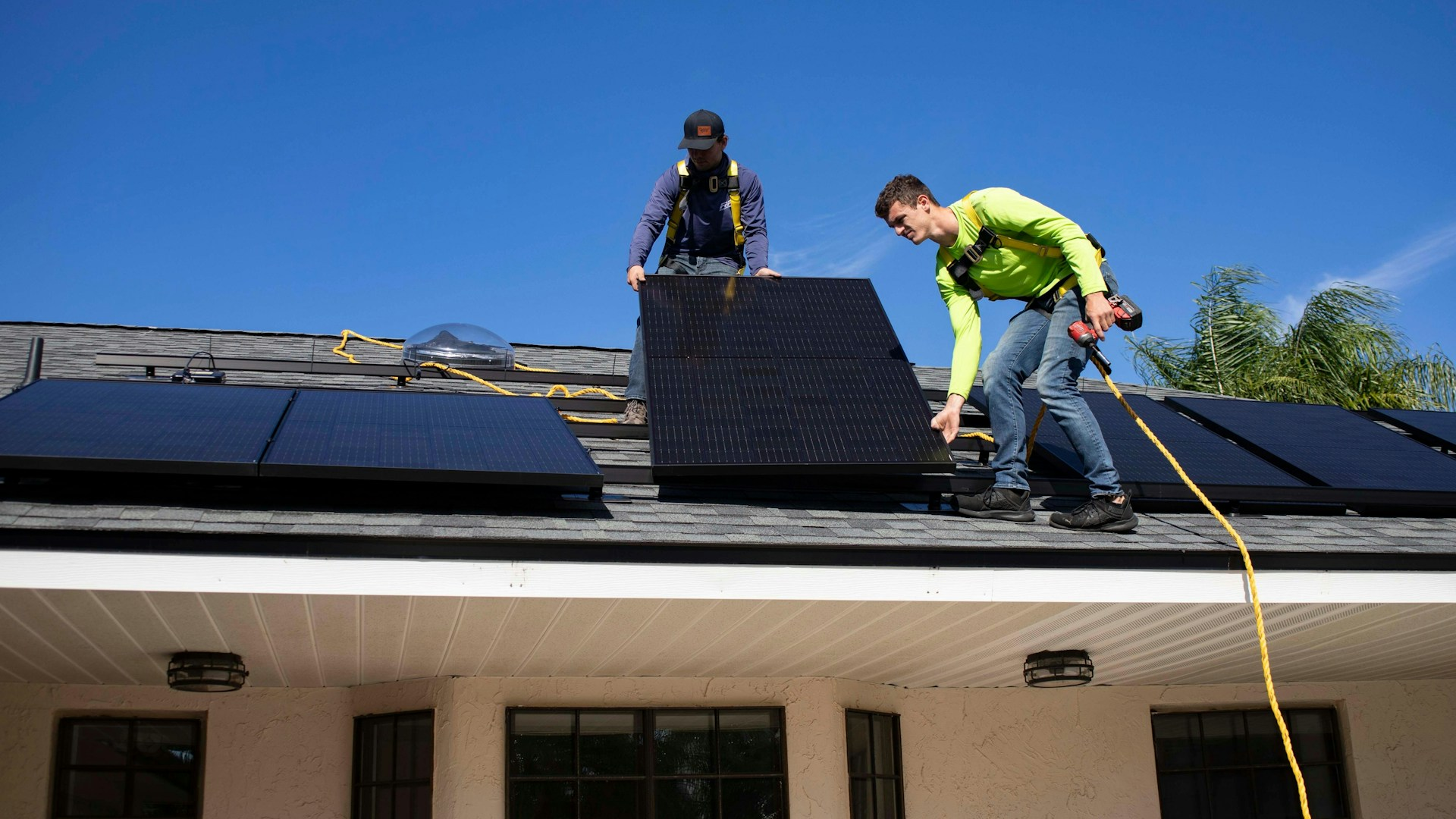
Momentum’s construction material identified the plant as a 31MWp development and showed work progressing on panel structures, photovoltaic modules, electrical installations, and the site’s transformer facilities. Commissioning reporting says the plant is now fully operational after a construction and testing programme of around ten months.
Danish Sun Energy supported engineering and procurement, while AL Sydbank provided financing. A formal inauguration is expected in October, although the generating plant itself has already moved into operation.
The Aunslev project is also associated with plans for battery storage, but the status requires care. Earlier material relating to a hybrid power purchase agreement between Momentum and Reel described an 8.4MW/16.8MWh co-located BESS alongside solar generation of approximately 36GWh a year.
That earlier hybrid-PPA description anticipated the combined project entering service in early 2027. More recent reporting around the solar commissioning, however, says Momentum is still seeking permission to add battery storage to the operating photovoltaic plant. The BESS should therefore be treated as a proposed next phase rather than part of the commissioned asset.
If developed at the previously described 8.4MW/16.8MWh specification, the battery would provide a nominal two hours of storage at rated power. Its capacity would be substantially smaller than the solar plant’s peak output, so it would not be intended to store all generation from the site.
Instead, a system of that size could shift selected periods of production, absorb electricity when solar output is strong or market prices are weak, and discharge later when electricity has greater value. It could also potentially provide balancing services, subject to the eventual design, connection agreement, market qualification, and operating strategy.
The distinction illustrates a broader change in the economics of photovoltaic generation. As more solar capacity enters the same electricity market, additional midday production can arrive at precisely the time when many other PV assets are producing strongly. Wholesale prices can weaken during those periods, reducing the value of an otherwise productive generating hour.
Storage offers one route to change that profile. It separates the time at which some electricity is generated from the time at which it is delivered, although every shift carries conversion losses and is constrained by the battery’s power rating, energy capacity, state of charge, and degradation limits.
The electrical configuration becomes more complicated once solar and battery systems share a site. A plant controller must coordinate two inverter-based resources while respecting the maximum export capacity agreed with the local network operator.
During strong photovoltaic conditions, the battery could charge while reducing the site’s net export. At other times it could discharge, either alongside residual solar production or after sunset, provided the combined output remains within the connection limit and any contractual obligations.
Protection, power quality, metering, communications, and control therefore become as important as the battery containers themselves. A hybrid plant has to distinguish between electricity generated by the PV array, electricity entering or leaving the battery, and the final net position at the grid connection if commercial settlement and operating instructions are to remain accurate.
The earlier Momentum and Reel arrangement also points towards a commercial use for that flexibility. The hybrid PPA was designed to allow business customers to buy a fixed volume of electricity over several years with greater scope for delivery during periods of higher demand rather than receiving a profile tied directly to instantaneous solar production.
That model is more complex than a conventional solar PPA because the physical asset has to support the delivery profile promised commercially. Battery availability, solar forecasting, grid restrictions, and stored-energy limits all affect whether the agreed shape can be produced without the seller purchasing additional power from elsewhere.
For now, those considerations belong to the next phase rather than the commissioned Aunslev plant. The operating asset is the approximately 31MWp photovoltaic park, and its immediate performance will be judged on generation availability, inverter efficiency, module condition, network constraints, and whether annual output approaches the expected 36GWh.
The site also demonstrates the time difference between constructing generation and adding flexibility around it. Photovoltaic modules, structures, inverters, and transformers can be installed within a comparatively short project programme, while battery permitting, market arrangements, connection treatment, and commercial design may follow a separate timetable.
That separation is increasingly relevant across Europe. Developers are building renewable sites with an eye towards later hybridisation even where storage is not ready on the day generation starts. Doing so preserves the possibility of changing the site’s export profile as market conditions, connection constraints, and storage economics develop.
Aunslev has therefore reached one clear milestone: its solar generation is operating. The proposed battery would create a second, materially different stage if it secures permission and proceeds. Until then, the project is better understood as an operating solar park with a potential storage extension rather than a completed hybrid plant.