
IN Brief:
- Eplan is demonstrating automated three-dimensional project generation at SPS.
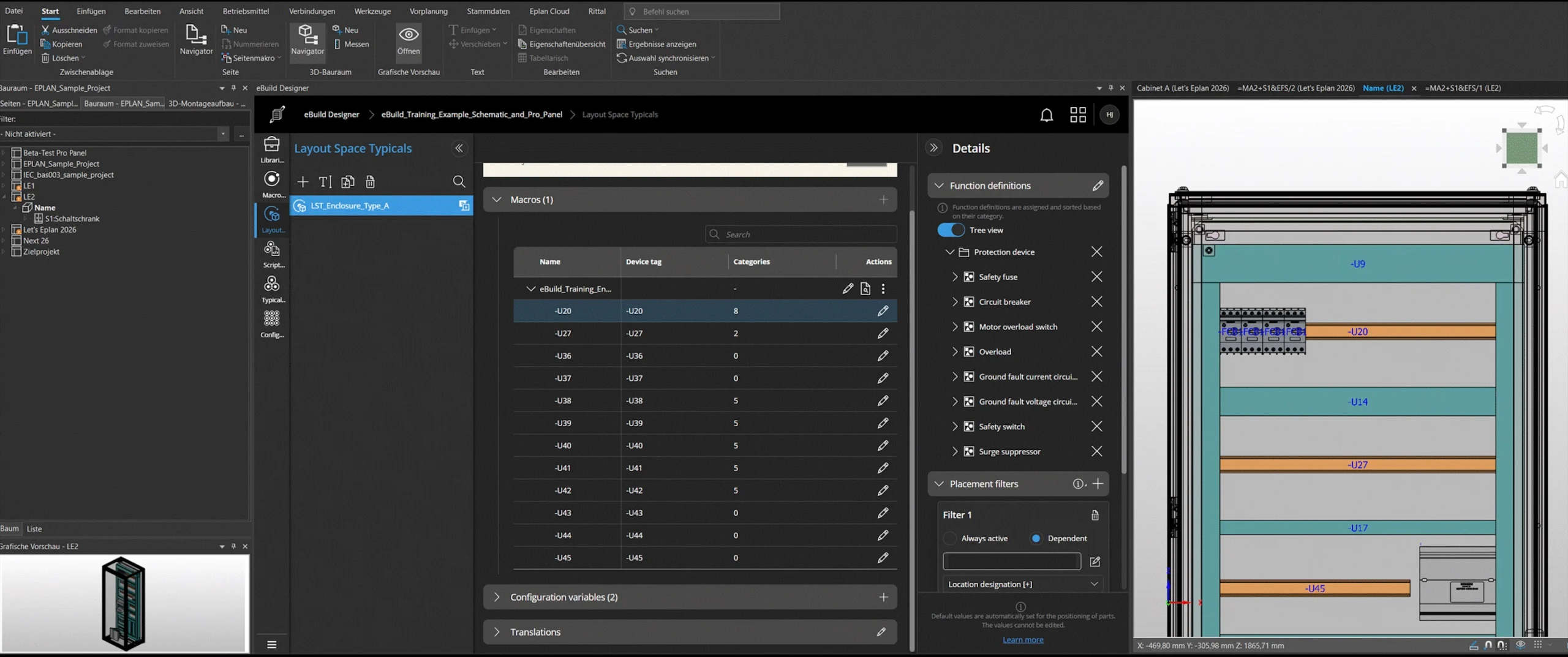
- Layout Space Typicals combine enclosure or mounting panel macros with mounting rails.
- Engineers can configure reusable cabinet variants using existing schematic data and placement rules.
Eplan is demonstrating automated three-dimensional electrical project generation at the SPS industrial automation exhibition, extending its rules-based engineering environment to the physical layout of control cabinets.
The capability, included in Eplan Platform 2027, enables engineers to generate mounting panel arrangements from existing electrical schematics. It builds on the automated project generation functionality Eplan previewed earlier this year, with the latest presentation explaining how physical cabinet configurations can be incorporated into the same engineering workflow as circuit documentation.
The development introduces an object called a Layout Space Typical, through which engineers organise the reusable macros required to construct a cabinet layout. Eplan’s technical documentation specifies that the macro must contain one enclosure or mounting panel and at least one mounting rail.
Using Eplan Pro Panel, engineers establish the physical geometry of the cabinet, including its cable channels and installation areas. Different enclosure configurations and mounting rail arrangements can be stored as templates, allowing the appropriate physical arrangement to be selected when a project is configured.
The associated electrical schematic must already exist in the target project. This prerequisite establishes a relationship between the devices required by the electrical design and the physical equipment to be accommodated within the cabinet. The generation process can then populate the defined mounting areas using the reusable design configuration.
Project generation through Eplan’s eBuild environment already supports the selection of a configurator and the assignment of values to configuration variables. These values determine which project elements are incorporated and how the generated documentation is structured. Extending that workflow into cabinet layouts gives engineering departments a means of applying common product configurations across electrical and physical documentation.
A control cabinet used in a modular production machine might, for example, require additional motor starters or input and output modules when a customer selects another machine section. The underlying circuit arrangement may be repeated while the number and physical arrangement of devices change. A reusable cabinet configuration can account for those variations without requiring every mounting location to be specified individually for each order.
Generating the physical layout from the electrical design also requires consistent information about the equipment being specified. The device represented on a schematic must be associated with the correct component dimensions and installation characteristics if its physical representation is to provide useful manufacturing information.
Substituting one protective device for another can have consequences extending beyond its electrical rating. Differences in mounting width, terminal orientation, and required clearances may affect the available space on a rail or the routes through which conductors can reach the device. Those relationships are particularly important where several different component configurations must be accommodated within a common enclosure size.
The physical arrangement must also satisfy requirements that cannot be derived solely from the electrical connectivity represented in a schematic. Heat dissipated by power electronics may influence the placement of adjacent temperature-sensitive equipment, while the routing of power and communications circuits must account for applicable electromagnetic compatibility and segregation requirements.
These constraints must be reflected in reusable engineering rules or checked separately during design verification. Generating a layout does not, by itself, establish that an enclosure satisfies its thermal or electrical design requirements under all intended operating conditions.
A detailed cabinet model can provide the basis for subsequent manufacturing activities, including preparing mounting panels, identifying component locations, and establishing the routes available for wiring. Its usefulness depends on the accuracy of the physical equipment data and on whether the selected manufacturing processes can utilise the generated information.
Eplan’s release documentation also describes changes to the management of parts and master data between its cloud environment and locally installed software. Consistent component records become particularly important when automated configurations are shared across engineering departments or manufacturing locations, where uncontrolled changes could affect multiple subsequent projects.
The configuration of a generated project also determines which electrical documentation accompanies the cabinet model. Keeping device identifiers consistent across the schematic and layout helps the assembly team associate physically installed components with their wiring and terminal designations during testing.
The software’s three-dimensional generation capabilities require the relevant installed Version 2027 engineering environment, including Pro Panel. Engineering teams will consequently need to establish suitable component data, cabinet templates, and configuration rules before applying automated placement to their production designs. Eplan has not published measured reductions in cabinet engineering time associated with the latest demonstration.