IN Brief:
- The extension provides connections for both Kilmarnock South circuits, a shunt reactor, and the new Ayrshire Grid connection.
- Hitachi Energy's original equipment contract included four EconiQ gas-insulated lines and its first commercial retrofill order.
- Hunterston is among SP Energy Networks' first 400 kV transmission projects incorporating an alternative to sulphur hexafluoride insulation.
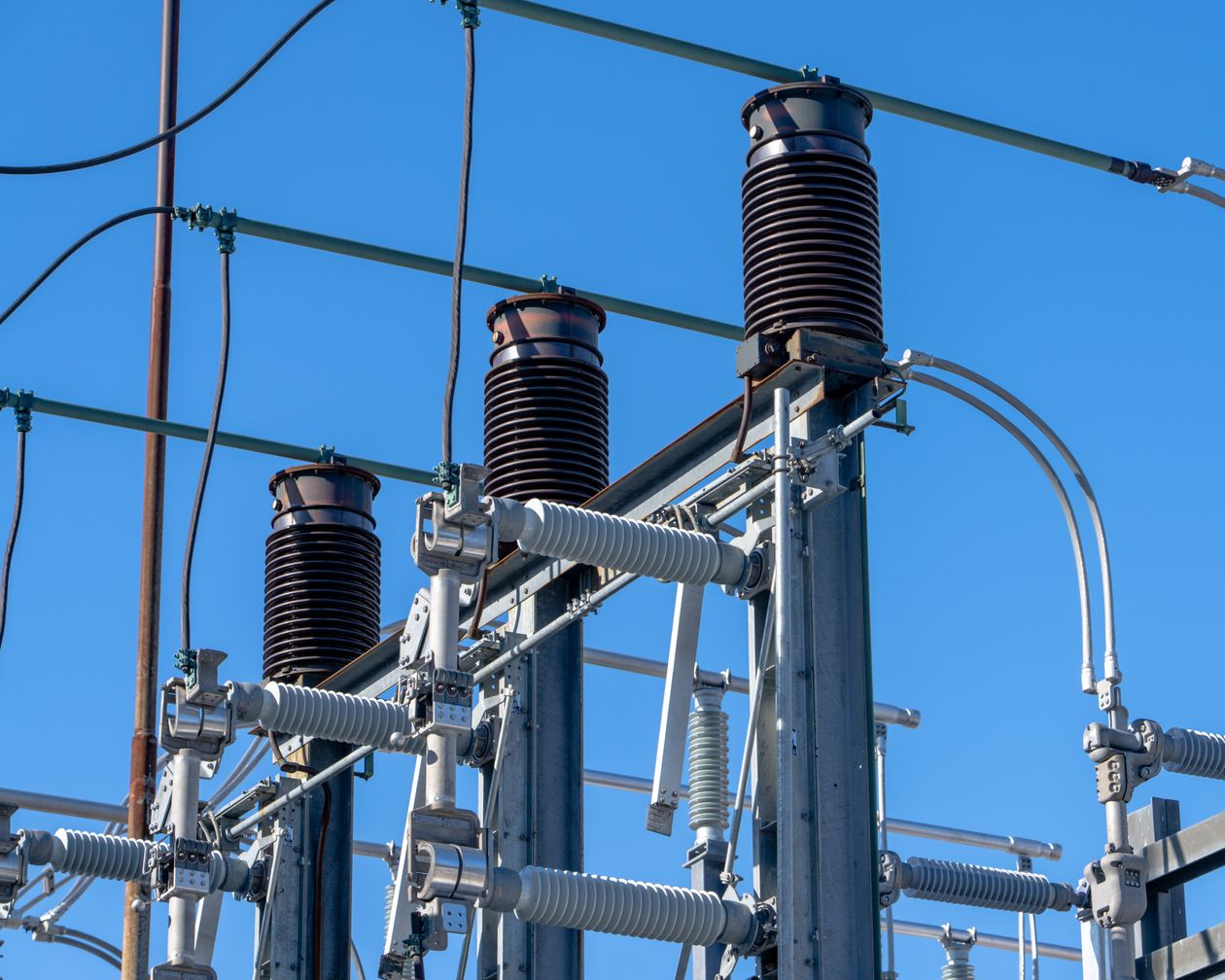
SP Energy Networks has completed a £13 million extension of its Hunterston 400 kV gas-insulated switchgear (GIS) substation in Ayrshire, expanding Scotland’s transmission infrastructure while introducing an alternative to conventional sulphur hexafluoride insulation. The development incorporates four additional switchgear bays and a 200 MVAr shunt reactor, increasing the electrical connections and reactive power compensation available at the substation.
The four additional bays provide individual electrical interfaces for the Kilmarnock South No. 1 and No. 2 circuits, the 200 MVAr shunt reactor, and a new Ayrshire Grid connection. SP Energy Networks confirmed completion of the works on 20 November, with ScottishPower’s parent company, Iberdrola, subsequently reporting the investment on 24 November.
Hunterston’s existing GIS substation was constructed in 2016. Hitachi Energy outlined its involvement in the refurbishment and extension programme in September 2023, identifying the project as its first commercial order for EconiQ retrofill technology. The manufacturer’s original scope also included four new EconiQ ELK-3 gas-insulated lines rated at 420 kV.
Gas-insulated lines provide enclosed electrical connections between equipment assemblies, allowing high-voltage conductors to be arranged within a comparatively compact space. The 420 kV equipment classification corresponds to the highest system voltage for equipment intended to operate on a nominal 400 kV network. This distinction allows equipment specifications to account for variations in operating voltage rather than being based solely on the network’s nominal rating.
Conventional gas-insulated equipment has made extensive use of sulphur hexafluoride, commonly abbreviated to SF₆, because of its dielectric properties and suitability for electrical switching applications. The gas is also a potent greenhouse gas, making leakage prevention, recovery, and the management of gas inventories significant considerations throughout the operating life of high-voltage infrastructure.
Hitachi Energy’s EconiQ ELK-3 gas-insulated lines use an alternative mixture incorporating fluoronitrile, carbon dioxide, and oxygen. Its associated retrofill technology is intended to replace SF₆ in compatible existing gas-insulated lines, allowing suitable electrical infrastructure to be retained rather than requiring complete replacement solely to introduce a different insulation medium.
The distinction between gas-insulated lines and complete switchgear assemblies is important when assessing the scope of such refurbishment. Replacing the insulation medium within an enclosed conductor system involves different engineering considerations from modifying equipment responsible for interrupting electrical faults. Compatibility must be established for the particular equipment, taking account of its dielectric performance, operating pressure, materials, seals, and condition.
Alternative gas technologies also have different environmental characteristics. The fluoronitrile mixture used in the ELK-3 lines removes reliance on SF₆ but still incorporates a fluorinated compound. Equipment specifications and maintenance arrangements therefore need to account for the properties and applicable requirements of the selected insulation technology, rather than treating all SF₆-free designs as equivalent.
Other manufacturers are pursuing similar changes across different voltage classes. GE Vernova recently introduced its 145 kV SF₆-free HYpact switchgear, illustrating the broader development of alternative insulation and switching technologies. Decisions about deploying those systems depend on equipment application, network requirements, and the characteristics of the existing electrical infrastructure.
The 200 MVAr shunt reactor installed at Hunterston addresses another requirement associated with transmission network operation. High-voltage circuits, particularly long underground cable connections, generate capacitive reactive power. When comparatively little active power is being transferred, that capacitive behaviour can contribute to increased network voltages.
A shunt reactor absorbs inductive reactive power from the network, helping counteract those effects and maintain voltage within the required operating range. Its 200 MVAr rating describes reactive power compensation rather than an increase in active electricity transfer capacity. The reactor must be integrated with the substation’s switching, protection, and control arrangements to support its operation under the network conditions for which it has been specified.
Adding four bays to an existing operational substation also requires coordination with the equipment already in service. Electrical outages, circuit changes, testing, and commissioning must be planned around the network’s continuing operational requirements. The extension programme consequently involves the integration of new assets with established busbar, protection, and monitoring arrangements rather than the construction of an independent substation.
Completion of the Hunterston extension establishes additional circuit connections and voltage management infrastructure within Scotland’s existing transmission system. The deployment of EconiQ technology also provides SP Energy Networks with operational experience of alternative insulation equipment in a 400 kV environment, complementing the wider investment required to reinforce the electricity network.