IN Brief:
- Uniper reports approximately 700 MW of secured grid capacity for data centre opportunities in advanced development.
- The company sees further gigawatt-scale connection potential across its existing European property and infrastructure portfolio.
- Its planned €6bn growth investment programme is weighted towards flexible generation, alongside renewables and hydropower.
Uniper has secured approximately 700 MW of electricity grid capacity for data centre projects in advanced development, as the European energy company seeks to use existing power infrastructure and industrial sites to support additional high-demand connections. The figure forms part of a broader investment strategy that includes around €6bn of planned growth capital expenditure through the early 2030s.
The position was disclosed at Uniper’s 16 November capital markets presentation, alongside further gigawatt-scale connection potential across its portfolio. The 700 MW figure relates to grid capacity secured for projects in advanced development, rather than electricity already consumed by operating data centres. Uniper has not assigned the full amount to named customers or supplied commissioning dates for individual sites.
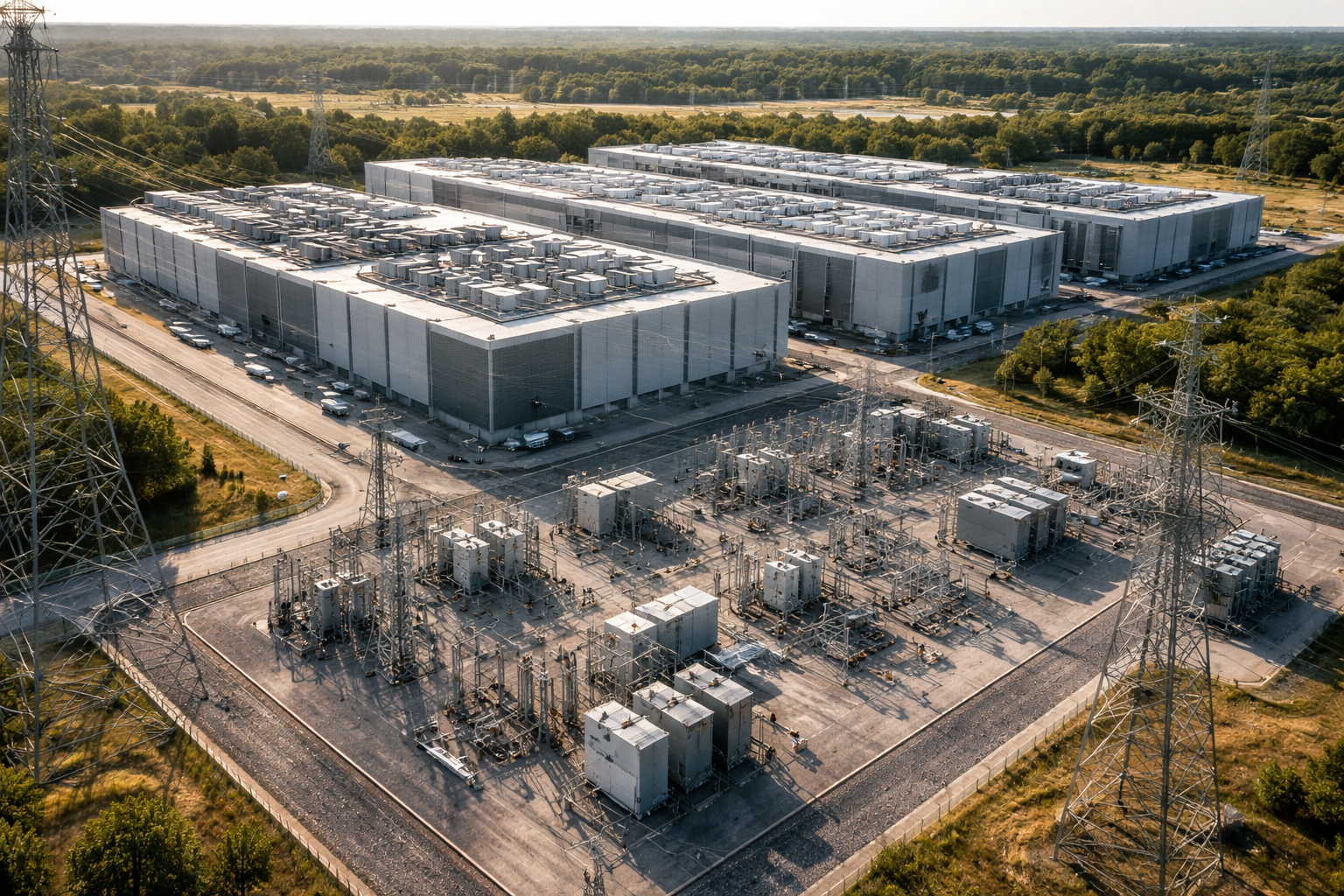
Existing energy sites can bring together land, access roads and established electrical infrastructure in locations that would otherwise require new high-capacity grid connections. Uniper is exploring how that combination can support data centre developers, using sites and network positions associated with its generation portfolio. The commercial options include leasing or disposing of locations and arrangements with operators that require a dependable route to power.
Grid access is one of several constraints on large data centre development, alongside cooling, telecommunications, planning permission and backup systems. A former power station can offer valuable connection infrastructure, but equipment and agreements designed for electricity export need engineering assessment before being used for large-scale imports. Network operators must consider maximum demand, protection settings and changes to power flow, even where existing substations and circuits remain in place.
Generating connections and large consumption connections also behave differently from the network’s perspective. A generator typically exports electricity within agreed limits, while a data centre draws sustained power and can introduce different requirements for voltage control, power factor, fault levels and operational resilience. Adapting an established connection can therefore involve new transformers, switchgear, protection equipment and revised commercial arrangements rather than simply changing the intended use of the site.
Uniper has not broken down the approximately 700 MW into individual site ratings or identified the final electrical architectures. The capacity is a development position across opportunities rather than a single plant of that size. It places the company among energy owners seeking to turn grid access and industrial land into assets for growing data centre electricity demand, with detailed engineering and customer agreements still to follow.
That development strategy sits alongside approximately €6bn of planned growth capital expenditure running into the early 2030s. Uniper expects to allocate around 60–70% to Flexible Generation, including gas-fired plants and conversions of existing assets, and roughly 25–30% to Green Generation, including renewables, storage and hydro. Those proportions describe company-wide investment priorities rather than a €6bn funding commitment to data centres.
Around €1.3bn of growth expenditure has already been committed since 2023, and more than 20 projects are in execution. Future development of the data centre opportunities will take place within that wider portfolio, where investment decisions cover different technologies and locations. The headline €6bn programme includes planned expenditure not yet incurred.
Uniper’s identified generation projects include approximately 570 MW of solar PV and onshore wind in Europe and the UK, the revival of the roughly 160 MW Happurg pumped storage plant, and around 50 MW of additional hydropower capacity on Sweden’s Ume River. These investments have different operating characteristics, but their development alongside high-demand sites shows the breadth of the company’s interest in network access and power system assets.
Flexible generation and pumped storage can contribute to the balancing of supply and demand, while data centres introduce substantial loads that require reliable network service. The extent to which Uniper’s generation assets might supply particular future sites will depend on contracts and network arrangements. The company has not identified dedicated generation or power purchase agreements covering the entire 700 MW development portfolio.
The group operates approximately 18.5 GW of generating capacity across its markets, including Germany, Britain, Sweden and the Netherlands. Its existing portfolio is expected to support adjusted EBITDA of €1.2bn–€1.5bn in 2027, before a larger contribution from growth projects. The financial forecast gives context to the planned capital spending; the immediate electrical engineering work concerns the conversion of secured network capacity into viable customer connections.
Before the developments can operate, each site will need appropriately rated substations, transformers, distribution circuits, protection and monitoring systems, together with arrangements for redundancy and backup power. The design must reflect both the connection agreement and the actual demand profile of the facility. Existing infrastructure may shorten some delivery steps, but surveys, permissions, equipment procurement and commissioning remain necessary.
The next project-level evidence will come from site agreements, planning and engineering approvals, and construction commitments. Uniper’s approximately 700 MW of secured capacity provides a defined starting position; the wider gigawatt-scale opportunity remains potential network access until it is progressed into projects.