IN Brief:
- Blue Elephant Energy has reached financial close for three agrivoltaic sites totalling almost 96 MWp in Mecklenburg-Western Pomerania.
- Solar trackers and nine-metre spaces between module rows are intended to maintain farming access to the sites.
- Construction is under way, with GOLDBECK SOLAR delivering the installations and commissioning scheduled for Q3 2027.
Blue Elephant Energy has reached financial close for three agrivoltaic solar parks in Germany with a combined capacity of almost 96 MWp, allowing construction work already under way in Mecklenburg-Western Pomerania to progress towards commissioning in the third quarter of 2027. Commerzbank is providing the finance, while GOLDBECK SOLAR is responsible for constructing the installations.
The cluster comprises a 43 MWp park at Pingelshagen, 33 MWp at Alt Meteln and 20 MWp at Klein Trebbow. Blue Elephant describes the combined development as Germany’s largest agrivoltaic scheme using tracker-mounted modules. Its claim refers specifically to that design category; the projects together represent almost 96 MWp of planned solar module capacity.
Commerzbank is supplying project finance, while GOLDBECK SOLAR has the construction contract. Work has started at all three locations, and Blue Elephant is targeting commissioning in the third quarter of 2027. The parties have not disclosed the loan amount, the grid export ratings or separate construction completion dates for each park.
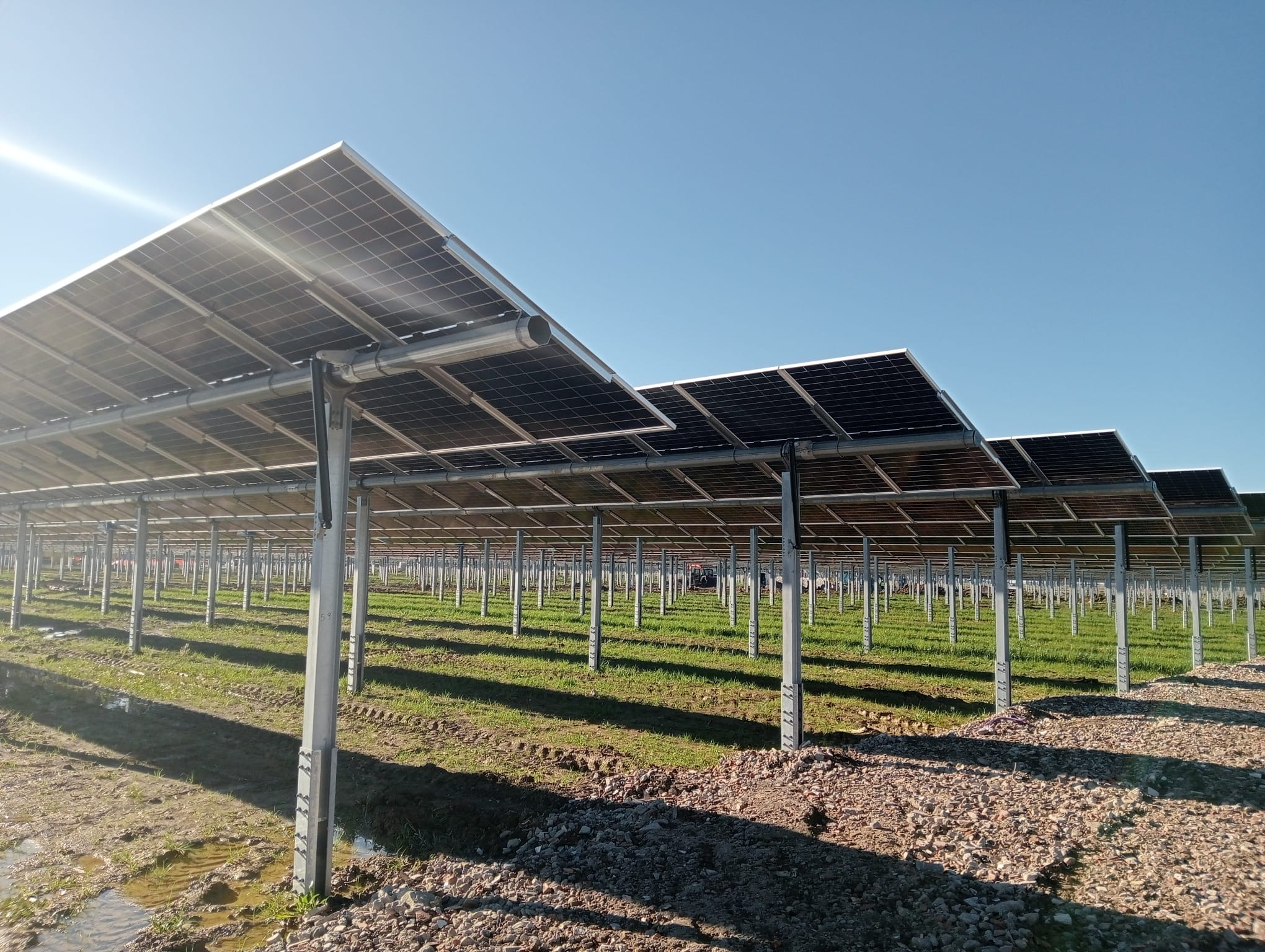
Each installation will use trackers to rotate the solar modules as the sun moves across the sky, with nine-metre-wide strips between rows retained for conventional agricultural machinery. Blue Elephant intends power generation and farming to operate on the same land throughout the planned 30-year project life, combining an electrical generation asset with continued agricultural use rather than removing the entire site from production.
Trackers change the geometry of a solar installation during the day. Their motors and controls adjust the angle of the modules, while the support structures must accommodate wind loads, ground conditions, cable movement and maintenance access. A tracking layout may improve energy yield compared with fixed modules under suitable conditions, but the resulting generation also depends on weather, shading, equipment availability and inverter operation.
The nine-metre spacing is central to the farming arrangement. Agricultural machinery must pass between moving module rows without coming into conflict with frames, cabling or maintenance crews, and the developer must maintain access for electrical inspection and repairs. Tracker height and row spacing will influence which equipment and farming practices can be accommodated. Blue Elephant has not published crop yields or a detailed agricultural production plan for the three parks.
The sites’ capacity is quoted in megawatts peak, measuring the nominal direct-current output of the photovoltaic modules under standard test conditions. Their combined almost 96 MWp rating is therefore different from continuous electrical generation or the alternating-current capacity permitted at their grid connection points. Inverters, transformers, protection systems and electrical collection circuits will be required to export power to the grid, but the company has not named those equipment suppliers or specified connection voltages.
GOLDBECK SOLAR’s construction programme brings together the moving module structures and the electrical installations serving them. Each park needs foundations, trackers, modules, DC cabling, conversion equipment and grid interfaces, alongside access arrangements that allow agricultural activity to continue. The projects share a developer, lender and construction partner, although their separate sites will have individual commissioning and grid connection requirements.
Blue Elephant will assume commercial and technical management once the parks are commissioned. That continuing role covers the operational performance of the assets after construction and connects the project’s 30-year intended lifespan with long-term maintenance of both the solar equipment and the land use arrangements. The company has not identified an electricity offtaker or power purchase agreement in the latest project information.
Dual use brings design trade-offs. Wider rows can preserve farm access but affect module density per hectare, while moving trackers have to operate safely around machinery and working areas. The developer’s stated nine-metre corridors provide a concrete measure of its approach; the practical balance between crop or livestock production and electricity output will depend on actual site operations.
Financial close and the start of construction place the cluster beyond the early development stage. The facilities must still progress through equipment installation, testing and grid connection before commercial generation begins. Without published financing terms or a project investment value, the announcement does not provide a basis for calculating capital cost per megawatt.
Blue Elephant develops and operates solar PV, onshore wind and battery storage projects across Europe. Its stated portfolio includes approximately 2.4 GW of operating and assets under construction, alongside a development pipeline exceeding 10 GW. The Mecklenburg-Western Pomerania sites are part of that investment programme, with their electricity contribution dependent on the planned commissioning next year.
Work at Pingelshagen, Alt Meteln and Klein Trebbow will continue towards the third-quarter 2027 commissioning target. First power export, operational tracker performance and continued access for agricultural machinery will provide the clearest measures of how the combined farming and generation model performs at these sites.