IN Brief:
- The Bundesnetzagentur awarded approximately 288MW of capacity across 143 rooftop and noise barrier solar bids.
- Submitted capacity reached 347MW against an offered volume of 296MW, with 34 bids covering 58MW excluded.
- Successful prices ranged from 8.50 to 10 euro cents/kWh, averaging 9.67 euro cents/kWh.
Germany’s Federal Network Agency (Bundesnetzagentur) has awarded approximately 288MW of photovoltaic generating capacity through its latest auction for installations on buildings and noise barriers, following a substantial increase in submitted capacity compared with the preceding round.
The regulator published the results on 3 November for bids submitted by the 1 October deadline. A total of 177 bids representing 347MW of generating capacity were received against an offered volume of approximately 296MW, demonstrating stronger participation in the competitive support programme.
The agency excluded 34 bids representing 58MW from the award procedure. The remaining 143 admissible bids, covering approximately 288.247MW, were accepted, leaving the final allocation slightly below the volume originally offered.
The October competition attracted considerably more capacity than the June 2026 auction, when bids totalled 238MW. The increase reflects stronger participation in this particular procurement round, although the results do not establish whether the change arose from additional projects entering the market or developers bringing forward existing proposals.
Successful prices ranged from 8.50 to 10 euro cents/kWh, with a volume-weighted average of 9.67 euro cents/kWh. This was marginally below June’s average of 9.72 euro cents/kWh, leaving the overall price level broadly unchanged despite the greater volume of submitted bids.
The auction uses a pay-as-bid arrangement, under which successful participants receive the support values associated with their individual accepted bids. The volume-weighted average therefore describes the outcome across the successful portfolio rather than the remuneration awarded to every installation.
North Rhine-Westphalia received the largest allocation, with 38 successful bids representing 66MW. Hesse followed with 30MW across 11 awards, while Brandenburg secured 28MW through 14 projects.
Lower Saxony accounted for 27MW across 16 successful bids, and Rhineland-Palatinate received 19MW through six awards. These regional figures show capacity distributed among numerous installations across different electricity networks, rather than concentrated in one large generating development.
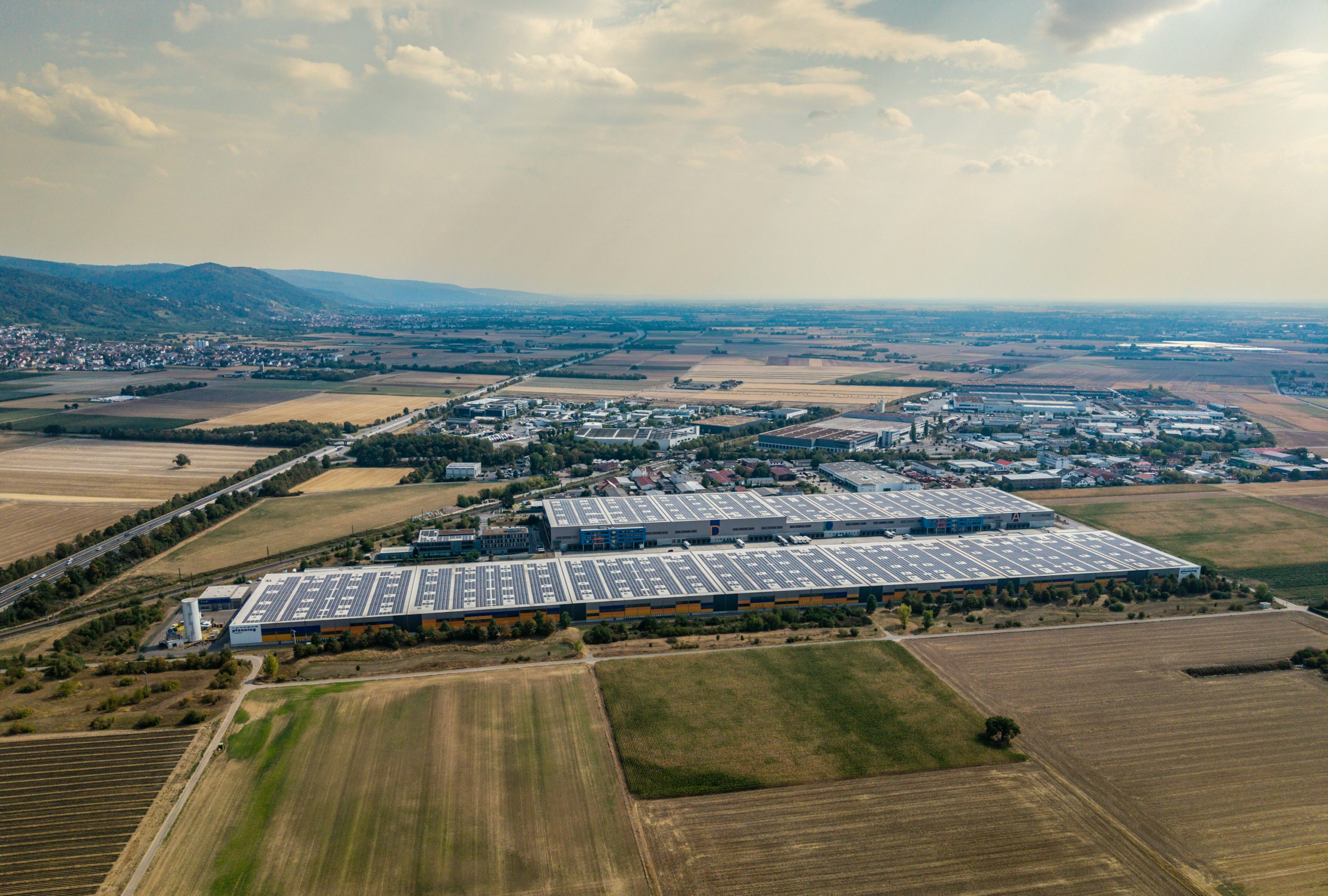
The programme covers solar equipment installed on buildings and noise barriers, distinguishing it from Germany’s separate competitive arrangements for ground-mounted photovoltaic generation. Eligible projects must meet the auction’s applicable technical and administrative requirements, including its minimum generating capacity threshold.
For the October 2026 competition, the published rules retained a minimum bid size of 1,001kWp. The regulator also applied an auction volume of 296.269MW after the relevant amendments under Germany’s Solar Package I remained dependent on European state-aid approval.
The physical characteristics of rooftop generating installations differ from those of ground-mounted solar farms. Available roof space, orientation, structural loading, access, and maintenance requirements all influence the number and arrangement of photovoltaic modules that can be installed.
Structural assessments are particularly important where generating equipment is being added to an existing commercial or industrial building. Mounting systems must transfer the relevant loads to the supporting structure, while installation methods must accommodate roof coverings, drainage arrangements, and the building’s normal operating requirements.
Electrical infrastructure must be designed around both the photovoltaic generating equipment and the existing installation. Solar modules produce direct current electricity, which is converted into alternating current by inverters before it can supply on-site loads or be exported through the grid connection.
The installation requires appropriately rated conductors, protective devices, isolation equipment, and electrical distribution arrangements. Inverter controls must operate within the relevant voltage and frequency conditions, while protection systems coordinate the generating installation with the host building and the external network.
Where solar output can be consumed within the building, electricity demand from the public network may be reduced during generating periods. The extent of that reduction depends on the relationship between photovoltaic output and the building’s load profile, including operating hours and seasonal variations.
Other installations may export a larger proportion of their generation. Their export arrangements are determined by the applicable network connection agreement, which can impose limits on the amount of power delivered through the connection regardless of the photovoltaic equipment’s installed peak rating.
Connection capacity can therefore influence the selection of inverters and controls. Export limitation systems may be required where the installed generating capacity exceeds the amount of power that the network operator has agreed to accept at a particular connection point.
Noise barrier installations have additional requirements arising from the structures on which they are mounted. Electrical equipment must be integrated with existing infrastructure without compromising its intended acoustic function, structural integrity, or the access needed for inspection and maintenance.
The October results establish successful bids for a distributed portfolio of photovoltaic installations. Actual equipment procurement and installation will depend on the developers progressing their individual projects through the necessary engineering, connection, and construction stages.
Manufacturers and contractors supplying photovoltaic modules, inverters, switchgear, mounting structures, and testing services will have opportunities associated with those developments, although the regulator’s capacity awards do not establish the timing of individual purchase orders.
The 143 accepted bids provide a defined set of supported projects representing approximately 288MW of additional photovoltaic capacity. Their commissioning will determine how much of that allocation becomes operational generation across Germany’s building and infrastructure-based solar market.