IN Brief:
- Daiwa Energy & Infrastructure has acquired 49% of Ampyr Solar Europe’s Elsterheide project, with Ampyr retaining 51%.
- The recently commissioned installation combines 157 MWp of photovoltaic capacity with 80 MWh of battery energy storage.
- The battery can charge from the photovoltaic installation or the grid using separate import and export connection arrangements.
Ampyr Solar Europe has sold a 49% interest in its Elsterheide solar and battery project in Saxony, Germany, to Daiwa Energy & Infrastructure. The developer retains 51% and will continue operating and managing the recently commissioned generating and storage assets under the new ownership structure.
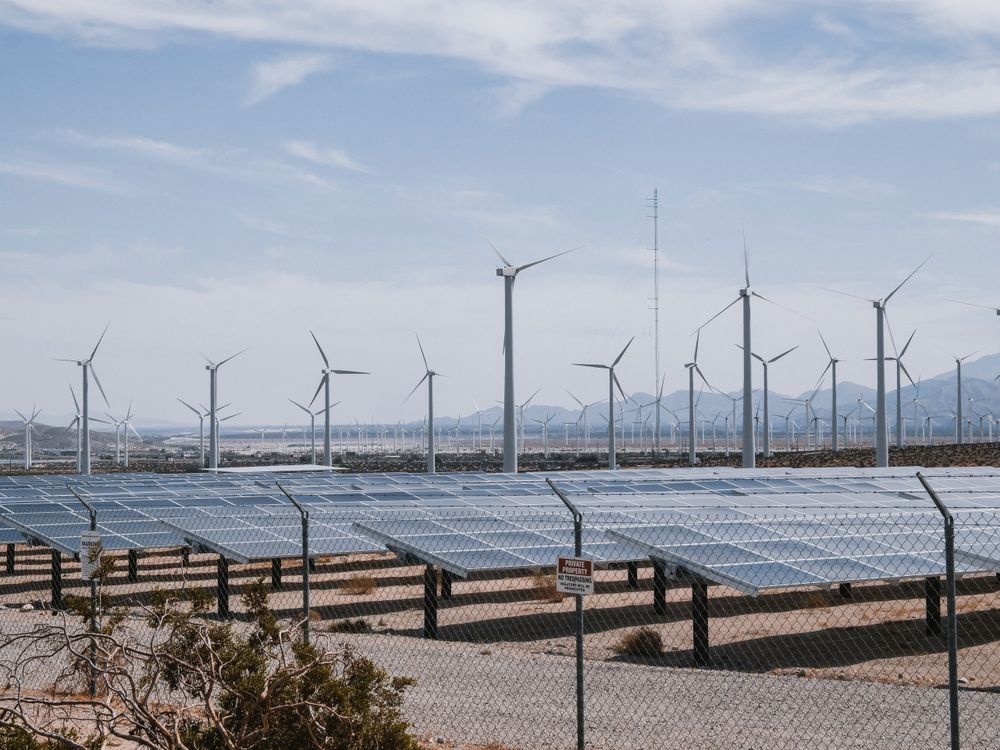
Announced on 15 October 2026, the transaction concerns an existing asset rather than a financing commitment to build an uncompleted solar farm. Elsterheide comprises a 157 MWp photovoltaic installation and a battery system with 80 MWh of energy capacity. Financial terms of the minority sale were not disclosed.
Ampyr says the site extends across more than 130 hectares around Elsterheide and Hoyerswerda. Initially planned as a much smaller 20 MWp solar development, the project was expanded during development to combine utility-scale generation with electricity storage. Its present capacity and energy rating describe two different technologies and cannot be added together as equivalent measures.
The photovoltaic rating of 157 MWp represents the peak capacity of the solar modules under standard test conditions. Electricity production changes with irradiation, temperature and equipment availability, so it is not a continuous 157 MW supply. The 80 MWh battery figure describes a quantity of energy that can be stored, not the rate at which the system can deliver that energy.
Without a clearly established battery output rating in MW, the nominal discharge duration of the storage system cannot be calculated reliably. Ampyr also refers to a combined 177 MW solar and storage installation, but this project description is not a substitute for separately specified electrical capacities and should not be used to infer unreported equipment characteristics.
The battery can obtain electricity from the photovoltaic array and from the wider grid. Ampyr says an additional import connection was secured alongside the export connection, giving the storage equipment access to electricity independently of contemporaneous solar generation. Charging remains subject to the agreed connection limits and operational controls.
Solar modules convert incident sunlight into direct current electricity. Inverters convert that output to alternating current suitable for the connected network, while transformers and protection equipment establish the required network interface. Battery cells also store direct current, which is transferred to or from the alternating current system through bidirectional power conversion equipment.
Plant control systems have to coordinate solar production, battery charging, discharge and network power flows. A battery cannot provide unlimited flexibility: stored energy, charge and discharge limits, conversion losses and operating temperature govern the services that may be delivered. Dispatch arrangements also need to respect any restrictions imposed by the import and export connections.
Grid charging broadens the potential use of a battery beyond storing locally generated solar electricity. Depending on commercial and technical arrangements, the storage equipment may absorb electricity at one time and return it later. Whether that is economic depends on electricity prices, contractual obligations, losses and the value of preserving capacity for other services.
The developer has arranged several distinct revenue contracts for the site. Its announcement identifies a long-term power purchase agreement covering 120 MWp of solar capacity, an optimisation tolling agreement for the battery and a separate arrangement for Guarantees of Origin. These are commercial arrangements for portions of the asset, not additional generating plant.
Ampyr also identifies 40 MW of photovoltaic capacity as supported through arrangements under Germany’s Renewable Energy Sources Act. The different figures refer to contracted or supported parts of the solar plant and should not be added to the site’s 157 MWp installed rating.
The construction of Elsterheide was supported by Ampyr equity and debt from NORD/LB through an established financing framework. Daiwa’s investment changes the ownership structure of the completed project. Ampyr continues as majority shareholder and manager, while Daiwa participates as a long-term investor in the operational asset.
The project incorporates land previously used for other purposes, including part of a former military site. Ampyr reports environmental measures associated with development, but such measures do not independently establish the lifetime ecological impact of the installation. The operating plant will require continued site management and inspection.
Electrical maintenance at a combined solar and storage installation covers a wider range of equipment than at a photovoltaic plant alone. Module condition, inverter availability and cable integrity affect solar output; battery monitoring, temperature management and power conversion performance affect the storage system’s available energy and dispatch capability.
The operational distinction is also reflected in how performance will be assessed. Solar production is measured over time in MWh, while battery performance involves charging energy, discharged energy, availability and adherence to power limits. Statements about installed capacity alone cannot demonstrate realised annual generation, revenue or emissions savings.
Ampyr estimates that the solar plant could generate electricity equivalent to the consumption of about 51,400 households annually and avoid approximately 56,700 tonnes of carbon dioxide emissions. These are developer calculations rather than measured benefits independently established by the share sale.
Elsterheide is described by Ampyr as its largest operating asset and its first operational battery development in Germany. The company’s announcement confirms commissioning but does not publish a complete operational performance history, so no claims about achieved battery cycles, annual generation or trading income can yet be inferred.
The 49% disposal provides Ampyr with an investment partner while leaving majority control and operation with the developer. Elsterheide will now be assessed through its generating output, storage dispatch and contracted revenues, rather than through construction milestones that have already been completed.