IN Brief:
- Seven 4.2MW-117m GE Vernova turbines will provide 29.4MW of capacity at Hiyamizutouge.
- Eurus Energy lists the Aomori wind farm as under construction, with operation scheduled for March 2029.
- The turbine order includes two years of service with an option for a further two years.
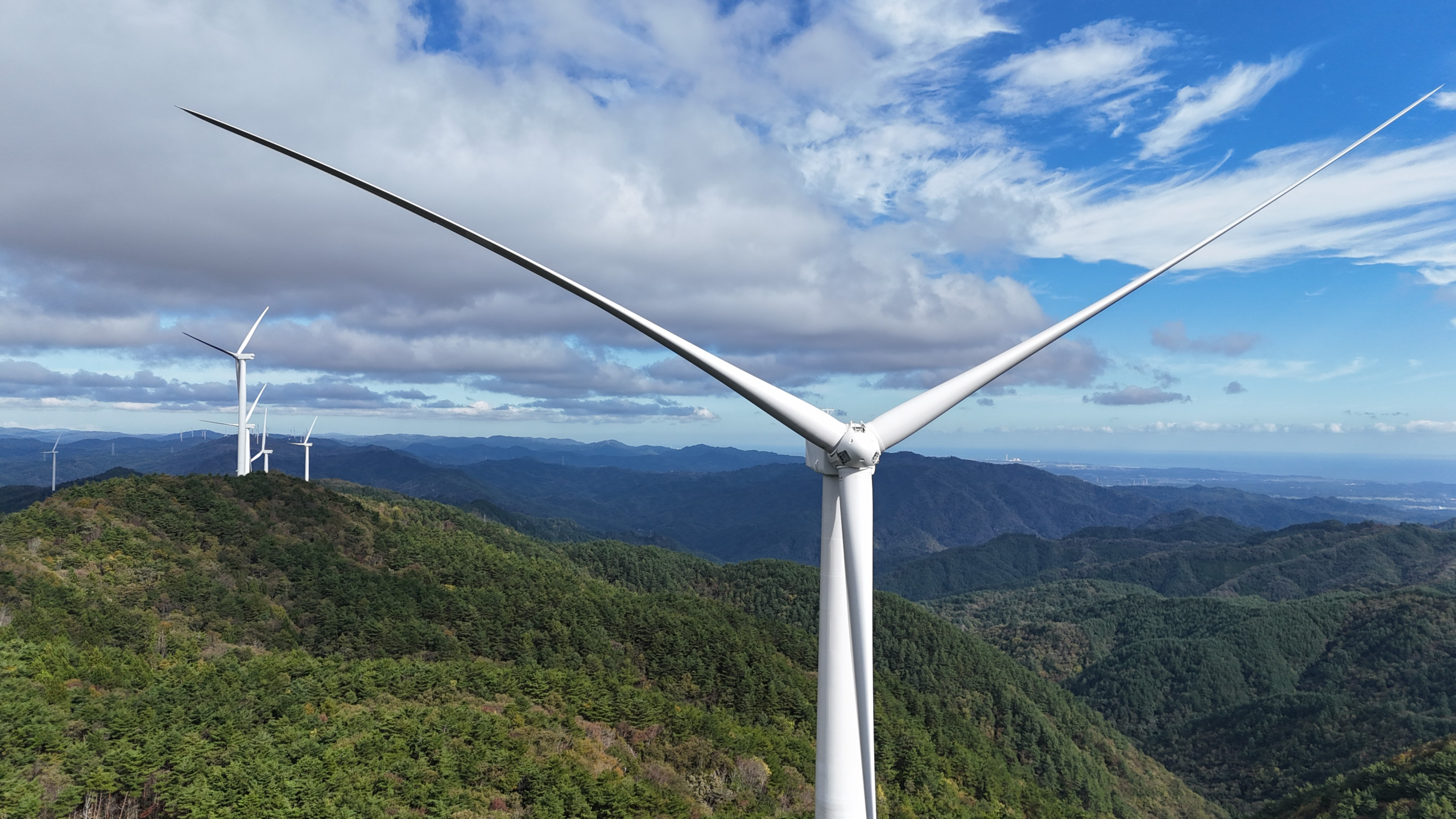
GE Vernova will supply seven 4.2MW onshore wind turbines to Eurus Energy for the 29.4MW Hiyamizutouge Wind Farm in Aomori Prefecture, extending deployment of its established 4MW platform in the Japanese market.
The turbines will be installed at a project spanning Mutsu City and Higashidori Village. Eurus Energy lists Hiyamizutouge as under construction and expects commercial operation to begin in March 2029, giving the supply agreement a defined delivery programme beyond the turbine order itself.
GE Vernova will provide seven machines in its 4.2MW-117m configuration, using a 117m rotor and delivering a combined rated capacity of 29.4MW. The agreement also includes a two-year service package with an option for a further two years, covering the early operating period after commissioning.
The manufacturer announced the contract on 15 September, while noting that the order was booked during the second quarter of 2026. That distinction separates the date of public disclosure from the commercial booking date and avoids presenting the turbine purchase itself as having been concluded on the day of the announcement.
Hiyamizutouge is relatively compact compared with the largest onshore developments now being commissioned internationally, but its engineering significance lies in continued use of a standardised turbine platform in a market where terrain, transport, weather, and grid conditions impose demanding project requirements.
GE Vernova says its 4MW platform has accumulated more than two million operating hours. A larger operating fleet gives manufacturers and owners more data on component behaviour, maintenance intervals, software performance, failure modes, and service requirements than would be available from a project-specific machine with limited field history.
That operating experience is increasingly important for an industry that has had to balance higher turbine ratings with pressure on equipment reliability and project economics. Standardised drivetrains, controls, electrical systems, blades, and structural components can reduce engineering variation between projects while allowing corrective actions and maintenance lessons to be applied across a wider fleet.
Japanese projects still require substantial site-specific engineering. Wind conditions, turbulence, terrain, access, seismic design requirements, transport restrictions, and extreme weather can all influence tower selection, foundations, controls, logistics, and construction sequencing even where the turbine platform itself remains standardised.
The 117m rotor determines the swept area from which each machine extracts energy, while the 4.2MW generator rating sets the upper level of electrical output under suitable operating conditions. Annual generation will depend on the local wind regime rather than nameplate capacity alone, making site assessment and the matching of turbine characteristics to the resource central to the project’s economics.
Delivery also depends on the balance-of-plant infrastructure surrounding the seven machines. Access roads and crane pads must accommodate large component transport and erection equipment, while foundations have to transfer static and dynamic loads into local ground conditions throughout the operating life of the project.
Once erected, the turbines need to be connected through the wind farm’s internal electrical collection network before their output can reach the wider grid. Transformers, medium-voltage switchgear, protection systems, cabling, communications, and the project substation have to be commissioned alongside the turbines rather than treated as separate construction packages.
Electrical completion can therefore lag mechanical erection. A turbine with its tower, nacelle, hub, and blades in place is not an operational generating unit until auxiliary supplies, converters, protection, communications, collection circuits, and the export route have been tested and energised.
Grid compliance adds another commissioning stage. Plant controllers must coordinate the output of individual machines, while the complete wind farm has to operate within requirements covering voltage, frequency, reactive power, fault response, and communication with the system operator.
The service agreement will become relevant immediately after that transition into operation. Modern wind turbines depend on remote diagnostics, scheduled maintenance, condition monitoring, software support, spare-parts availability, and rapid fault response, particularly where a major component failure may require specialist lifting equipment and extended mobilisation.
At a seven-turbine site, the loss of one machine removes a relatively large share of installed project capacity. Availability management can therefore have a visible effect on annual output, making maintenance planning and the speed of fault resolution commercially significant even though the total project is below 30MW.
Eurus Energy already operates and develops a substantial renewable portfolio in Japan. Its current project register lists Hiyamizutouge alongside several other Aomori wind farms at different stages of operation and construction, giving the company an established regional presence rather than making this a standalone entry into the prefecture.
That concentration can provide operational advantages through shared regional knowledge, contractor relationships, maintenance logistics, and experience with local grid and planning conditions, although each project still requires its own connection, civil design, and commissioning programme.
GE Vernova says its technology accounts for around a quarter of Japan’s installed onshore wind capacity. The company has been positioning its standardised 4MW platform around repeatable execution and field-proven performance rather than developing a new machine configuration for every project.
Hiyamizutouge will test that approach through physical delivery rather than the order announcement. Manufacturing, inland transport, road access, erection, electrical completion, protection testing, grid commissioning, and service readiness all have to converge around Eurus Energy’s March 2029 operating target.
The project therefore has a straightforward technical path but a long execution chain. Seven turbines define the generation capacity; roads, foundations, cables, switchgear, controls, and commissioning will determine whether that 29.4MW is available when the wind farm moves into commercial operation.