IN Brief:
- EU solar additions reached about 33.8GW in H1 2026, around 1.9% above the same period in 2025.
- Solar supplied a record 25% of EU electricity in June as grid congestion, curtailment, and negative-price periods intensified.
- Further deployment increasingly depends on storage, flexible demand, stronger networks, and more stable national investment frameworks.
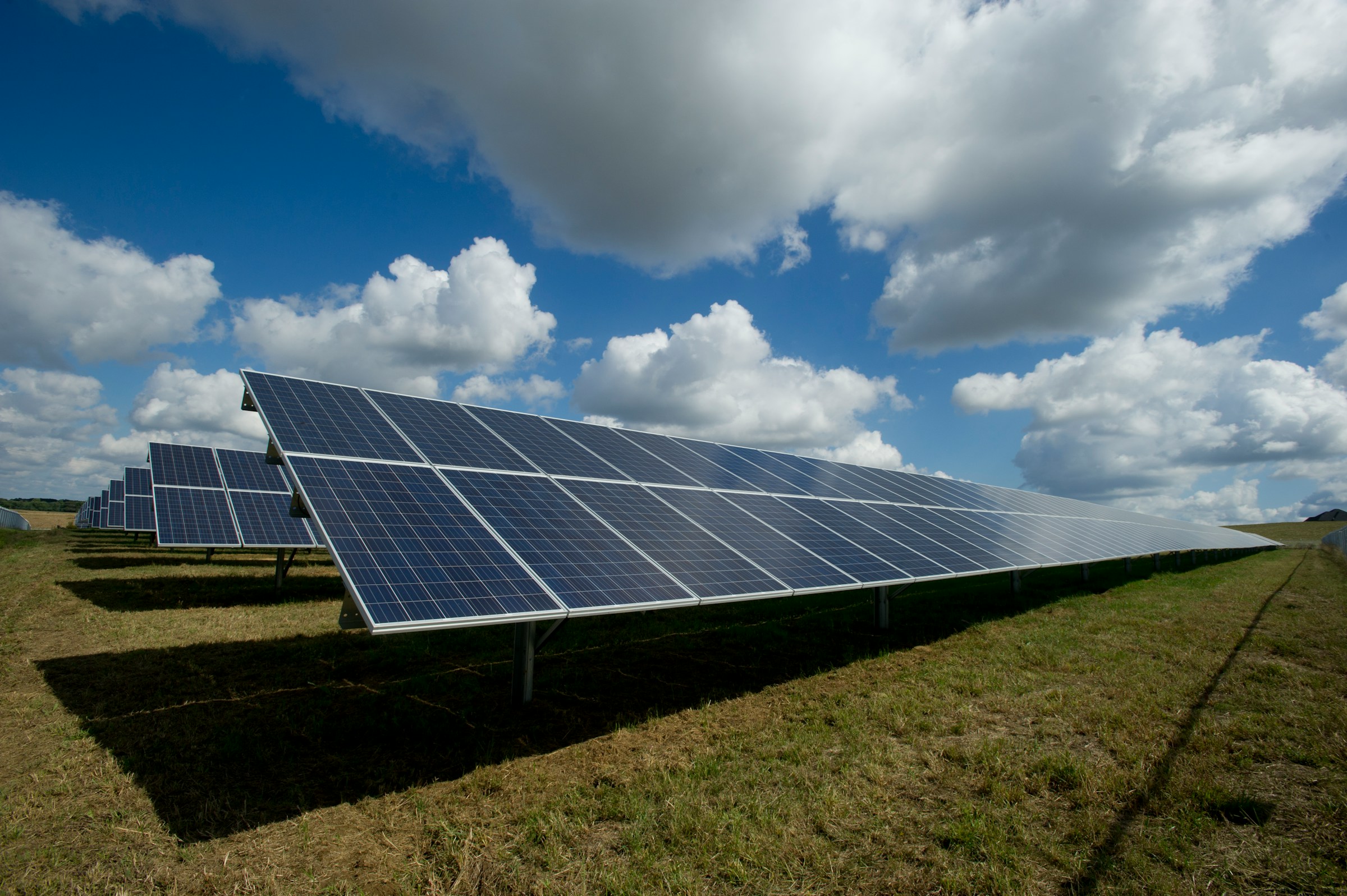
SolarPower Europe says the EU installed about 33.8GW of new solar capacity in the first half of 2026, up 1.9% on the same period last year, while curtailment, negative prices, falling capture rates, and grid constraints became more prominent across several markets.
The association’s mid-year market analysis compares the first-half figure with 33.2GW added in the first six months of 2025. Its central scenario now points to 68.1GW of new EU solar capacity across 2026, 2.1% below the revised 69.6GW record set last year.
Deployment has held up better than expected during a period of renewed fossil-fuel price pressure and extreme heat, but SolarPower Europe says the improvement has not been driven by stronger policy support. National incentive changes, regulatory uncertainty, network bottlenecks, and insufficient flexibility continue to weigh on investment decisions.
Solar’s contribution to electricity supply has nevertheless increased materially. Since 1 March, photovoltaic generation has produced 282TWh across the EU, which SolarPower Europe estimates has avoided more than €30 billion of gas imports for power generation.
For the second consecutive year, solar supplied more than 20% of EU electricity in May, June, and July. In June alone, the share reached a record 25%, making solar the EU’s largest source of electricity for the month as hot weather raised cooling demand and constrained parts of the thermal and hydropower fleet.
Higher output is exposing the operating limits of a system in which generation can be added faster than network and flexibility capacity. Solar production is concentrated in daylight hours and often rises at similar times across neighbouring markets, increasing the risk of depressed wholesale prices when demand, storage, and export capacity cannot absorb the available electricity.
European solar generation reached a new quarterly record in the spring, accompanied by more negative-price periods and stronger evening price ramps. The market effect is now increasingly tied to the physical constraints of grids that have to balance large midday surpluses with sharp changes in output around sunset.
Several markets are responding with more active control of renewable generation. France is lowering its renewable curtailment threshold from 10MW to 1MW, extending remote-control requirements to a much larger number of supported solar and wind installations.
That change illustrates how grid integration is becoming an equipment and communications issue as well as a market problem. Distribution-connected solar increasingly needs plant controllers, inverter interfaces, reliable telemetry, metering, and protection arrangements that allow output to be adjusted without compromising local network limits or wider system stability.
Storage can reduce part of the mismatch by shifting solar electricity from the middle of the day into later demand periods. Its value depends on location, connection terms, power rating, energy duration, and market commitments, while conversion losses and state-of-charge constraints mean batteries cannot absorb every period of surplus generation.
Flexible demand provides another route where industrial processes, electric heating, electrolysis, cooling, or managed vehicle charging can increase consumption during periods of high renewable output. A megawatt of additional demand is most useful when it appears on the constrained part of the network at the time surplus generation is available.
Network reinforcement remains the slower response where congestion is structural. New substations, transformers, overhead lines, underground cables, and digital control can raise transfer capability, but their planning, consenting, procurement, and construction periods are generally much longer than the time needed to deploy another solar farm.
Those different delivery speeds explain why curtailment and flexible connection arrangements are becoming more common. Generation can continue to enter the system while reinforcement is under way, but the operational cost appears in constrained output, lower capture prices, and a greater need for storage or demand response.
The policy environment is also becoming less uniform. SolarPower Europe points to reduced rooftop support in France, changes affecting residential demand in Czechia, and debate in Germany over reforms that could reduce support for new rooftop systems from 2027.
For project developers, installed capacity alone is therefore a poor measure of asset quality. Connection terms, expected curtailment, capture prices, storage access, route-to-market arrangements, and the ability to respond to network instructions increasingly determine whether a plant can deliver the revenues assumed in its investment case.
The first half of 2026 leaves Europe with a larger solar fleet and a more visible integration problem. Solar produced a quarter of EU electricity in June, but further deployment will depend increasingly on the less photogenic parts of the power system — substations, storage, flexible loads, controls, and transmission capacity capable of carrying the energy when the panels are producing it.