IN Brief:
- Charge & Earn has more than 10,000 flexible EV charging assets enrolled and trading in Great Britain's energy markets.
- The Eve platform shifts eligible charging while maintaining the driver's required vehicle-ready time.
- Retailers, fleets, and charge-point operators can aggregate customer flexibility through the parallel Charge & Earn Network.
ev.energy has launched its Charge & Earn flexible-charging programme in Great Britain with more than 10,000 connected assets already enrolled and trading in energy markets through the company’s Eve orchestration platform.
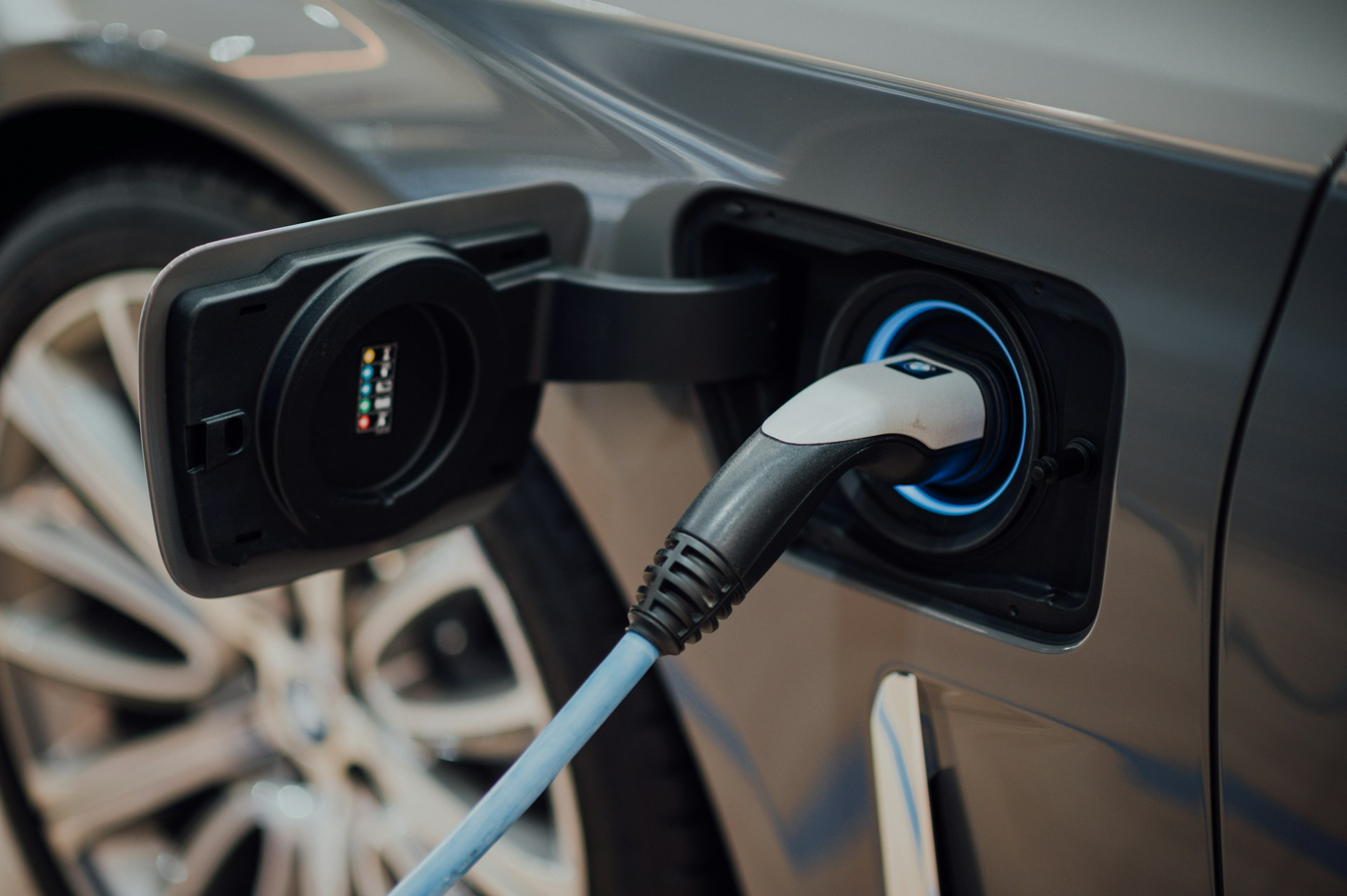
The programme rewards eligible smart charging by changing when participating electric vehicles draw electricity. Drivers connect a compatible vehicle or charger through the ev.energy app, while the platform schedules charging around energy-market and grid conditions without compromising the time at which the vehicle needs to be ready.
ev.energy says participants are currently earning an average of £25 per month based on five charges a week. That figure is company-reported rather than a guaranteed payment, and actual rewards depend on how often a user charges and how much flexibility an individual charging session can provide.
The company’s 10,000 figure refers to flexible assets rather than necessarily the same number of individual drivers. Integration can take place through either a compatible vehicle or charge point, giving the platform different routes to schedule an EV load depending on the equipment and services available.
Charge & Earn operates through Eve, ev.energy’s platform for coordinating distributed energy resources. The company says Eve is deployed across more than 55 programmes in North America and Europe and can connect to more than 80% of the European EV market through vehicle and charger integrations.
Alongside the driver programme, ev.energy has opened the Charge & Earn Network to retailers, fleets, charge-point operators, and other businesses managing EV charging. Partners can enrol users and receive part of the value generated when those charging loads provide flexibility.
The model is designed to reduce the amount of energy-market infrastructure each participating business needs to build independently. ev.energy provides application programming interfaces and handles orchestration and settlement functions through its platform, while partners retain the customer or fleet relationship.
The electrical value comes from controlling time rather than reducing the amount of energy an EV ultimately requires. An unmanaged vehicle can begin charging as soon as it is plugged in, potentially adding load during the same evening period when household and commercial electricity demand is already elevated.
Many vehicles remain connected considerably longer than the time required to reach their target state of charge. That difference between connection duration and charging duration creates a window in which the load can be shifted while still meeting the driver’s required departure time.
Across thousands of vehicles, individually small changes can form a substantial controllable portfolio. The assets remain physically distributed across homes, workplaces, depots, and charging locations, but orchestration software can coordinate their charging response as one aggregated resource.
The technical difficulty lies in the fact that every asset has different constraints. Vehicles arrive with different states of charge, charger ratings vary, departure times change, users can disconnect early, and communications with either the vehicle or charge point may not always be available.
A dependable flexibility service therefore needs enough statistical depth across the fleet to cope with individual assets becoming unavailable. It also needs controls that continuously recalculate the charging schedule rather than assuming every vehicle will remain connected exactly as forecast.
The 10,000-asset milestone should not be treated as though it represented a conventional generating plant with a fixed megawatt rating. ev.energy has not published the combined controllable power, duration, or guaranteed availability of the enrolled portfolio, and those values will vary according to how many vehicles are connected at a particular time.
Its useful capacity is instead determined dynamically by charger power, required energy, connection duration, user preferences, and market commitments. A portfolio may offer substantial flexibility during one period and considerably less during another, which makes forecasting and aggregation central to commercial performance.
Measurement and settlement are equally important where customers are being paid from energy-market value. The platform has to establish what charging occurred, what flexibility was actually delivered, and how the resulting revenue should be allocated between drivers, commercial partners, and the service operator.
That requirement becomes more significant for fleets and retailers. A fleet may have access to a much larger block of charging demand than an individual household, but operational requirements can be tighter because vehicles may have fixed routes, depot departure times, or minimum state-of-charge requirements.
Retail charging propositions face a different constraint: the flexibility programme cannot make the underlying charging service unreliable. Control therefore has to remain subordinate to the driver’s requirement for a usable vehicle, even where wholesale or balancing-market conditions would favour a longer delay.
Flexible EV charging is becoming more relevant as transport electrification adds electricity demand to the network. If a large proportion of vehicles begins charging simultaneously during traditional peak periods, distribution assets and system generation have to accommodate both existing demand and the new transport load.
Smart charging can move part of that load towards periods when electricity and network capacity are more readily available. The same mechanism can support renewable integration by increasing charging during periods of strong wind or solar production and reducing it when the electricity system is tighter.
Charge & Earn should not, however, be confused with a vehicle-to-grid programme. The launch material describes control of charging demand and does not state that the 10,000 enrolled assets are exporting stored electricity from their traction batteries back to the network.
That distinction keeps the hardware requirement comparatively modest. Unidirectional flexibility can be created through compatible smart charging without requiring every vehicle and charger to support bidirectional power flow, although interoperability across vehicle software, charging equipment, communications, and energy-market systems remains essential.
ev.energy expects the existing portfolio to expand as additional drivers, fleets, retailers, and charge-point operators join the programme. Its ability to turn that growth into a reliable grid resource will depend less on the headline number of connected assets than on how accurately the platform can forecast, dispatch, measure, and settle the flexibility available from them at any given time.