IN Brief:
- Five RWE units with 4.2GW of combined nameplate capacity were disconnected after the Rommerskirchen-area incident.
- The units were producing around 3GW when they tripped, while Amprion said general supply and system stability were maintained.
- Neurath G and Niederaußem H had returned by early afternoon on 2 September, with three units still undergoing staged restoration.
RWE has begun restoring generation after five lignite-fired units with 4.2GW of combined capacity were disconnected following an incident near Amprion’s Rommerskirchen substation in Germany’s Rhineland.
The event occurred at around 20:00 on 1 September and affected Neurath units G and F together with Niederaußem units H, G, and K. The five units were producing approximately 3,000MW immediately before they tripped, below their combined nameplate capacity of 4,200MW.
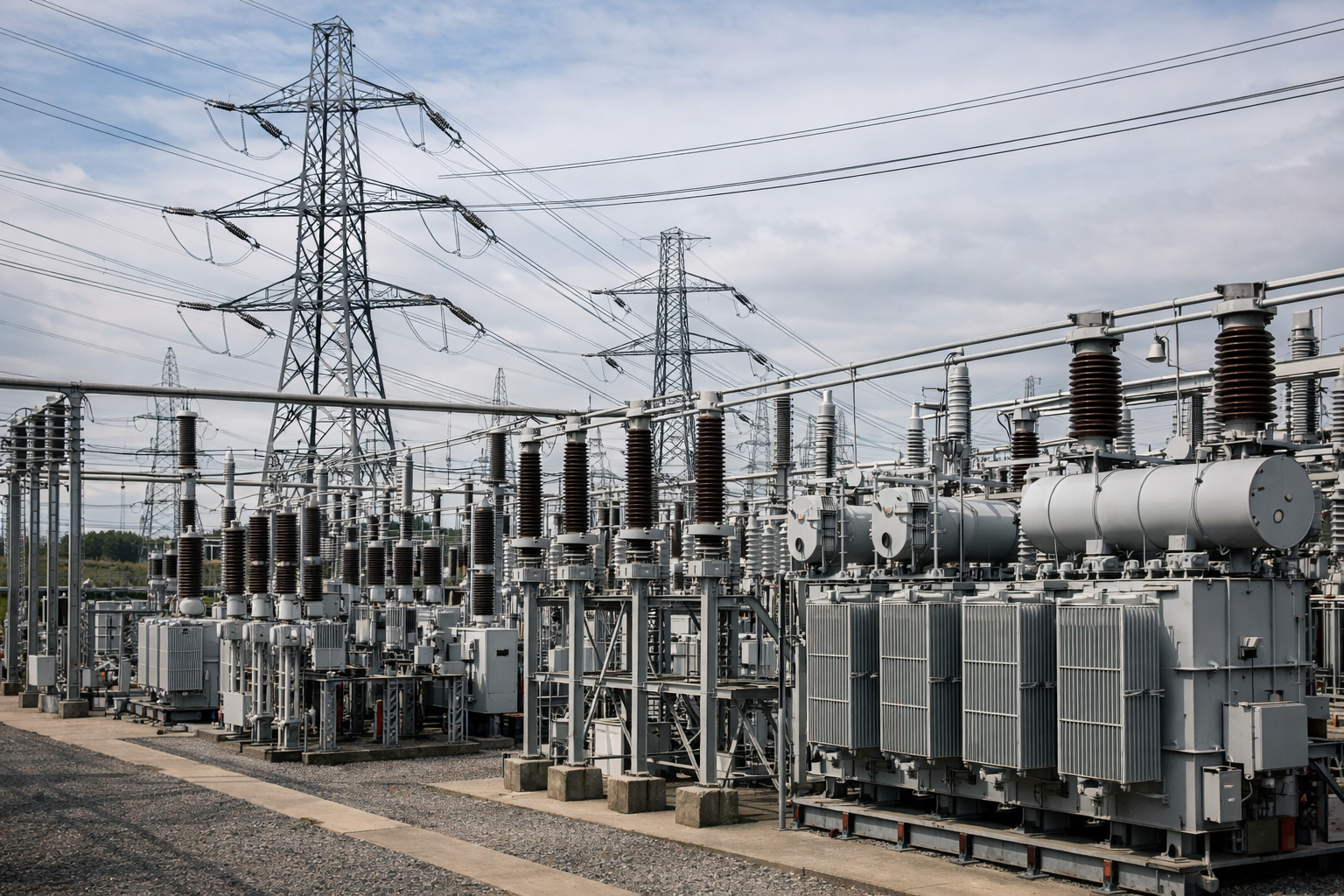
Amprion said the incident affected power-station feeder circuits in the vicinity of its Rommerskirchen installation. General electricity supply was not interrupted and system stability was maintained throughout, despite the sudden loss of several generating units.
The cause remains under police investigation. Amprion said external interference is considered highly probable, while also stating that no confirmed findings on the background to the incident are yet available. The available evidence does not establish deliberate sabotage, a perpetrator, or a specific motive.
RWE reported at 13:55 on 2 September that Neurath G and Niederaußem H had been reconnected as planned, restoring around 1,600MW of capacity. The company expected the 1,000MW Neurath F unit to return by the evening, with Niederaußem G and K, together representing around 1,600MW, still expected back during the weekend.
The difference between the 4.2GW nameplate figure and the roughly 3GW of output actually lost is important. Nameplate capacity describes how much plant became unavailable, while the immediate system imbalance is determined by the power those units were supplying at the instant of the trip.
A simultaneous loss of around 3GW is nevertheless a substantial transmission-system disturbance. Frequency begins to respond as soon as generation and demand diverge, requiring the system to arrest the deviation using the combination of inertia, frequency response, reserves, balancing actions, and the behaviour of other connected generation and demand.
Amprion has not published the individual operational measures used during the event. Its confirmation that stability was maintained shows that the wider system remained within secure operating conditions even though several large units were removed through a common network area.
The incident also illustrates common-mode risk. Generating units can be independent at plant level yet share transmission infrastructure whose failure or disconnection affects several units at once, which is why substation configuration, feeder routing, protection design, and contingency analysis are treated as system-level issues rather than individual plant concerns.
High-voltage substations form the electrical interface between generating stations, transmission circuits, and the wider grid. A disturbance around that interface can therefore disconnect healthy generating plant even where turbines, boilers, generators, and station auxiliaries have not suffered an internal failure.
Protection systems may deliberately isolate circuits or plant to prevent fault energy propagating into unaffected equipment. Successful protection can therefore coincide with a large loss of generation: the purpose is to contain the abnormal condition first, after which operators rebalance the system and reconfigure network topology.
Restoration is governed by both network and plant constraints. A thermal unit cannot resume full output simply because a transmission circuit becomes available; auxiliary systems must be stable, protection must be reset and validated, the generator has to synchronise with grid voltage and frequency, and output must ramp within the plant’s permitted operating envelope.
That makes staged reconnection a normal engineering response after an unplanned trip. Returning several large units simultaneously could create new voltage, frequency, or thermal stresses, while each plant also needs confirmation that the fault or abnormal condition that caused the original disconnection is no longer present.
The Rommerskirchen event is also likely to increase attention on the physical security of transmission assets, but the available evidence does not yet support a conclusion about the precise method, perpetrator, or motive. Police and Amprion are still investigating, and no confirmed background has been published.
For system operators, the confirmed operational facts are already significant: five units tripped, approximately 3GW of generation disappeared at the time, and the transmission system remained stable without a general interruption to supply. Two units were back by early afternoon, while restoration of the remaining plant was being spread across the rest of the day and the coming weekend.
The final technical assessment will depend on the investigation into the substation-area incident and confirmation that all remaining units have returned safely. Until then, the event is best understood as a large but contained loss of generation rather than a wider grid outage.