IN Brief:
- Infineon and Skeleton have signed an MoU covering the power chain from medium-voltage grid connection towards high-density AI computing loads.
- The companies plan to combine silicon-carbide semiconductors with solid-state transformer architectures converting medium-voltage AC to high-voltage DC.
- A second workstream combines gallium-nitride devices with supercapacitors for short-duration peak-power management.
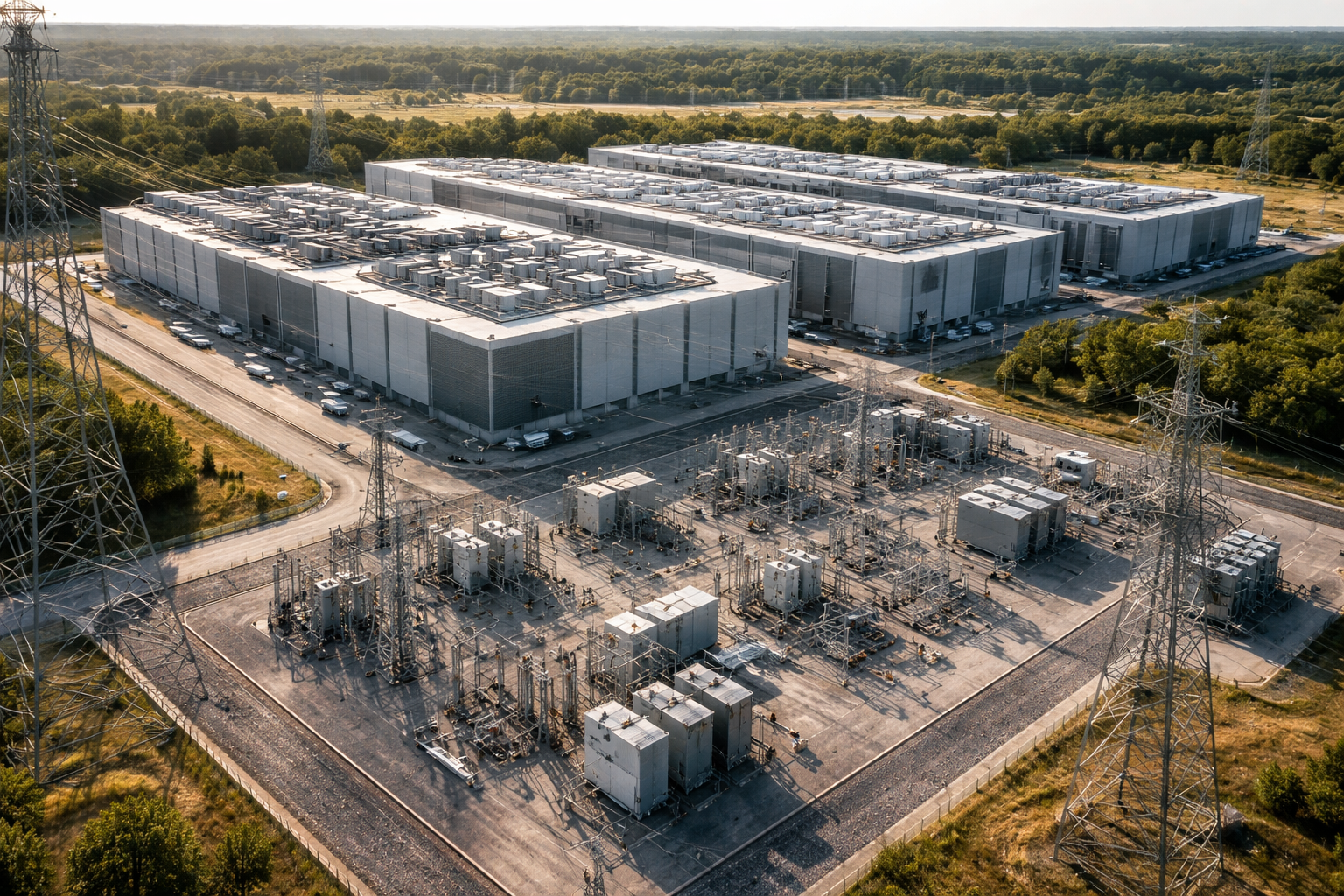
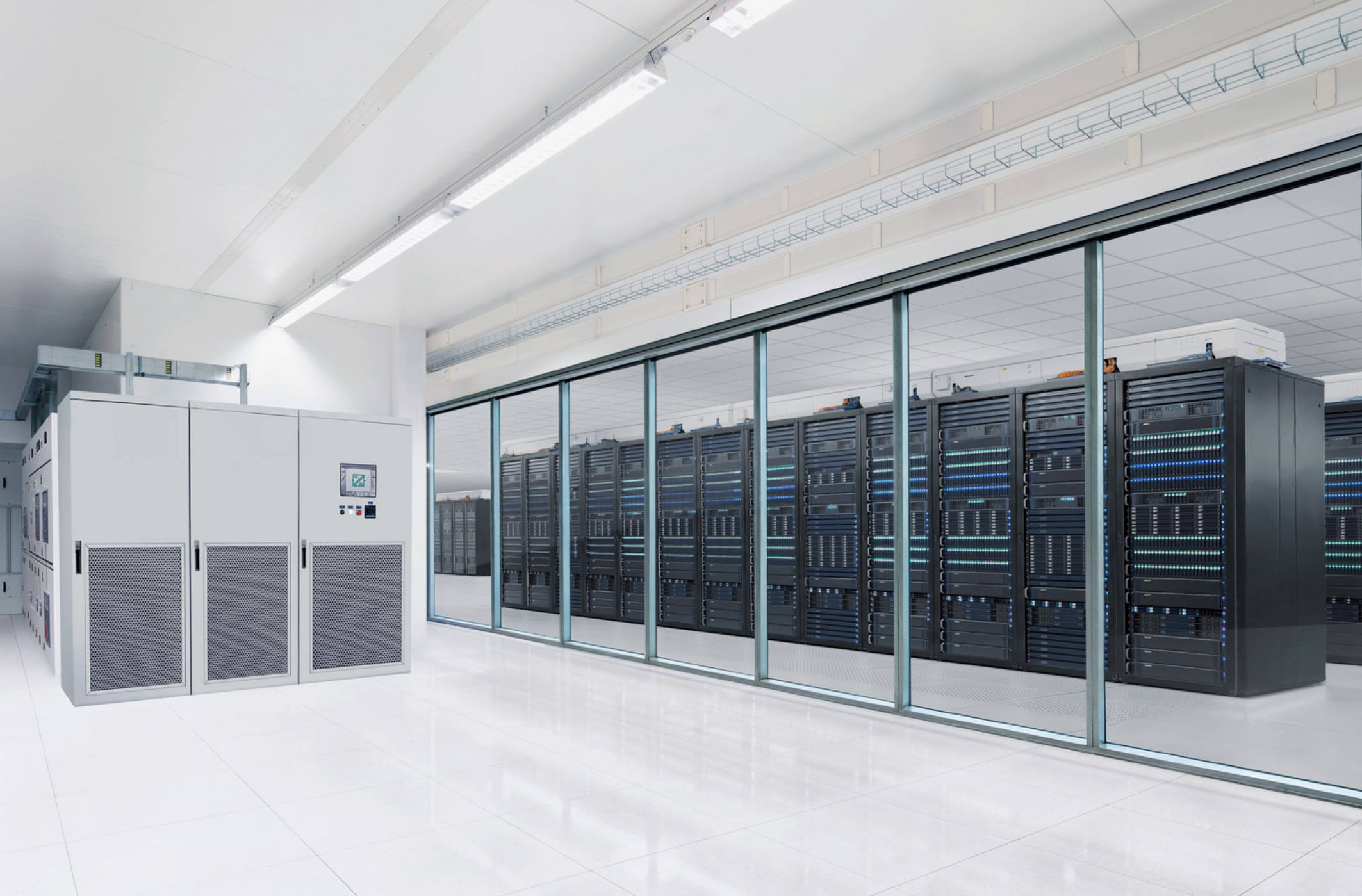
Infineon Technologies and Skeleton Technologies have signed a memorandum of understanding to develop power architectures for high-density AI data centres, focusing on solid-state transformers and high-power sidecar systems intended to improve conversion efficiency, power density, and resilience between the grid connection and computing load.
The agreement brings together Infineon’s power semiconductor portfolio and Skeleton’s supercapacitor and power-conversion expertise. The companies are examining architectures across a substantial part of the data-centre electricity chain rather than concentrating only on the final voltage-conversion stages close to processors.
One workstream centres on solid-state transformers capable of converting medium-voltage alternating current into high-voltage direct current. Infineon plans to contribute its CoolSiC silicon-carbide devices, while Skeleton will bring system-level power-conversion and energy-storage capability.
Solid-state transformers replace much of the low-frequency magnetic conversion used in conventional transformer arrangements with semiconductor switching and higher-frequency conversion stages. For data centres, the attraction lies in tighter control of voltage and power flow, higher power density, and the potential to reduce the number of separate conversion steps between the grid connection and DC loads.
The technical trade-off is greater electronic complexity. Every semiconductor conversion stage introduces losses, heat, switching stress, control requirements, and protection considerations. Small efficiency improvements can be commercially significant when equipment processes power continuously at multi-megawatt scale, but those gains have to be sustained across realistic loading conditions and over long operating periods.
A second workstream covers high-power sidecar systems combining Infineon’s CoolGaN gallium-nitride devices with Skeleton’s supercapacitors. These systems are intended to absorb or supply short-duration power peaks, reducing the requirement for upstream electrical infrastructure to follow every rapid variation in computing demand.
That problem is becoming more prominent as AI accelerators increase rack power density and create faster changes in load. The electrical system has to maintain stable voltages despite those changes, while transformers, switchgear, generators, and grid connections are generally easier to size and operate when demand is comparatively smooth.
Supercapacitors have different operating characteristics from conventional battery storage. They can charge and discharge rapidly at high power and tolerate very large numbers of cycles, making them potentially useful for short-duration buffering where energy capacity is less important than response speed and repeated power delivery.
The collaboration remains at memorandum-of-understanding stage. Infineon and Skeleton have not announced a commercial customer, installation rating, measured efficiency, deployment date, or product-availability timetable. The engineering significance therefore lies in the architecture being pursued rather than in a proven operating installation.
That distinction matters because medium-voltage solid-state transformation is demanding. Semiconductor devices and converter assemblies must tolerate high electric fields, switching transients, thermal cycling, fault conditions, and sustained operation while delivering the availability expected from infrastructure supporting expensive computing equipment.
Protection philosophy also changes as more of the distribution chain becomes semiconductor-controlled. Conventional transformers have well-understood fault behaviour and can tolerate short-duration overloads, whereas semiconductor converters require rapid fault detection and coordinated control to prevent device damage. Those requirements extend into switchgear, DC protection, earthing, redundancy, and maintenance strategy.
The commercial driver is not only efficiency. Electrical rooms, transformers, switchgear, UPS equipment, storage, and cooling all consume space that could otherwise support computing hardware. Higher power density in the electrical chain can therefore influence the economics of a data-centre building as well as its energy performance.
Infineon has been building a wider position around this problem. The company has separately worked with LS ELECTRIC on high-efficiency DC infrastructure including solid-state transformers and semiconductor circuit breakers, while its planned acquisition of C2i Semiconductors adds digital multiphase control closer to the processor end of the power chain.
The Skeleton agreement moves attention towards the grid-facing side and short-duration energy buffering. That reflects the emerging electrical problem created by AI infrastructure: medium-voltage supply has to be converted efficiently while dense computing hardware demands lower voltages, much higher currents, and faster response to transient loads.
Semiconductor-based systems will not displace conventional transformers simply because AI loads are growing. Utility connection standards, cost, serviceability, equipment lifetime, fault performance, spare-parts strategy, and proven reliability still favour established technology in many applications.
The adoption case will therefore depend on measured system performance rather than semiconductor specifications in isolation. Prototype ratings, conversion efficiency, thermal behaviour, fault response, maintainability, and operation under realistic AI load profiles will be more important than the MoU itself.
Infineon and Skeleton have identified a credible area for engineering development, but the next milestone needs to be hardware. Until demonstrators or customer deployments establish those figures, the collaboration should be treated as an architecture programme aimed at a difficult power-distribution problem rather than a finished replacement for conventional data-centre electrical systems.