IN Brief:
- HOCHTIEF has agreed to acquire German high-voltage overhead-line specialist Autmatec.
- Autmatec employs around 80 people and generated approximately €50 million of revenue in 2026.
- The acquisition adds specialist line construction and maintenance capability to HOCHTIEF's wider grid infrastructure business.
HOCHTIEF has agreed to acquire German transmission infrastructure specialist Autmatec, adding dedicated high-voltage overhead-line construction, refurbishment, and maintenance capability to its existing engineering and infrastructure operations.
Autmatec was founded in 1997 and is based in Walldorf, Germany. It employs around 80 specialists and generated approximately €50 million in revenue in 2026, providing services to transmission and distribution network operators.
Its work covers site preparation, foundations, tower construction, line installation, refurbishment, maintenance, and project management. Those capabilities will sit alongside HOCHTIEF Infrastructure and HOCHTIEF Engineering if the acquisition receives German merger-control clearance.
Autmatec’s existing management team is expected to remain in place following completion. For HOCHTIEF, retaining that specialist leadership is important because overhead-line work depends heavily on operational knowledge, trained crews, network-operator procedures, and qualifications that cannot be replicated simply by adding general construction capacity.
The acquisition extends a grid business that HOCHTIEF is already developing through major transmission contracts. In the UK, a HOCHTIEF-Murphy joint venture is working on National Grid’s North West London Upgrade, a programme that includes 60 kilometres of new cable infrastructure, substation upgrades and expansion, replacement of overhead lines, and work on a high-voltage cable tunnel.
Specialist delivery capacity becomes more valuable
Transmission construction is increasingly constrained by more than access to capital. New renewable generation, battery storage, data centres, electrified transport, and industrial demand are adding projects to network investment programmes, while operators also have to refurbish and reinforce existing assets.
That creates simultaneous demand for cables, transformers, switchgear, towers, conductors, civil engineering, protection systems, and the skilled workforce needed to put the equipment into service. Contractors that can combine general infrastructure delivery with high-voltage line expertise are consequently positioned across a larger share of a grid programme.
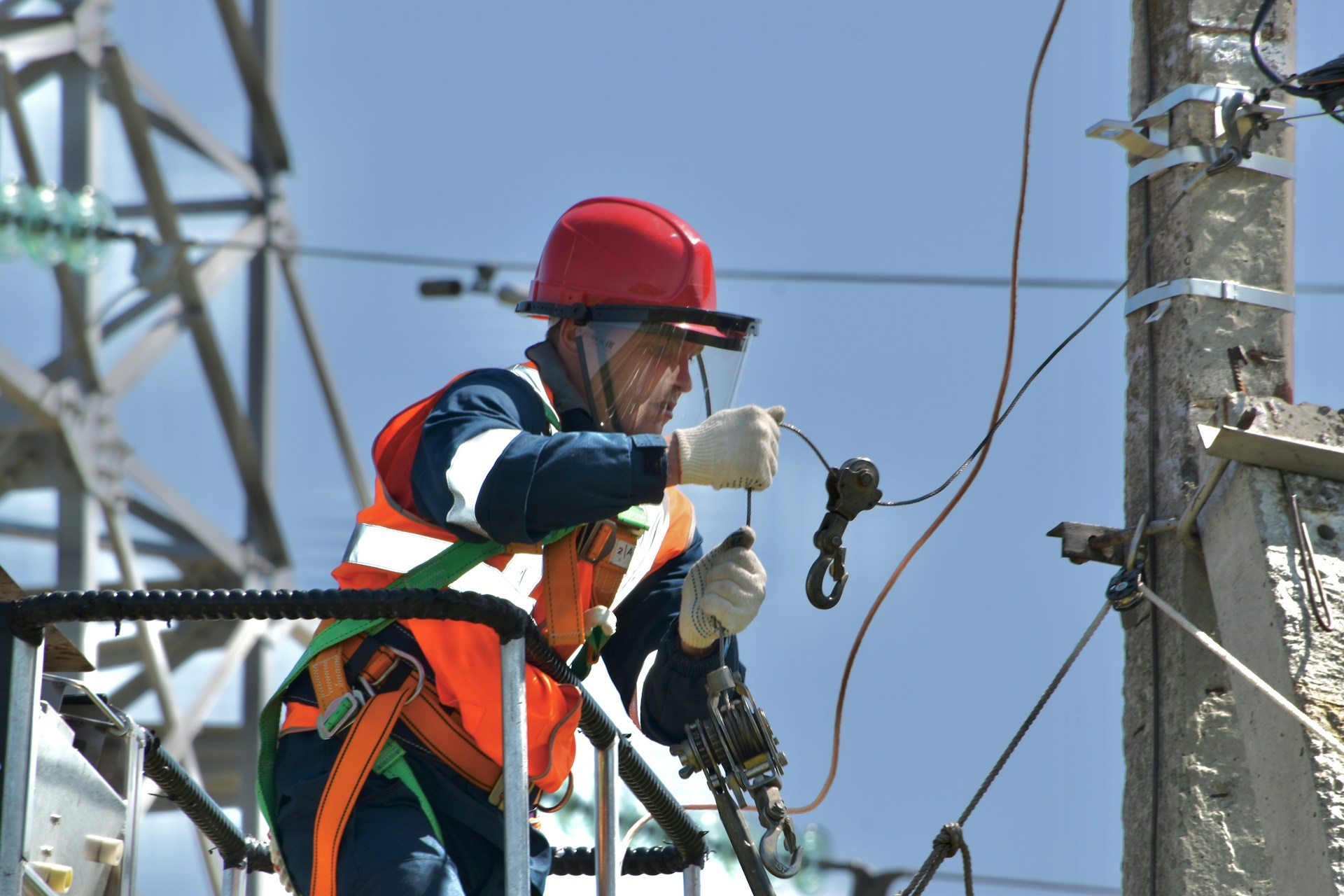
Overhead-line construction remains a specialist activity within that market. Foundation design varies with ground conditions and tower type, structures have to be assembled and erected safely close to existing assets, and conductor installation requires controlled stringing operations across roads, railways, waterways, and other infrastructure.
Brownfield refurbishment can be more complex still because work has to be sequenced around outages and the continued operation of adjacent circuits. Replacement of towers, conductors, fittings, and foundations therefore depends on close coordination between contractor and network operator rather than simply applying new-build methods to an existing route.
Autmatec gives HOCHTIEF direct access to that capability instead of relying entirely on subcontracted specialists. It also adds maintenance work, which can provide a different workload profile from large capital projects because network assets require inspection, repair, component replacement, and uprating throughout their operating life.
For transmission owners, greater contractor scale can support larger frameworks and more integrated project packages. A supplier with engineering, civil, line construction, and project-management resources can take responsibility for additional interfaces, although concentration among contractors can also reduce the number of independent specialists competing for the same programmes.
That balance will matter as grid operators increase delivery volumes. A network reinforcement plan can be fully funded and still fall behind if specialist crews, outage windows, equipment, or design resources are not available when required. Contractor capacity is therefore becoming a practical programme constraint alongside transformer and cable lead times.
HOCHTIEF’s London work shows how those disciplines increasingly overlap. The North West London Upgrade involves underground cable, substations, overhead lines, and tunnel infrastructure within one broader transmission programme, requiring construction activities that would once have sat within more separate contractor packages.
Autmatec adds German overhead-line expertise to that model. The acquired business will still have to retain its workforce and customer relationships if the anticipated benefits are to materialise, because the value lies as much in operational capability as in revenue or order-book contribution.
The transaction remains subject to clearance by the German Federal Cartel Office. Until that process is complete, Autmatec continues as a separate specialist business, but the proposed acquisition illustrates how network investment is beginning to reshape the contractor market as well as the physical grid.