IN Brief:
- The 125MW Kukonkylä BESS in Sievi has been sold by Korkia and Semecon’s development venture to Enlight Renewable Energy.
- The standalone project is ready to build beside Fingrid’s planned Kukonkylä substation, avoiding the need for a new transmission corridor.
- Its sale reflects a maturing Finnish storage market where permitted, connection-ready projects are becoming infrastructure assets in their own right.
Korkia and Semecon have sold the 125MW Kukonkylä battery energy storage project in Sievi, Finland, to Enlight Renewable Energy, moving one of the country’s larger publicly announced standalone storage schemes from development into a new ownership phase.
The project was developed through Korkia Semecon Finland Renewables, the joint venture established by Korkia and Finnish developer Semecon. Kukonkylä has already reached ready-to-build status, with a legally valid building permit secured and preparatory work undertaken ahead of construction.
The 125MW BESS is planned in Northern Ostrobothnia beside a new Fingrid substation under development at Kukonkylä. That location removes the need for a new long-distance transmission corridor and gives the project a comparatively direct route into the Finnish power system once the required grid interface is complete.
It is a standalone storage development rather than a battery tied electrically to one wind or solar plant, leaving its eventual operator free to charge and discharge against wider market and system conditions. Wholesale trading, balancing, ancillary services, congestion, and transmission requirements can therefore determine operation without the battery being constrained by the production profile of a co-located generator.
The transaction also illustrates how the storage development market is dividing into distinct stages. Early-stage developers secure land, permissions, and grid access before transferring projects to owners capable of funding construction and carrying operating exposure over the asset’s working life. Reaching ready-to-build status removes much of the planning uncertainty, although the most capital-intensive engineering still lies ahead.
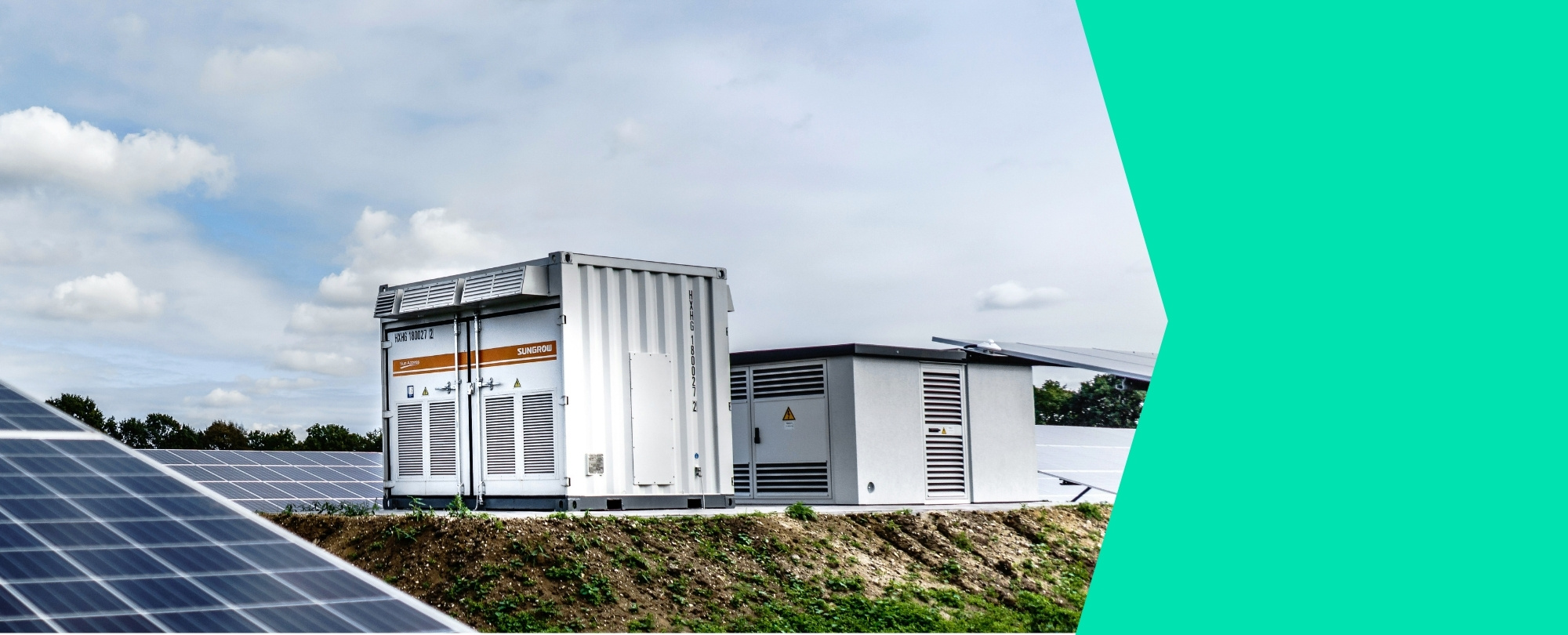
A 125MW battery plant requires considerably more than battery containers. Bidirectional power conversion systems, transformers, switchgear, protection, metering, auxiliary supplies, communications, thermal management, fire protection, and plant-level controls all have to operate as a coordinated grid asset.
Its behaviour at the transmission interface is particularly important because a battery can move rapidly between importing and exporting large quantities of power. Connection studies must establish acceptable active and reactive power performance, fault behaviour, protection coordination, voltage control, harmonics, ramp rates, and communications with the system operator across both operating directions.
Those requirements become more significant as storage projects move from tens into hundreds of megawatts. A small battery responding incorrectly to a control instruction may be largely a local problem; a transmission-connected asset changing its output by 125MW can have a measurable effect on system conditions.
Finland provides a strong commercial setting for that capability. Wind generation has expanded rapidly, creating larger variations in output and more frequent periods when electricity prices move sharply as generation and demand diverge. Storage can absorb electricity during periods of strong supply and discharge later, while the Nordic balancing markets provide additional routes to revenue for assets capable of responding quickly.
The value of individual services will not remain static as the storage fleet grows. Frequency-response and balancing markets can become crowded when new batteries arrive faster than demand for a particular service, reducing prices and forcing operators to move capacity between different revenue streams.
That places greater emphasis on software and operating strategy. A battery controller has to decide whether available capacity is better reserved for balancing, used for wholesale arbitrage, or held back for anticipated market conditions later in the day, while accounting for state of charge and technical operating limits.
Battery degradation adds another constraint because every cycle consumes part of the asset’s useful life. Round-trip efficiency, cell temperature, depth of discharge, warranty terms, and capacity fade all influence whether a trading opportunity is worth taking once the long-term cost of cycling is included.
The engineering specification therefore feeds directly into the financial model. Power rating determines how rapidly the plant can move energy and how much capacity it can offer to grid services, while energy capacity determines the duration for which that output can be sustained. Controls, efficiency, degradation, and market access then determine how effectively the installed hardware can be monetised.
Kukonkylä sits within a wider group of renewable developments around Sievi, including wind, solar, and battery projects being advanced by Korkia and Semecon. Some of those developments use hybrid configurations intended to make more intensive use of limited connection capacity, while Kukonkylä retains the flexibility associated with a standalone asset.
The two approaches solve different problems. Co-located batteries can reduce curtailment and improve utilisation of a renewable project’s grid connection, whereas standalone systems can be positioned where the network or market places the highest value on flexibility independent of a particular generator.
For Enlight, acquiring a project at ready-to-build stage avoids much of the uncertainty attached to land assembly, permitting, and early connection work. Procurement, financing, construction, commissioning, grid-code compliance, and operating optimisation remain, but the project has already passed several of the stages where storage developments are most likely to stall.
Kukonkylä’s sale is therefore a useful measure of how Finland’s battery market is developing. Connection-ready storage schemes are becoming tradeable infrastructure projects rather than speculative applications, bringing long-term owners into a market where grid flexibility increasingly has both a technical requirement and a commercial value.