IN Brief:
- JIB joined a parliamentary discussion on workforce delivery for the energy transition.
- It is seeking stronger use of verified competence and collective employment frameworks.
- Upskilling qualified electricians for charging, storage, and solar remains a central priority.
The Joint Industry Board has taken its case for verified electrical competence and collective employment standards into a parliamentary discussion on delivery of the UK energy transition.
Andy Reakes, JIB Acting Chief Executive, attended the meeting on 13 July. Hosted by Henry Tufnell MP, the discussion considered the workforce required to deliver clean-energy investment and wider electrification.
The Government has committed £63 billion of capital funding across clean energy, climate, and nature. Public-finance measures include a £1 billion Great British Energy clean-energy supply-chain fund intended to encourage additional private investment.
Approximately £50 billion of private clean-energy investment has also been announced since July 2024. Turning that capital into operating infrastructure will require designers, cable jointers, electricians, commissioning personnel, project managers, protection specialists, control engineers, and maintenance teams across generation, transmission, distribution, and customer installations.
JIB’s intervention focused on preventing construction speed and investment volume from weakening competence or safety requirements. It identified the upskilling of already-qualified electricians for electric-vehicle charging, battery storage, and solar photovoltaic work as a priority.
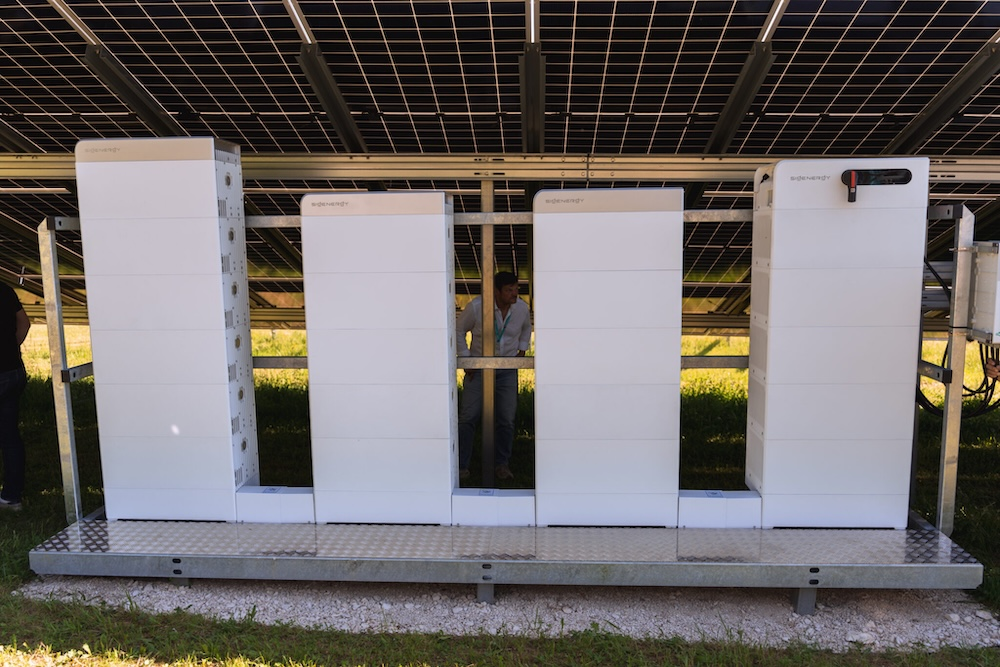
Those technologies introduce requirements beyond general installation experience. Charging systems can involve open-PEN protection, load management, communications, and distribution-network notifications, while battery installations add bidirectional power flow, isolation, fire precautions, control systems, and interaction with existing generation.
Solar PV introduces its own DC design, inverter protection, generation metering, and safe-shutdown requirements. Upskilling therefore needs to build on an established electrical foundation rather than replace it, because short technology courses cannot reproduce the breadth of training, supervised experience, assessment, and fault-finding competence contained within a complete electrical qualification.
Workforce planning follows the project pipeline
Skills shortages are already appearing around infrastructure with concentrated electrical demand. Work on data-centre workforce requirements has identified commissioning, cable jointing, apprenticeships, and specialist electrical capability as areas requiring coordinated development.
The clean-energy programme will draw on many of the same occupations. A transmission substation, battery project, data centre, offshore-wind connection, and large charging depot may all require high-voltage installation, protection testing, control integration, commissioning, and cable expertise even though their end applications differ.
Workforce forecasts need to account for timing as well as total headcount because several major projects entering construction simultaneously can create local shortages that are not visible in national employment figures. Remote locations, shift patterns, security requirements, travel, and temporary accommodation can narrow the available workforce further.
JIB is promoting its collective agreement as a framework covering verified competence, employment conditions, welfare, and fair work. Collective arrangements can establish common expectations across projects where several contractors and subcontractors operate under one delivery programme.
Competence verification is particularly important within long supply chains. A principal contractor may have limited direct knowledge of every individual arriving through subcontractors and labour providers, making card schemes, registers, qualification checks, and clearly defined scopes necessary for confirming who is authorised to undertake particular work.
Verification must remain specific because holding a general electrical qualification does not automatically establish competence for every high-voltage, hazardous-area, protection, battery, or specialist commissioning task. Training, experience, supervision, and assessment should correspond to the actual work and equipment.
The same distinction applies to new entrants and experienced workers. Apprenticeships build the broad occupational base needed for long-term capacity, while targeted upskilling allows qualified electricians to move into adjacent low-carbon systems more quickly; relying only on one route would either slow near-term delivery or weaken the future skills pipeline.
Procurement can reinforce those standards by including competence, training, employment, and workforce-development requirements at the start of a project. Introducing them after contracts have been priced and labour strategies agreed is more difficult and can encourage inconsistent implementation between tiers.
Capital announcements establish the scale of intended activity, but infrastructure is delivered through people with defined technical authority and practical experience. Competence and employment structure therefore sit alongside finance, planning, and equipment as core delivery conditions.