
IN Brief:
- Fidra Energy has secured £231 million of loan facilities for the 500MW/1.1GWh West Burton C battery.
- Sungrow will supply the storage systems, while H&MV Engineering will deliver the 400kV connection and electrical works.
- Construction is due to begin during 2026, with full operation expected in 2028.
Fidra Energy has reached financial close on its 500MW/1.1GWh West Burton C battery energy storage project in Nottinghamshire, securing £231 million of new loan facilities for construction.
Representing an investment of approximately £250 million, the project will be built on the site of the former West Burton coal-fired power station. Construction is due to begin later in 2026, with full commercial operation expected during 2028.
The financing package comprises a term loan and ancillary facilities provided by a group of international lenders. It sits alongside capital already committed to Fidra by infrastructure investor EIG and the UK National Wealth Fund.
Sungrow will supply the battery systems, while H&MV Engineering has been appointed principal designer and contractor for the 400kV grid connection, the wider electrical scheme, and erection and commissioning of the storage equipment.
West Burton C has a power rating of 500MW and energy capacity of 1.1GWh, giving a nominal duration of approximately 2.2 hours at maximum discharge. Usable duration will vary with operating reserves, efficiency, degradation, temperature, warranty limits, and the services being delivered.
Fidra has signed a long-term offtake agreement with Drax covering 50% of the project’s capacity. The battery also holds a fifteen-year Capacity Market agreement beginning in October 2028, combining contracted revenue with access to trading and system-service markets.
At maximum output, the completed facility is expected to supply power equivalent to the peak demand of around 300,000 homes. The comparison describes instantaneous output rather than annual electricity production, because the battery will shift previously generated energy instead of creating it.
Coal infrastructure gives way to flexibility
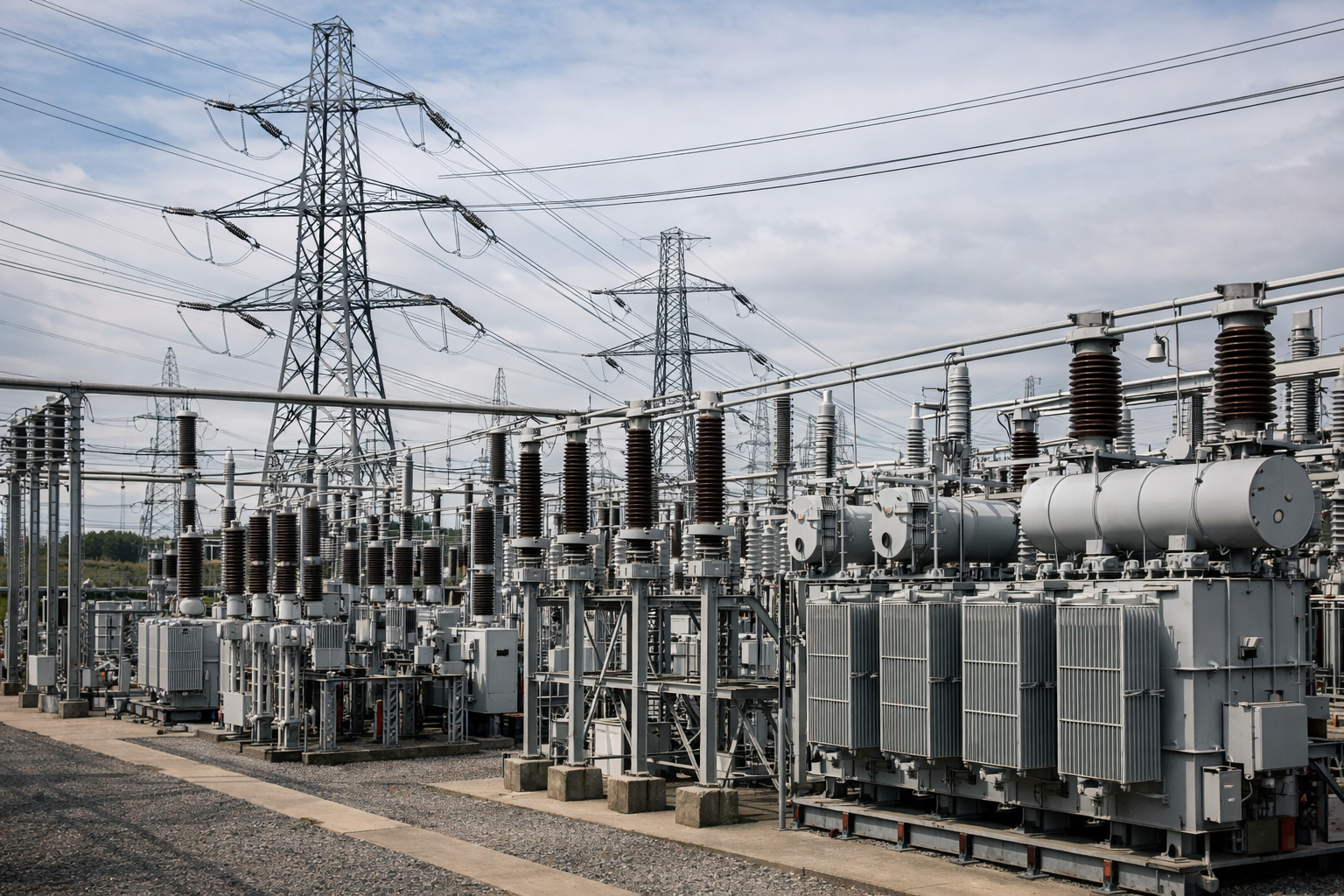
West Burton provides several characteristics sought by large battery developers: an established power-sector location, proximity to high-voltage infrastructure, industrial land, and a history of accommodating substantial electrical plant. Reusing former generation sites can reduce parts of the development burden, although every new connection still requires detailed studies and an appropriate network agreement.
The 400kV interface places West Burton C firmly within transmission-scale storage. Protection, metering, control, harmonic performance, fault behaviour, reactive-power capability, and communications must all satisfy requirements applying to a plant capable of moving rapidly between a 500MW import and a 500MW export position.
Such a reversal changes the site’s net system position by 1GW. Control systems and market schedules therefore need to prevent abrupt or poorly coordinated transitions from adding unnecessary stress to the network.
H&MV’s scope will extend well beyond constructing a substation bay. Battery blocks, inverter stations, transformers, auxiliary systems, the 400kV connection, site protection, control interfaces, and commissioning tests must operate as one compliant generating and demand facility.
West Burton C joins a UK battery pipeline containing several different durations and commercial models. A four-hour project consented on Teesside represents a longer-duration configuration, while West Burton’s approximately 2.2-hour design provides greater power relative to its stored energy.
Neither arrangement is inherently superior. A shorter, higher-power battery can respond strongly to balancing requirements and brief price events, whereas four-hour storage can sustain output across longer periods. Connection location, cycling strategy, degradation, market design, and revenue contracts determine the stronger fit for each project.
Financing structures are becoming more significant as frequency-response revenues mature and battery fleets expand. Capacity Market income, offtake agreements, tolling contracts, wholesale optimisation, balancing activity, and ancillary services can be combined, but lenders require confidence that the operating strategy will remain viable as individual markets change.
Contracted availability also influences engineering decisions. Redundancy, spare-parts support, maintenance planning, augmentation, and control over planned outages all affect the ability to meet commitments, while failures in auxiliary systems or the grid connection can reduce revenue even where most battery cells remain healthy.
Fire detection, enclosure separation, drainage, emergency access, thermal management, and coordination with local responders will form part of the site design. The energy held within a 1.1GWh facility requires incident containment to be considered across the entire layout rather than at container level alone.
Battery degradation will need to be managed over the project’s contracted life. Available energy and power can decline with cycling and age, so equipment oversizing, augmentation, operating limits, and replacement plans may be needed to preserve the capacity sold under long-term agreements.
Fidra’s wider UK pipeline exceeds 4GW and includes Thorpe Marsh, Enderby, and Bicker Fen. That scale moves the company beyond single-project development towards a portfolio requiring repeatable procurement, common technical standards, operations capability, and coordinated market access.
The Clean Power 2030 programme anticipates between 22GW and 27GW of short-duration battery storage by 2030. Reaching that range depends on projects securing finance, equipment, grid works, commissioning, and sustainable revenues rather than accumulating planning permissions alone.
West Burton C has now cleared one of the most difficult stages in that process. The remaining programme will test whether its financing, contracting structure, 400kV engineering, and construction plan can convert a former coal-generation site into a dependable source of fast system flexibility.

