IN Brief:
- Orders for new power plants reached €406.5m in Q3 2026, compared with €59.3m a year earlier.
- Eight 2 MW CHP units have been ordered for German biogas facilities, while US data centre generator deliveries have started.
- The company has received a substantial contractual down payment against a previously disclosed 275 MW order.
2G Energy secured €406.5m of new power plant orders in the third quarter of 2026, compared with €59.3m a year earlier, as large North American generation projects and German combined heat and power demand strengthened its order book. The company has received a contractual down payment for an existing 275 MW contract, started deliveries to a US data centre project and secured a separate 16 MW order for biogas generation equipment.
North and Central America accounted for €277.1m of third-quarter orders, while Germany contributed €60.1m, up from €40.2m a year earlier. The rest of Europe generated €16.2m and Asia, Australia and other markets €53.1m. The quarterly total represents an annual increase of 585%, although the regional distribution shows that much of the growth came from a small number of large orders rather than an equivalent rise across every market.
2G’s 275 MW contract was originally disclosed on 23 September. Having first received a reservation payment, the manufacturer has now collected the contractual advance payment required to recognise the order. That payment is the latest development in an existing contract and is included in the manufacturer’s reporting approach to new plant intake. It also provides funding for procurement and production as equipment moves through the manufacturing programme.
Large generator orders normally involve staged payments against design, manufacture and delivery milestones. 2G says that subsequent customer payments are generally structured to cover production costs by the time equipment is delivered. The timing helps explain why order intake, revenue and the electrical capacity installed at customer sites follow different reporting cycles. A generator can be booked as an order months before it is delivered, connected or cleared for operation.
The first generating units from another US data centre order, announced in May, have arrived at the customer’s construction site. Deliveries have followed the commissioning of a new assembly hall and a ramp-up in manufacturing. Electrical installation, protection coordination, fuel connections and acceptance testing will determine when the equipment can be operated at the site, with the customer responsible for integrating the supplied generation into its wider power system.
Data centres can require a combination of grid supply, standby generation, energy storage and local power production, depending on the resilience specification and the network connection available. Generator duty affects fuel supply, cooling, emissions controls, switching and maintenance arrangements. 2G has confirmed the deliveries but has not disclosed the final operating configuration or dispatch profile of the US installation, leaving the site’s use of the equipment to be established through later project milestones.
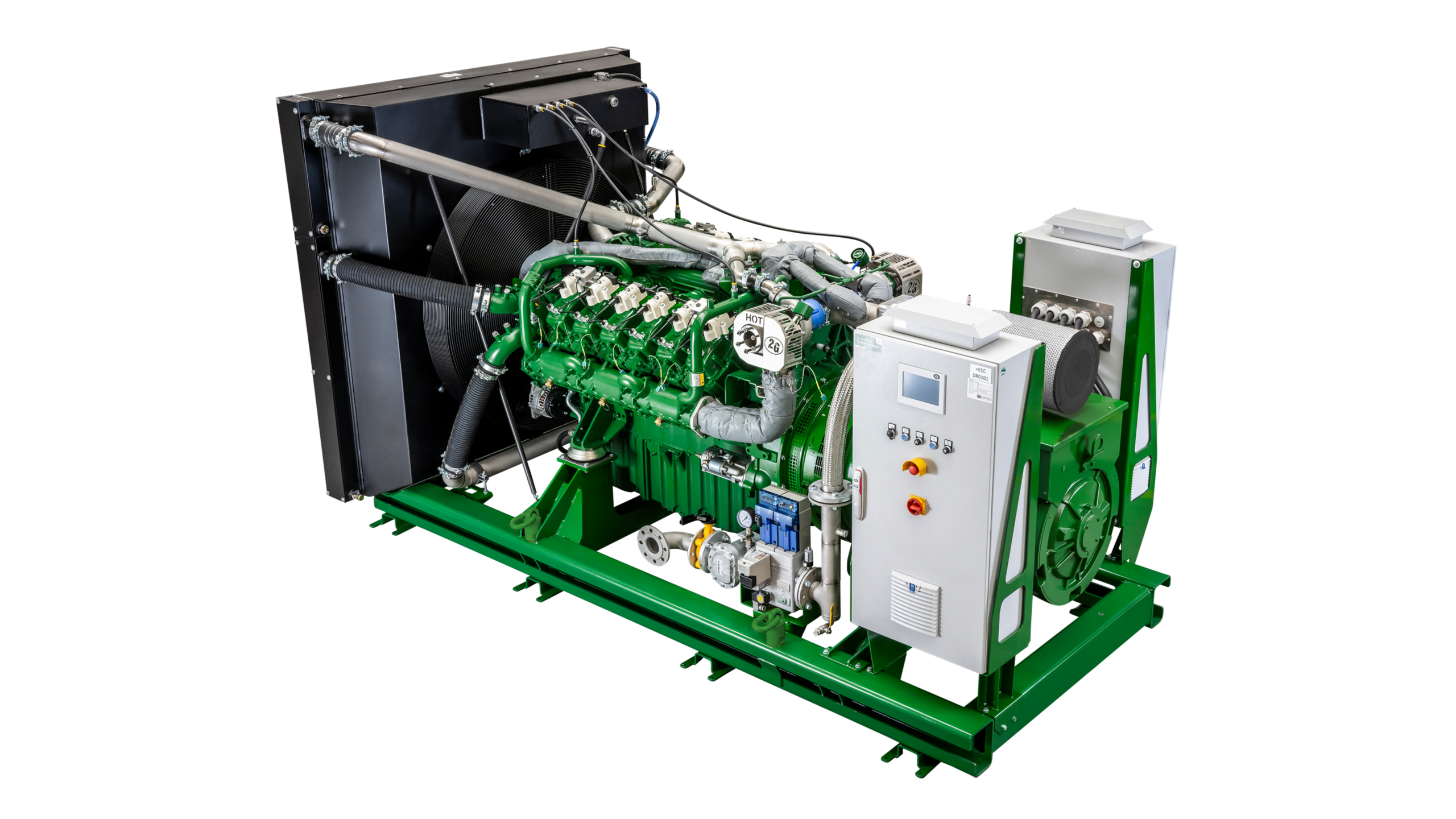
A separate order secured at the EnergyDecentral exhibition in Hanover covers eight combined heat and power (CHP) units for Backenholzer Hof, each rated at 2 MW of electrical output. The customer operates biogas facilities in northern Germany and intends to use the additional units to make generation more flexible. Together, the machines provide 16 MW of specified generating capacity, which can be scheduled across individual units according to the available fuel and the site’s export arrangements.
CHP equipment couples an engine-driven generator with heat recovery. At a biogas plant, methane-rich gas from anaerobic digestion fuels the engine, while recovered heat can serve the digestion process or another suitable thermal load. Flexible operation depends on how gas production, any gas storage, engine availability and electricity export limits are coordinated. Running several engines allows output to be changed in steps as conditions vary, rather than relying on one fixed generating unit.
Additional engines provide more installed power without necessarily increasing the amount of biogas produced. Where storage and process conditions allow, an operator can concentrate generation into hours when electricity is more valuable, then reduce output in other periods. Backenholzer Hof’s detailed gas storage arrangements and planned operating hours have not been published, so the eight-unit order establishes generating equipment capacity rather than a measurable increase in annual electricity production.
Across the first nine months of 2026, 2G recorded €885.9m of new plant orders, compared with €170m during the equivalent period in 2025. North and Central America provided €630.8m of that total, Germany €131.9m, the rest of Europe €59m and other markets €64.1m. German demand was supported by biogas equipment, while larger generation contracts shaped the much greater North American figure.
The regional split also reflects the company’s expansion beyond traditional CHP installations. Large generation sets for industrial and data centre customers require manufacturing throughput, supplier capacity and skilled labour, while biogas CHP projects place particular emphasis on fuel flexibility and the integration of heat and electricity production. The new assembly hall and its production ramp-up therefore form part of the equipment-delivery programme underpinning the order book.
Alongside its CHP systems, 2G supplies peak-load generator sets, large heat pumps and digital monitoring and maintenance services. Each product category brings different engineering and commissioning requirements, from high-temperature heat recovery to electrical protection and grid synchronisation. The company’s latest figures aggregate new equipment orders across these activities, with project-specific delivery and commissioning dates depending on the individual contracts.
2G’s scheduled update on 23 November is due to provide third-quarter revenue and earnings figures alongside the order picture. In the meantime, manufacturing under the 275 MW contract, further US deliveries and production of Backenholzer Hof’s eight CHP units are the next practical steps in turning booked orders into supplied equipment.