IN Brief:
- STRABAG, eLoaded, and R:loaded will deliver 140 eHGV charging points at 25 German motorway rest areas.
- The highest-power installations will use Megawatt Charging System equipment capable of supplying up to 2.5MW.
- Lot 4 forms part of an 863-point national charging programme spanning 124 locations.
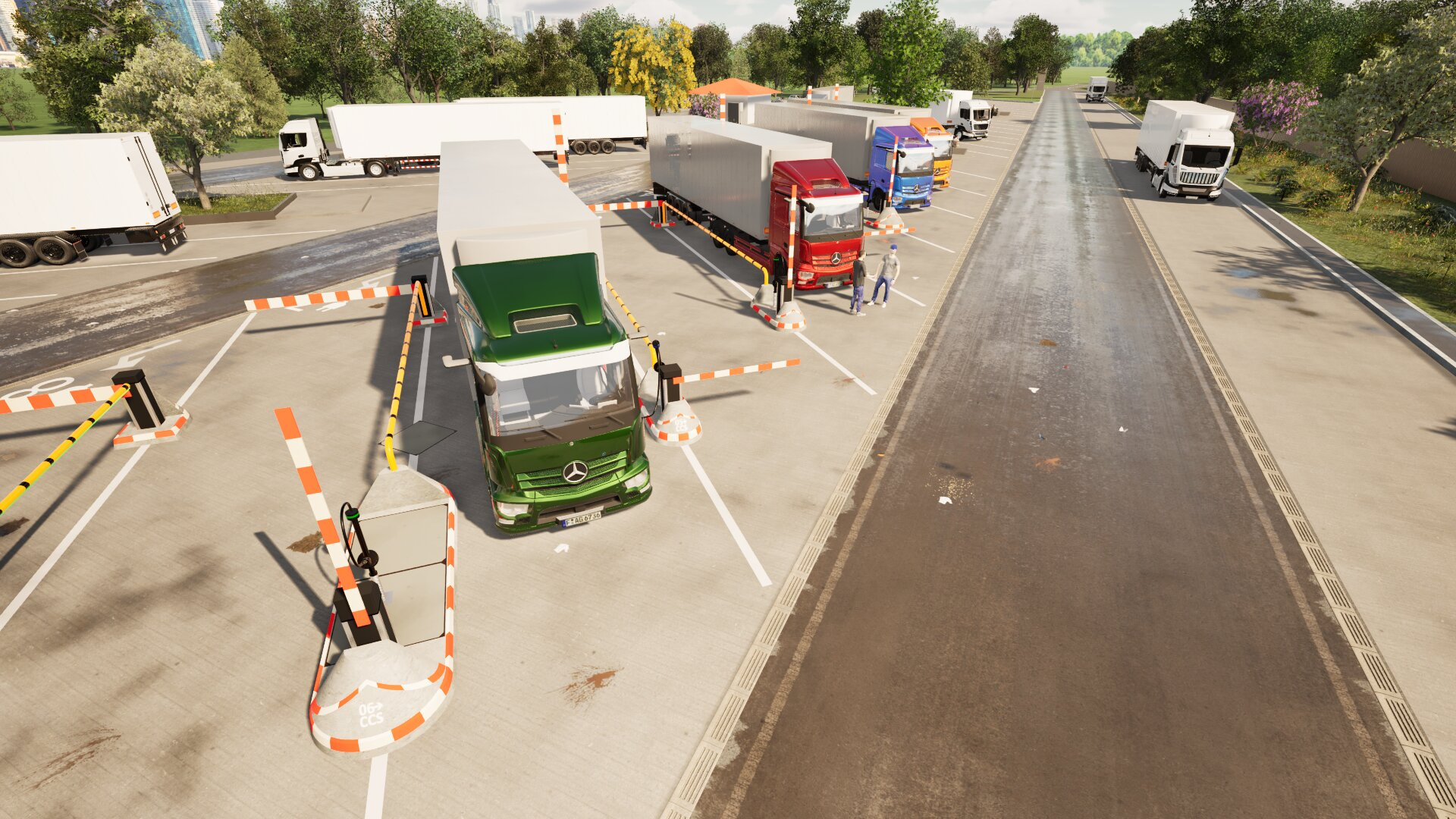
STRABAG, eLoaded, and R:loaded have secured Lot 4 of Germany’s national electric heavy goods vehicle charging programme, covering 140 charging points at 25 unserviced motorway rest areas in the south and west of the country.
The contract forms part of Autobahn GmbH’s wider fast-charging programme for electric HGVs. STRABAG will build the charging infrastructure, eLoaded will provide expertise in infrastructure systems, electricity networks, and electromobility, while R:loaded will operate and manage the locations until mid-2034. Lot 4 is scheduled for completion in 2030.
The highest-power installations will use the Megawatt Charging System, with charging capability of up to 2,500kW. That moves the electrical design well beyond conventional passenger-car charging because individual vehicles can impose loads comparable with substantial industrial equipment while several chargers may be operating simultaneously at a single motorway site.
The connection requirement is therefore defined by more than the number of charging points. Engineers have to consider expected traffic, vehicle dwell time, simultaneous charging, diversity between chargers, the maximum import capacity available from the local network, and the extent to which software can allocate power between vehicles without creating operational delays.
A motorway hub containing several megawatt-class chargers can require new substations, transformers, medium-voltage switchgear, protection, metering, communications, and substantial cable infrastructure. At locations where the surrounding distribution network has limited spare capacity, the programme can also require reinforcement beyond the site boundary before the chargers can operate at their intended output.
MCS equipment is intended for commercial vehicles whose battery capacities and working patterns make lower-power charging difficult to reconcile with freight operations. Heavy goods vehicles need to restore substantial energy during planned stops, placing pressure on connector design, liquid cooling, cable handling, thermal management, interoperability, and communication between the vehicle and charging system.
The electrical hardware also has to survive a demanding operating environment. Motorway infrastructure is exposed to weather, road contamination, repeated connection cycles, vehicle movements, and accidental impact risks, while failure of a high-power charger can have an immediate effect on fleet schedules. Protective barriers, drainage, cable management, isolation arrangements, and safe maintenance access therefore sit alongside the charger specification itself.
Autobahn GmbH’s national programme is expected to create 863 charging points at 124 locations across Germany. The larger rollout gives network operators, civil contractors, and equipment suppliers a clearer pipeline than individual charging schemes, while creating pressure for repeatable designs that can be adapted to very different connection conditions.
Complete standardisation is unlikely. One motorway site may have useful medium-voltage capacity nearby, while another may require a longer cable route or a new transformer connection. Traffic volumes, available land, parking layout, and the number of vehicles expected to charge concurrently will also change the amount of electrical infrastructure required at each location.
Load management can reduce some of that connection burden. A site does not necessarily need enough firm grid capacity to supply every charger at its nameplate output simultaneously if charging power can be allocated dynamically. The trade-off is operational: restricting power during busy periods can increase vehicle dwell time, undermining the advantage of installing megawatt-class equipment in the first place.
Stationary batteries may offer another option at constrained sites by charging more gradually from the network and discharging into short high-power vehicle peaks. Storage cannot compensate indefinitely for a connection that is too small, but it can change the shape of the demand imposed on the grid where charging activity is intermittent rather than continuous.
Reliability will become increasingly important once the sites enter service. For freight operators, charger downtime can affect delivery schedules, vehicle utilisation, and drivers’ working-hour limits. Remote diagnostics, communications resilience, spare-parts availability, preventative maintenance, and fault-response arrangements will therefore influence the practical value of the infrastructure as much as its advertised maximum power.
R:loaded’s operating role through mid-2034 will provide several years of performance data after construction is complete. That should give the partners evidence on actual charger utilisation, simultaneous vehicle demand, transformer loading, equipment temperatures, maintenance requirements, and the difference between forecast and real motorway charging patterns.
The contract also provides a sizeable test of how quickly road-freight electrification can be matched by electricity-network delivery. Vehicle manufacturers can increase battery capacity and charging rates comparatively quickly, while new substations and reinforced distribution connections can involve longer design, permitting, procurement, and construction programmes.
With 140 charging points now allocated across 25 sites, Lot 4 moves the German eHGV network into a physical delivery programme rather than a technology demonstration. The key milestones between now and 2030 will be network connections, site construction, equipment commissioning, and sustained charger availability once commercial vehicles begin depending on the infrastructure.