IN Brief:
- AKKU One will provide 125MW of power and 300MWh of storage at Lapinlahti in Finland.
- Covenergo is majority owner, while Delta Capacity is managing construction delivery and commercial optimisation.
- Commissioning is planned for the fourth quarter of 2027.
Construction has started on the 125MW/300MWh AKKU One standalone battery at Lapinlahti in Finland, adding another large flexible asset to a Nordic electricity system where battery deployment is accelerating alongside renewable generation and changing power flows.
Covenergo is the majority owner, while Delta Capacity is managing the construction programme and will lead commercial optimisation and long-term asset management. The project was acquired as a ready-to-build development from Helios Nordic Energy and is scheduled for commissioning during the fourth quarter of 2027.
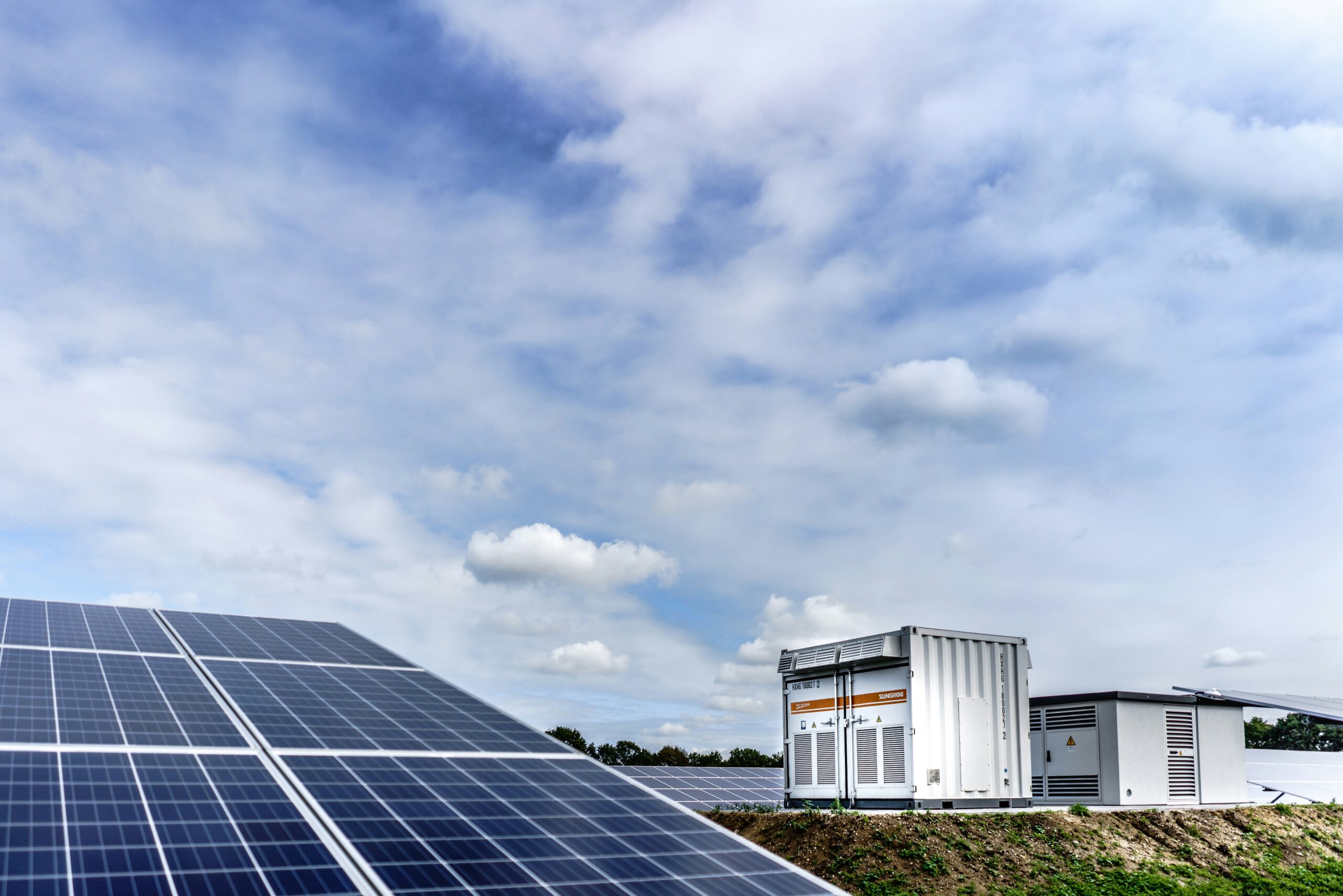
Sungrow is supplying the battery system. Other project roles span technical support, balance-of-plant construction, grid studies, compliance work, energy management, and SCADA, illustrating how the engineering boundary of a utility-scale battery extends well beyond cells and inverter containers.
A 125MW plant requires civil infrastructure, medium- and high-voltage electrical equipment, protection and control, metering, telecommunications, auxiliary supplies, thermal management, fire protection, and a control platform capable of translating commercial dispatch instructions into plant behaviour that remains within electrical and battery limits.
AKKU One is expected to operate across Finnish and Nordic flexibility markets, where batteries can respond rapidly to frequency deviations and balancing requirements. Inverter-based storage can change active power considerably faster than conventional thermal generation, although useful response depends on available state of charge, network availability, qualified controls, and reliable communications with market and system-operator platforms.
Finland has a system-specific requirement for fast reserves because the network must withstand the sudden loss of large generating units and interconnectors. A battery does not replace the wider reserve stack, but it can contribute during the first seconds and minutes after an imbalance while slower resources adjust output or demand.
AKKU One’s 300MWh energy capacity gives it a nominal duration of about 2.4 hours at full 125MW output. That creates more scope for energy shifting than a one-hour battery while retaining the power rating needed for rapid balancing services. Actual operation will depend on state-of-charge limits, efficiency, equipment warranties, contracted obligations, and the value available across competing markets.
Delta Capacity is already involved with another Finnish project carrying the same 125MW/300MWh ratings. The Karppio battery at Teuva is due to be optimised by Centrica Energy under a partial tolling arrangement, showing how similar physical storage assets can sit inside different ownership and commercial structures.
That separation between physical operation and market dispatch is becoming common in battery projects. The owner carries construction, asset availability, degradation, and long-term maintenance risk, while an optimiser may take greater responsibility for deciding when to charge, discharge, or reserve capacity for specific services.
Construction now moves AKKU One into the stage where interfaces between suppliers become critical. Civil completion must align with delivery of battery equipment, transformers, switchgear, and cabling. The grid connection has to be ready before energisation, while protection, controls, metering, SCADA, and communications need to operate together before market testing can begin.
Commissioning will involve more than demonstrating that individual battery blocks can charge and discharge. The plant must show correct behaviour across active and reactive power control, protection, fault response, communications, metering, and network-compliance tests, followed by whatever technical qualification is required for the reserve and balancing products it intends to provide.
A storage project can therefore reach mechanical completion before it is commercially usable. Battery enclosures may be installed and energised while grid-code testing, telemetry acceptance, control tuning, or market registration remains outstanding. Those final steps can determine whether an asset begins earning revenue on its planned date or remains technically complete but commercially constrained.
Long-term asset management then has to balance market opportunity against battery health. Frequent cycling can increase gross revenue but also accelerates degradation, while holding stored energy in reserve for system services can limit the capacity available for wholesale trading. The operating platform has to account for both if the plant is to maintain contracted performance over its design life.
AKKU One is scheduled to reach commissioning in the fourth quarter of 2027. By then, Finland is likely to have more batteries competing across many of the same flexibility markets, placing greater emphasis on technical availability, efficient dispatch, and access to several revenue streams rather than a single service.
The project has now moved beyond development into physical delivery. Its 300MWh rating is already fixed; the more consequential work is now construction, connection, testing, and market qualification, which will determine when that installed capacity becomes dependable flexibility on the Finnish power system.