
IN Brief:
- Statkraft has applied to replace its Høyanger K5A and K5B plants with two stations totalling around 257MW.
- Annual production would increase from approximately 700GWh to 780GWh while installed capacity rises from 109MW.
- The scheme uses no new reservoirs or additional water resources and still requires licensing, profitability assessment, and an investment decision.
Statkraft has applied to the Norwegian Water Resources and Energy Directorate for permission to replace its existing Høyanger K5A and K5B hydropower stations with two new plants totalling around 257MW, more than doubling installed capacity while continuing to use the same regulated water resources.
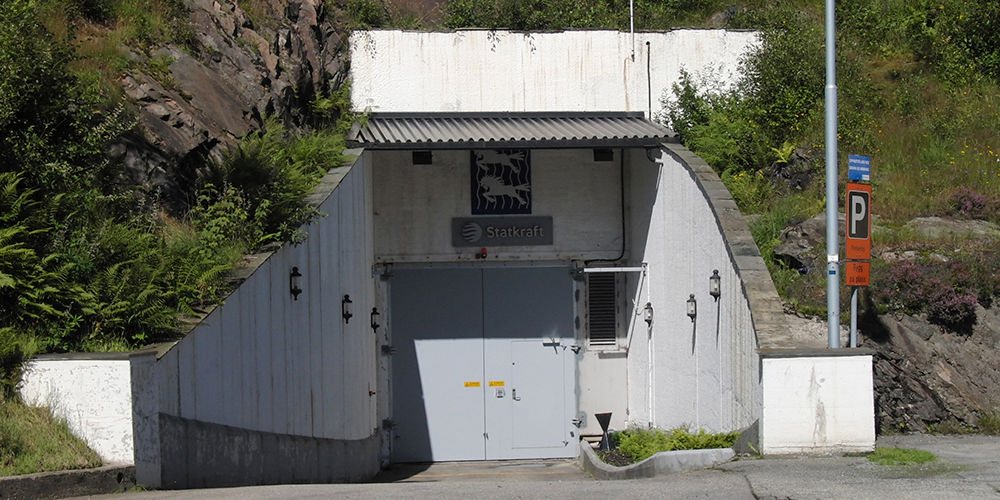
The proposed Høyanger K5 and Breidal plants would replace facilities commissioned between 1965 and 1979. Statkraft says the existing stations remain in good condition, but several key components have limited remaining life, leaving the company to choose between extensive reinvestment in ageing assets and replacement plants designed around current power-system requirements.
The existing stations provide around 109MW of combined capacity and approximately 700GWh of annual generation. The proposed replacements would raise those figures to around 257MW and 780GWh respectively, increasing annual energy production by only about 10% while lifting peak generating capability by well over 100%.
That difference between megawatts and gigawatt-hours is the core of the project. Statkraft is not proposing a large new reservoir system to produce radically more energy; it is seeking to convert an established water resource into electricity at a much higher rate when system demand and market conditions make that output more valuable.
No additional water resources, new reservoirs, or changes to existing regulation limits are included in the application. The engineering case therefore depends on making more effective use of water already available within the regulated system, rather than increasing the amount stored or materially changing the underlying hydrology.
Statkraft has placed an investment framework of just under NOK3bn around the development. The proposal also forms part of a wider plan announced in May to invest NOK80bn in Norway over the coming decade, with hydropower renewal and development remaining central to the company’s domestic generation strategy.
Greater installed capacity can make reservoir hydropower more useful in a system carrying increasing volumes of variable wind and solar generation. A plant that can raise or lower output quickly gives the system operator more controllable power during periods of high demand, weak renewable production, or rapidly changing net load, provided the waterway, turbine, generator, and grid-connection design can support the required operating profile.
The proposed increase from 109MW to 257MW therefore places heavier demands on equipment that sits beyond the reservoir itself. Turbines, generators, penstocks or pressure waterways, transformers, switchgear, protection, control, excitation, and high-voltage connections all have to be designed for the higher instantaneous power flow even though annual water use remains broadly constrained by the same regulated resource.
Operating patterns also matter. More flexible plants may be expected to ramp more frequently and spend less time at steady baseload output, which increases the importance of mechanical fatigue, turbine operating envelopes, generator thermal behaviour, vibration monitoring, control-system performance, and condition-based maintenance. Renewing the generating equipment provides an opportunity to design those requirements into the plant rather than imposing them on machinery installed several decades ago.
The project has not yet received a licence or final investment decision. NVE will process the application and submit it for consultation, allowing the municipality, affected parties, sector authorities, organisations, and other stakeholders to comment before the regulator reaches its decision.
If a licence is granted, Statkraft says the project must still demonstrate sufficient profitability before an investment decision is taken. A detailed environmental and landscape plan would then be prepared before construction starts, keeping commercial, regulatory, and environmental gates between the present application and physical delivery.
Construction is expected to take around four to five years if the scheme proceeds. Statkraft has already acknowledged that the work would create local impacts through traffic, noise, dust, and temporary rig areas, even though the development avoids new reservoirs and changes to existing regulation limits.
The absence of new storage reservoirs is nevertheless important because it narrows the physical footprint compared with a new-build hydro scheme. Much of the value is being sought through generating equipment and waterway optimisation, an approach that could become increasingly relevant across mature European hydro fleets where the best reservoir sites were developed decades ago.
For Norway, the project is also tied to industrial demand in Høyanger, where hydropower has supported the local industrial community for generations. Statkraft says the replacement plants are intended to secure production for decades while increasing the ability to generate during periods when power demand is high.
The licence application now puts a practical test around that proposition. Annual output would rise by roughly 80GWh, but installed capacity would increase by about 148MW; the economic and system value of the project will therefore depend less on producing much more water-derived energy than on producing the same resource more flexibly, reliably, and at the times when those megawatts are actually needed.

