IN Brief:
- Scottish Water has added 648 ground-mounted solar panels at Blairlinnans Water Treatment Works near Balloch.
- The combined 1,672-panel installation is expected to generate around 0.52GWh annually and provide about 40% of site electricity demand.
- Scottish Water Horizons led the expansion, with R&A Group delivering the renewable energy installation.
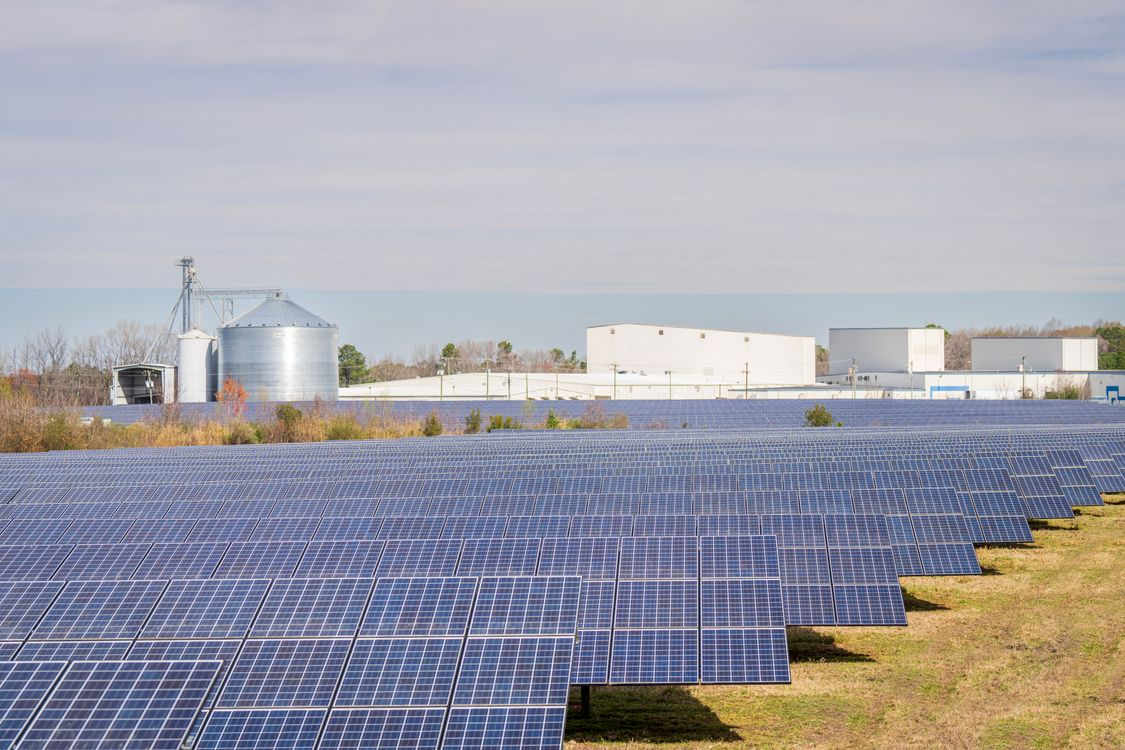
Scottish Water has expanded on-site solar generation at Blairlinnans Water Treatment Works near Balloch, adding 648 ground-mounted panels to an existing installation and increasing the total number operating at the site to 1,672.
The combined solar schemes are expected to generate approximately 0.52GWh of electricity each year and meet around 40% of the treatment works’ power requirements. Scottish Water also forecasts that the installation will avoid around 226 tonnes of carbon dioxide equivalent annually.
The latest phase was led by Scottish Water Horizons, the utility’s commercial subsidiary, and delivered by renewable energy specialist R&A Group. It extends an operating solar scheme rather than creating an entirely separate generation site, allowing the additional modules to build on electrical and operational infrastructure already present at Blairlinnans.
Water treatment facilities are suited to some forms of on-site generation because their electricity consumption is relatively persistent. Pumps, treatment equipment, monitoring systems, chemical dosing, controls, and building services create a continuing electrical load, although the precise profile changes with water flows, process conditions, and maintenance activity.
Generating electricity behind the meter means part of that demand can be served directly by the solar installation rather than entirely through imported grid power during daylight hours. The proportion consumed on site will vary through the year because photovoltaic output changes with weather and season while treatment demand follows a separate operating profile.
Scottish Water expects the combined installation to provide around 40% of Blairlinnans’ annual electricity requirement. That does not mean the site will operate at a constant 40% solar contribution. There will be periods when generation represents a much higher proportion of load and others, particularly overnight and during darker winter conditions, when grid electricity remains dominant.
The expansion is designed around a daytime generation profile and an infrastructure load that continues throughout normal working hours. A treatment works can consume a substantial share of its solar output locally, reducing the amount that has to be exported when production is high and lowering the volume of electricity bought from the grid.
No battery installation has been announced as part of the Blairlinnans expansion, so the electrical balance remains dependent on the relationship between instantaneous solar production and site demand. Storage could move excess generation into later hours, but it would introduce additional capital cost, conversion losses, controls, maintenance, and battery replacement requirements.
The project is small beside utility-scale solar developments, but distributed generation serves a different purpose. A large solar farm is primarily a generating asset connected to the network, whereas an installation such as Blairlinnans is integrated into an operating infrastructure site and designed principally around reducing imported electricity.
Electrical integration remains important despite the modest scale. The enlarged solar array has to operate alongside the treatment works’ existing supply, switchgear, protection, metering, and controls without compromising a process that provides an essential public service. Planned maintenance also has to fit around continued treatment operations.
The 648-panel expansion increases generation without changing the primary function of the site. The renewable plant is therefore designed around the demand profile of an existing operation rather than developed as a standalone power project, an approach that can be repeated where other infrastructure sites have suitable land and predictable daytime loads.
Scottish Water says increasing its own renewable generation should reduce both carbon emissions and exposure to electricity price volatility. Part of the cost of electricity produced by the solar asset is tied to the capital and operating cost of the installation rather than moving directly with wholesale and retail electricity markets.
Self-generation does not remove all price exposure. Blairlinnans still imports power whenever solar output is below demand, while the long term economics depend on capital cost, maintenance, inverter replacement, module degradation, financing, and the value of electricity avoided over the operating life of the array.
The expansion also provides an incremental route to reducing imported electricity. An earlier solar installation has been retained and enlarged rather than replaced, allowing generation to be added in stages as performance, available space, operating requirements, and investment priorities permit.
Across water and wastewater estates, similar opportunities can exist at treatment works, pumping stations, reservoirs, and other operational sites. The suitability of each location depends on available space, orientation, grid arrangements, planning requirements, electricity demand, and whether generation can be consumed economically on site.
At Blairlinnans, annual output of 0.52GWh remains negligible in national generation terms, but the more relevant comparison is the electricity consumed behind its own meter. Supplying around 40% of site demand would make solar a substantial part of the treatment works’ electrical supply rather than a peripheral demonstration scheme.
Actual performance will now be visible over complete operating years. Solar yield, inverter availability, maintenance, weather, and changes in treatment demand will determine whether generation and self-consumption match the forecast figures.
The panel count is fixed at 1,672 following the expansion. The more useful operational measure will be how consistently that enlarged array displaces imported electricity while the treatment works continues meeting its water-processing requirements.