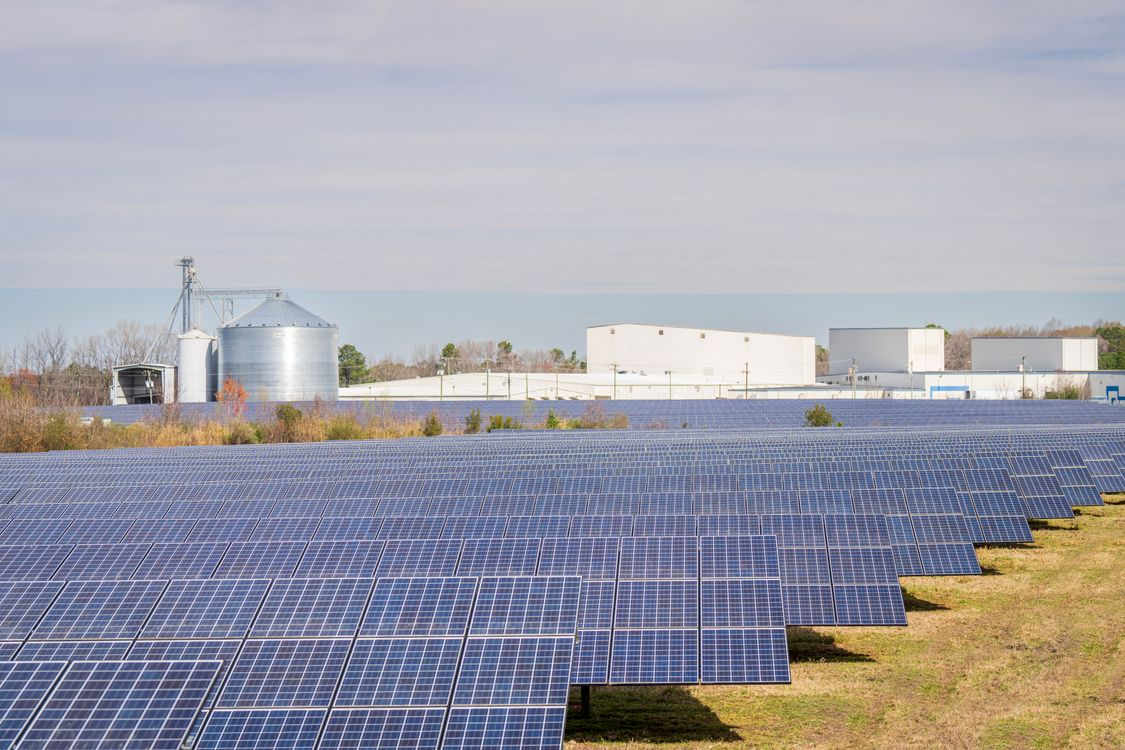
IN Brief:
- Devnya has expanded from a 5MWp solar plant to 65MWp following a 2026 repowering programme.
- A co-located 60MW/165MWh battery adds around 2.75 hours of nominal storage at maximum output.
- The project converts an operating solar site into a larger hybrid asset able to shift generation and provide greater dispatch flexibility.
Renalfa IPP has completed a major repowering programme at its Devnya solar plant in northeastern Bulgaria, increasing photovoltaic capacity from 5MWp to 65MWp and adding a co-located 60MW/165MWh battery energy storage system.
The original Devnya plant entered operation in 2011 with 5MWp of solar generation. The 2026 upgrade has increased solar capacity thirteenfold while adding enough storage to sustain the battery’s full 60MW output for around 2.75 hours before conversion losses, reserve margins, and operating limits are taken into account.
The enlarged site can now control the timing of a greater proportion of its output rather than exporting electricity solely as solar conditions dictate. Generation can be sent directly to the grid, used to charge the battery, or released later according to network conditions, electricity prices, battery state of charge, and the operating strategy applied to the plant.
That changes the electrical architecture substantially from the original 5MWp installation. Additional photovoltaic capacity requires larger inverter, collection, transformer, protection, communications, and metering systems, while the battery introduces its own power conversion equipment, thermal management, fire protection, control systems, and bidirectional energy flows.
The 60MW battery power rating sits close to the solar plant’s 65MWp peak capacity. Its 165MWh energy capacity gives the operator scope to move a substantial volume of generation away from the hours in which the panels produce it, although the amount shifted on any particular day will depend on irradiation, connection limits, market conditions, and the battery reserve held for other services.
Hybrid operation can also smooth the profile presented at the grid connection. Rapid changes in solar production can be moderated by charging or discharging the battery, while output can be capped when the connection reaches its permitted limit. Reactive power, voltage control, and dispatch instructions can be coordinated through the plant controller rather than managed by the solar and battery systems independently.
Bulgaria has been adding storage alongside a growing solar fleet as developers seek more control over variable generation. Sunterra recently commissioned almost 397MW/1.3GWh of batteries across three Bulgarian solar parks, adding another large pool of flexible capacity to the country’s power system.
Devnya follows a different development route because the site began as an operating solar plant more than a decade ago. Repowering allows Renalfa to reuse an established generation location and grid interface while replacing or extending equipment that was designed for a much smaller installation.
Existing sites can offer advantages in land, access, operational history, and grid infrastructure, although expanding capacity is not simply a matter of installing additional modules. Connection studies, transformer ratings, protection settings, cable capacities, fault levels, communications, and export limits all have to be reassessed when the generating plant changes substantially.
The battery adds a further commercial layer. A solar plant without storage largely earns revenue when sunlight is available, subject to any curtailment or market arrangements. A hybrid plant can decide whether immediate export or later discharge offers greater value, while potentially reserving capacity for balancing or ancillary services where the market and connection agreement permit.
Each additional revenue route competes for the same battery capability. Energy held for later trading cannot simultaneously be committed elsewhere, and frequent cycling affects degradation and warranty limits. Optimisation software therefore has to balance market value against state of charge, efficiency, cell ageing, temperature, and future operating commitments.
Renalfa is applying similar combinations elsewhere in southeastern Europe. Its Tenevo development combines 242MWp of solar with a planned 311MW/772.5MWh battery system, while other company projects incorporate storage alongside renewable generation in the region.
The growth of hybrid assets also changes how renewable capacity is assessed. A 65MWp solar plant and a 60MW battery cannot simply be added together and treated as 125MW of continuous generation. The battery consumes electricity when charging and has finite energy capacity, while solar production remains dependent on weather. Its contribution lies in controlling when available energy reaches the grid.
Operational performance at Devnya will therefore be determined by more than the installed megawatts. Solar yield, battery availability, round trip efficiency, degradation, grid constraints, and dispatch strategy will decide how much additional energy the expanded site can deliver and how effectively its existing connection is used throughout the day.
Renalfa now lists Devnya as an operating 65MWp solar and 60MW/165MWh battery asset. The repowering has turned one of its older photovoltaic plants into a substantially larger hybrid installation whose output can be shaped rather than simply exported when generated.