IN Brief:
- RWE has completed inter-array cable works at Nordseecluster A in the German North Sea.
- The campaign covered 48 cables, including laying, burial, termination, and testing.
- Nordseecluster A is the 660MW first phase of a wider 1.6GW offshore wind development.
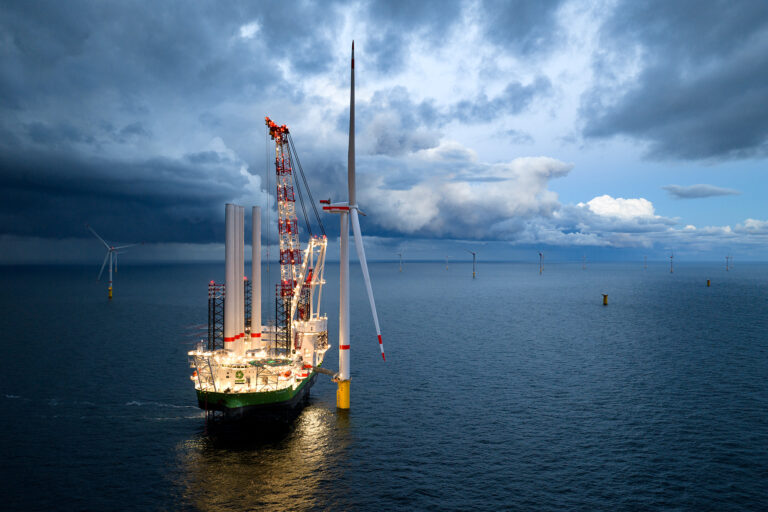
RWE has completed the inter-array cable campaign at Nordseecluster A, advancing the electrical balance-of-plant package on the first phase of its German North Sea offshore wind development.
The campaign covered 48 cables, with laying, burial, termination, and testing now complete. Inter-array cables form the internal electrical network of an offshore wind farm, linking turbines to offshore substations before generated power is exported onward through the grid connection system.
Nordseecluster A is the 660MW first phase of the wider 1.6GW Nordseecluster project, located north of the island of Juist. The first phase will include 44 Vestas 15MW turbines, with installation expected to continue through 2026 and full commissioning targeted for early 2027. Nordseecluster B will add a further 900MW, with foundation installation scheduled to start next year and turbine installation planned for 2028.
The cable milestone follows earlier offshore substation progress and the start of turbine installation. Offshore wind projects are now delivered as tightly integrated electrical and marine programmes, with foundations, export systems, substations, array cables, turbine installation, commissioning, and grid connection all bound to weather windows, vessel availability, equipment lead times, and regulatory milestones.
Inter-array cabling is one of the most exposed parts of that construction chain. Cable laying and burial require seabed preparation, route clearance, installation vessels, remotely operated vehicle support, protection systems, termination teams, and test procedures. Faults or delays can disrupt turbine energisation, commissioning schedules, and revenue start dates, particularly as higher turbine ratings increase the value of each connected circuit.
Nordseecluster is being delivered in phases while retaining a single overall system logic. Nordseecluster A and B have separate installation timetables, but together they will form a 1.6GW offshore wind cluster expected to produce around 6.5TWh of electricity annually once fully operational. RWE owns 51% of the project alongside Norges Bank Investment Management, with RWE responsible for construction and long-term operation.
The project sits within a wider German offshore transmission build-out. Offshore wind delivery is now closely linked to converter platforms, grid connection capacity, high-voltage equipment procurement, and port-side manufacturing. Nordseecluster’s substation work and Germany’s North Sea converter platform contracts both show how offshore generation is becoming a power-electronics, cabling, and grid-integration programme as much as a turbine installation campaign.
Larger turbines reduce the number of units required for a given project capacity, but they also concentrate greater output behind each electrical connection. That places more value on high-availability cable systems, effective protection design, and reliable monitoring across the array network. Offshore substations and converter platforms must also manage higher power densities, more complex switching arrangements, and stronger operational integration with onshore networks.
Germany’s development pattern also reflects the pressure on European supply chains. Cable factories, installation vessels, turbine suppliers, foundation contractors, transformer manufacturers, and commissioning specialists are all exposed to simultaneous demand from offshore wind, interconnectors, grid reinforcement, and energy island projects. Completing the cable campaign removes one of the major construction risks from Nordseecluster A’s first-phase timetable.
Commissioning still requires careful system integration. Each turbine connection must perform under electrical load, with protection, monitoring, communications, and control functions operating across the array network. Export systems and grid interfaces then determine when power can be delivered reliably and commercially.
The electrical balance of plant is increasingly defining offshore wind delivery. Bigger turbines remain central to cost and capacity, but cable routes, substations, converter platforms, grid compliance, and commissioning discipline determine whether offshore generation becomes dependable network-connected power. Nordseecluster A’s completed cable campaign is therefore a practical step in Germany’s offshore build-out and another marker of the electrical complexity now embedded in North Sea wind development.