IN Brief:
- Three 5.7 MW turbines replace five older units with a combined rating of 9 MW at Calle in Lower Saxony.
- RWE estimates a fivefold increase in annual electricity generation, although a full operating-year comparison is not yet available.
- Recovered foundation concrete was reused for access roads, and nearby municipalities will receive generation-linked payments.
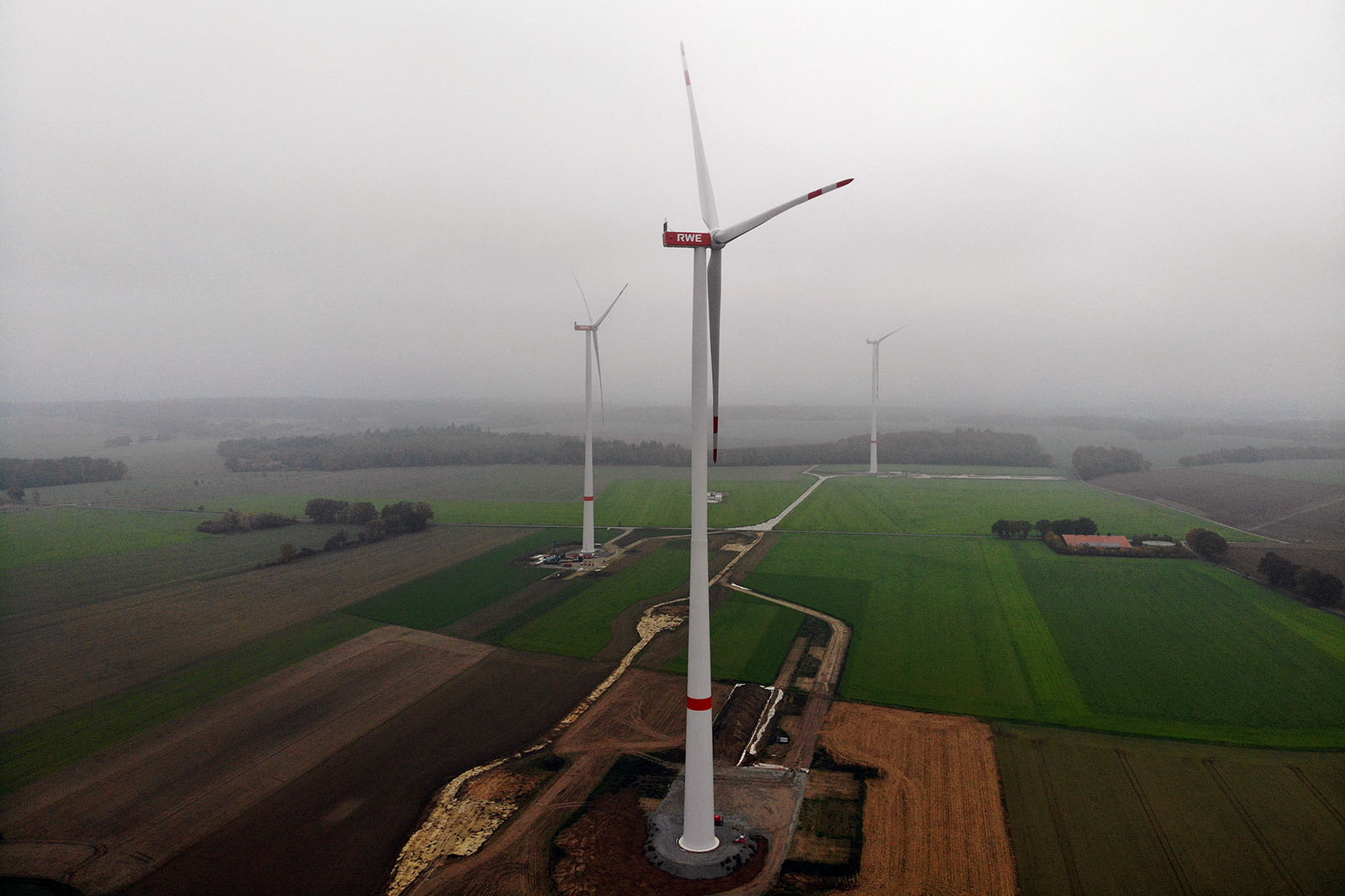
RWE has commissioned a repowered onshore wind farm at Calle in the municipality of Bücken, Lower Saxony, replacing five turbines installed in 2004 with three new machines. The replacement units provide 17.1 MW of installed capacity, compared with 9 MW for the former installation. The company says annual electricity production should rise to approximately five times the previous level, despite the reduction in turbine numbers.
The commissioning follows a repowering programme RWE outlined in November 2025, when it expected the three replacement machines to enter service by the end of 2026. The older turbines have since been dismantled and recycled. Although the new units are rated at 5.7 MW each, RWE has not identified their manufacturer or model in its latest project account. Nor has a full year of generation from the commissioned plant yet been reported.
The 8.1 MW increase in installed power is substantial, but does not by itself explain the fivefold annual generation improvement claimed by RWE. Energy yield also depends on rotor swept area, hub height, turbine power curves, wind conditions, wake losses and availability. Modern turbines can capture usable energy over more hours of the year than the smaller machines they replace, so an increase in annual megawatt-hours can exceed the rise in nominal capacity.
At Calle, rated capacity has risen by 90%, while RWE puts the annual electricity increase at roughly 400%. These percentages describe different measures: a turbine produces its nameplate power only within a specified operating range, whereas annual yield accounts for output across changing wind speeds and outages. RWE has not disclosed the reference years or calculation method behind its fivefold comparison, and measured performance following commissioning will be needed to assess the forecast against operating results.
The company calculates that the redesigned installation can generate the annual electricity equivalent of demand from approximately 16,000 households. That comparison is based on assumed consumption and should not be read as continuous, dedicated supply to those households. The project is now operating, although RWE has not specified a separate date for final performance acceptance or detailed the expected annual generation in MWh.
Concrete removed from the foundations of the original turbines was reused for access roads serving the replacement wind farm. The change from five smaller units to three larger machines also entails different structural loads and equipment dimensions, which can affect the foundation design, crane standing areas and cable routes on a repowered site. RWE has not specified which electrical or civil components, beyond the recovered concrete, were retained or replaced.
The 17.1 MW installation also has to deliver power through equipment and grid permissions appropriate to its new capacity. Collection cables, transformer ratings, switchgear, protection and export controls must be coordinated with the connection agreement, particularly where existing infrastructure was built for a smaller wind farm. RWE has not disclosed whether Calle required substation reinforcement, a new export limit or changes to its grid connection. No such works can be inferred from the increase in generating capacity alone.
The surrounding municipalities will receive 0.3 euro cents for each kilowatt-hour generated, according to RWE. Its 2025 project notice specified that 0.1 cent of that payment is linked to the Lower Saxony participation law, with the remainder adding to the benefit. RWE estimates the combined arrangements could yield annual revenue of up to €150,000. The amount depends on actual annual generation, so the municipalities’ income will vary with wind conditions and the wind farm’s availability. RWE has not specified a guaranteed minimum payment to any individual council, and the €150,000 figure should not be treated as a fixed annual transfer.
Alongside the operating plant, RWE is continuing site measures involving orchards, hedgerows and semi-natural woodland, and has introduced wildflower strips in consultation with landowners. These are identified landscape and biodiversity measures rather than quantified ecological outcomes; the company has not provided ecological monitoring results associated with the new machines. Construction, reinstatement and operational environmental measures should also be distinguished when assessing the completed programme.
RWE reports approximately 785 MW of onshore wind capacity in Germany, with more projects under construction and development. At Calle, repowering has taken an existing 9 MW wind site into a new 17.1 MW operating period, rather than opening a separate greenfield development. The figures for the first full year of operation will establish how the enlarged turbines perform in local wind conditions and whether electricity production matches the company’s fivefold estimate.