IN Brief:
- wpd has ordered four GE Vernova 5.5 MW-158m turbines for the Haseloff wind farm in Brandenburg.
- The manufacturer plans to begin deliveries in November 2027, with commissioning targeted for the first quarter of 2028.
- The agreement includes long-term servicing and raises the companies’ German 6 MW-class collaboration to 24 turbines.
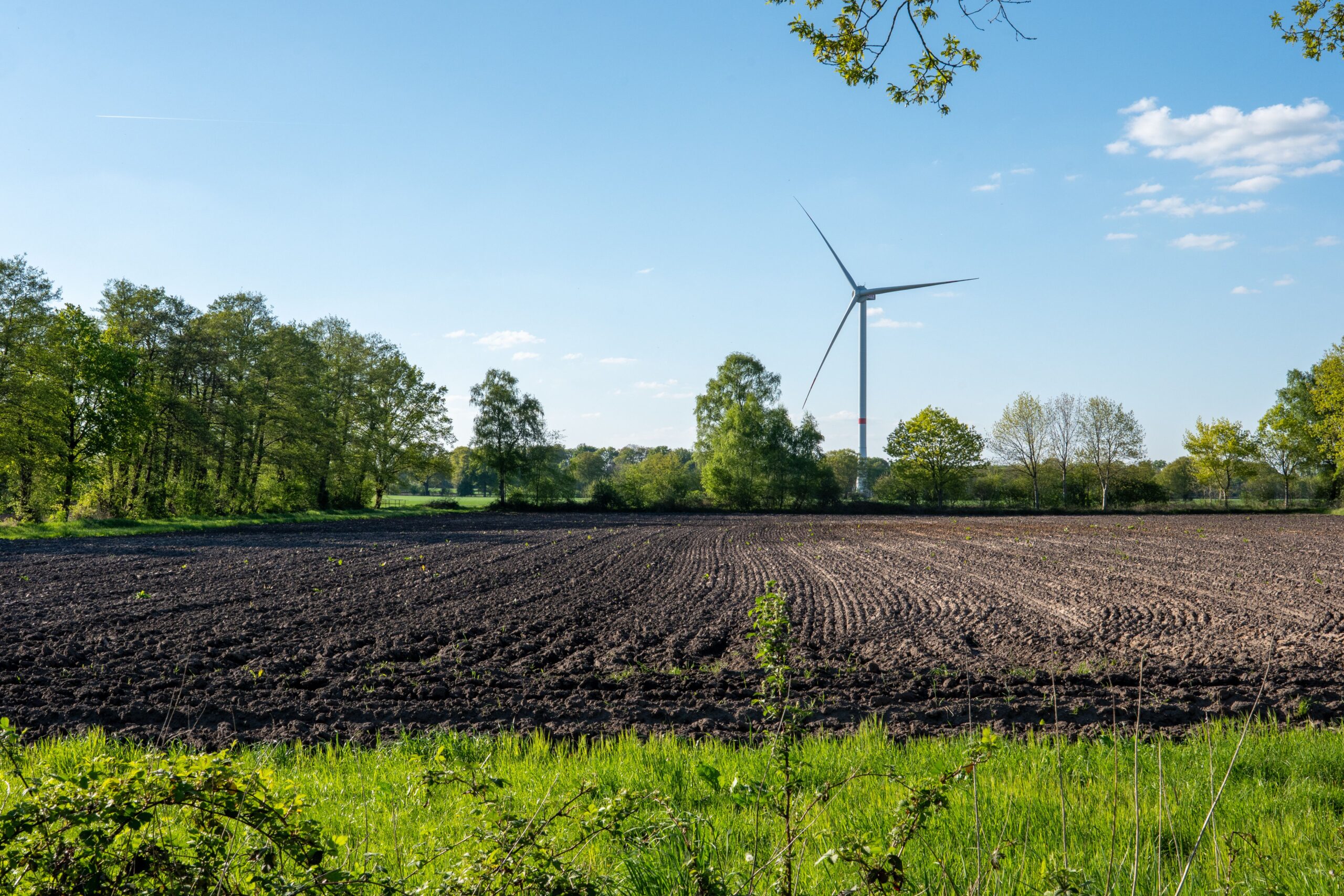
GE Vernova has agreed to supply four 5.5 MW-158m onshore wind turbines to wpd for the Haseloff wind farm in Brandenburg, Germany. The 22 MW order, disclosed on 17 November and booked in the fourth quarter, includes a long-term service agreement. Turbine deliveries are scheduled to start in November 2027, with commissioning targeted for the first quarter of 2028.
Each turbine has a nominal electrical output of 5.5 MW and a rotor diameter of 158 metres. Rotor diameter determines the area swept by the blades and is one of the main design parameters governing how much energy a turbine can extract at a given wind speed. The generator rating establishes the maximum nominal electrical output, while actual production varies with wind conditions, curtailment and availability. A 22 MW nameplate capacity is therefore not a statement of the electricity that the wind farm will deliver continuously.
The turbines will be manufactured at GE Vernova’s Salzbergen factory in Germany. The company says the plant reached a cumulative production milestone of 25 GW in May 2026 and is one of 13 German sites in its manufacturing and engineering network. Haseloff adds a firm four-machine order to that production programme, although the release does not give factory completion dates or the sequence in which the turbines will be transported to the wind farm.
The agreement is the fifth German project between GE Vernova and wpd involving turbines from the manufacturer’s 6 MW class. Across those projects, wpd’s fleet will total 24 units with 132 MW of combined nameplate capacity, including the four machines ordered for Haseloff. The 132 MW describes the partnership’s wider fleet, not the size of the new Brandenburg development.
Common turbine platforms can simplify recurring mechanical and electrical interfaces, from blade and nacelle assembly to the controls and protection equipment used at each site. Local requirements still determine foundation design, transport routes, crane selection and grid connection arrangements. GE Vernova has not published Haseloff’s foundations, turbine hub heights or connection design, so site-specific construction savings cannot be quantified from the standardised platform claim.
Starting deliveries in November 2027 leaves the following months for site assembly and commissioning before the target operating quarter closes. Foundations must be ready to accept the tower loads; medium-voltage collection circuits and the grid connection must also be commissioned before the machines can export power. Electrical testing then establishes the operation of the generator converters, protection functions and turbine controls, while mechanical checks cover braking and shutdown systems. The companies have not provided dates for those individual stages.
The associated service agreement extends the relationship beyond equipment delivery. Wind turbine maintenance typically includes condition monitoring, scheduled inspections, component servicing and fault response, all of which affect availability over the operating life. GE Vernova describes the arrangement as long-term but has not specified the service duration or performance guarantees for the Haseloff contract. Those details should not be inferred from service terms attached to other wind projects or turbine models.
GE Vernova describes the 5.5 MW-158m as a member of its 6 MW-class turbine family, offered at higher output ratings in other configurations. It cites more than 38 million cumulative operating hours from over 2,100 related machines worldwide. Those fleet figures provide manufacturer experience data rather than a performance guarantee for Haseloff, whose turbines have not yet been installed.
The company also recently disclosed a separate three-turbine order for Schlotberg-Jüchsen from Stadtwerke Heidenheim. That contract involves 16.5 MW and its own delivery programme. Haseloff is a different four-turbine project for wpd, increasing the existing partnership fleet rather than forming part of the earlier order.
Wind farm output after commissioning will depend on wind speeds, turbine availability and the network’s ability to accept generation. Connection conditions can require voltage control, reactive power provision and operation through specified disturbances. The Haseloff announcement gives the turbine model and delivery timetable but not the grid connection point, any necessary substation works or an annual energy forecast. None of those missing details should be inferred from the 22 MW nameplate rating.
The order establishes a defined manufacturing commitment at Salzbergen and a planned commissioning period in early 2028. Until transport, erection and electrical testing are complete, the four turbines remain ordered capacity rather than an operating addition to Germany’s wind fleet. GE Vernova and wpd have not disclosed the contract value or the duration of the associated service agreement.