
IN Brief:
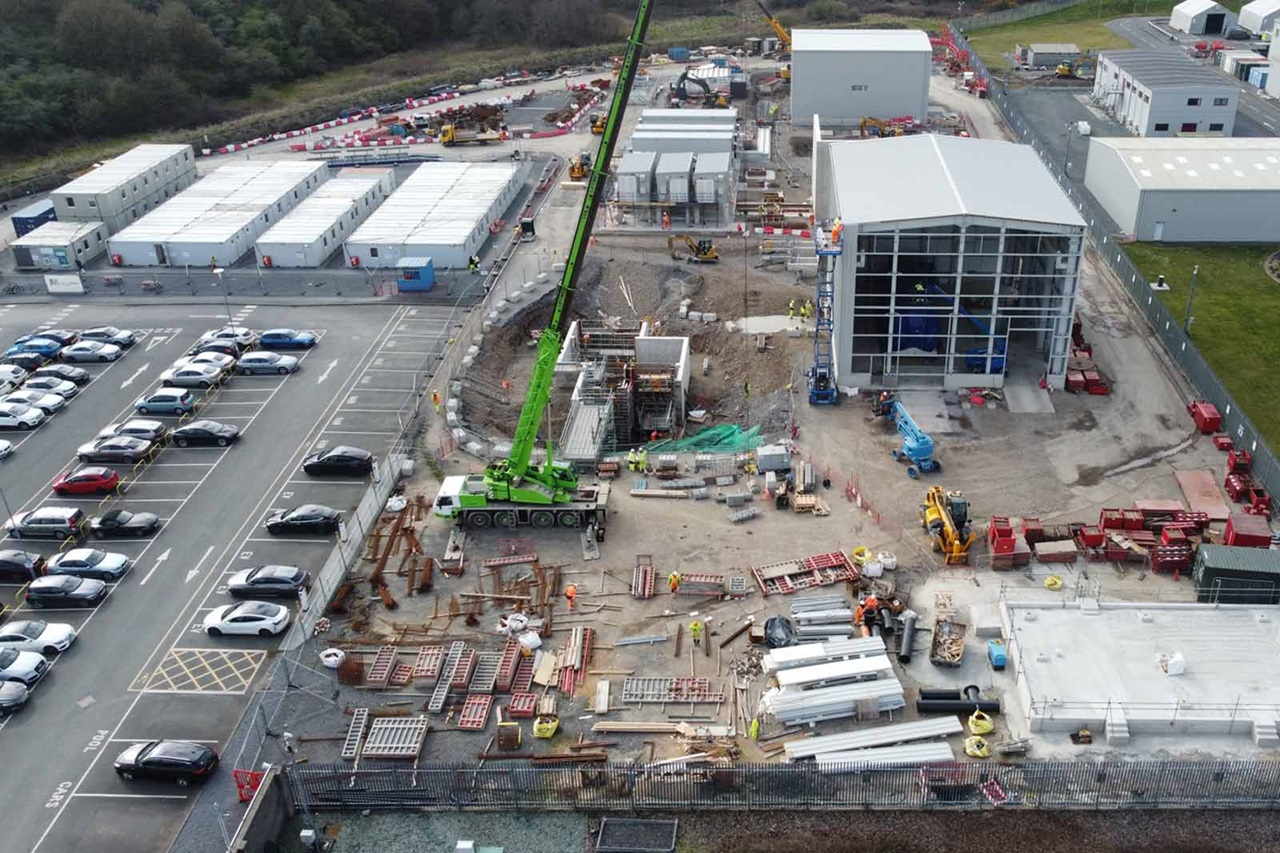
- RWE has commissioned a synchronous condenser at its Pembroke power station site in South Wales.
- The rotating machine supplies inertia and electrical stability services without requiring the associated gas-fired plant to generate electricity.
- NESO's latest Stability Pathfinder phase will add 26.9GVA.s of inertia alongside the 17.2GVA.s already contracted through earlier phases.
RWE has brought a synchronous condenser into service at Pembroke in South Wales, adding rotational inertia to Britain’s electricity system without requiring the site’s gas-fired generating plant to produce active power.
The installation is operating under National Energy System Operator’s Stability Pathfinder programme and is the first of a new group of 16 synchronous condensers expected to enter service. It is also the fourth such machine operating in Wales under the wider stability programme.
Synchronous condensers address an electrical characteristic that is becoming increasingly important as Britain’s generation mix changes. Large coal, gas, and nuclear generators use synchronous machines with substantial rotating mass, and the kinetic energy stored in those machines naturally resists sudden changes in grid frequency following faults, generator trips, or abrupt changes in supply and demand.
Solar farms, batteries, and most modern wind installations are connected through power electronics and do not inherently contribute mechanical inertia in the same way. As conventional power stations run less often, system operators have to procure some of the stability services that previously arrived automatically whenever large synchronous generators were online.
A synchronous condenser uses an established electrical-machine design without continuously generating electricity. Once accelerated to operating speed and synchronised with the network, its rotating mass contributes inertia, while its excitation system can also support voltage and reactive-power requirements.
That allows an existing power station site to provide a valuable grid service independently of thermal generation. At Pembroke, the machine can remain connected when the associated combined-cycle gas turbine plant is not producing active power, avoiding the need to burn fuel solely to keep a synchronous generator available for stability purposes.
NESO describes inertia as one of the system properties needed to slow the rate at which frequency changes after a disturbance. A slower rate of change gives protection systems, frequency-response assets, and other control measures more time to react before the system approaches unacceptable operating limits.
The requirement becomes more demanding as the proportion of inverter-connected generation rises. Frequency control is no longer simply a question of having enough megawatts available to replace a lost generator; the speed and electrical behaviour of the system immediately after a fault also determine whether that replacement capacity can act in time.
Pembroke therefore sits within a broader programme to separate stability services from conventional electricity production. NESO says 17 synchronous condensers are already providing clean inertia across Britain, with the latest wave of 16 expected to almost double the number of machines available under the programme.
The scale of the contracted capability is also increasing. Earlier Stability Pathfinder activity provides around 17.2GVA.s of inertia, while the next phase is expected to contribute another 26.9GVA.s. Other technologies, including grid-forming battery systems, are being developed alongside rotating machines rather than treating synchronous condensers as the sole long-term answer.
Grid-forming converters approach the problem differently, using power electronics and control software to establish electrical conditions that can support frequency and voltage. Synchronous condensers provide their contribution through physical rotating mass and conventional excitation systems, giving system planners several technical routes to securing the same broad objective.
The mix is likely to remain important because stability is not a single service. Inertia, short-circuit strength, reactive power, voltage control, frequency response, and active power reserves perform different functions, even though conventional generating stations historically supplied several of them simultaneously.
Existing power station locations can be useful as that separation develops. Sites such as Pembroke already have substantial grid connections, switchyards, high-voltage equipment, land, operating expertise, and established relationships with the transmission network. Those assets can support new electrical infrastructure even where the underlying generation technology changes.
RWE is using the wider Pembroke site as part of its Pembroke Net Zero Centre programme, which includes additional energy projects alongside the existing gas station. The synchronous condenser demonstrates one route by which a conventional generating location can retain a system role without every service being tied to combustion-based generation.
Its commissioning also changes what constitutes productive grid infrastructure. A machine consuming a small amount of energy while producing no saleable megawatt-hours can still provide an essential service if its rotating mass allows considerably larger volumes of generation elsewhere to remain securely connected.
That distinction will become more visible as Britain’s generation fleet evolves. Electricity production, capacity, frequency response, voltage support, system strength, and inertia are increasingly being procured from different assets rather than bundled together inside the same conventional power station.
Pembroke’s synchronous condenser represents that change in unusually physical form. The machine rotates, connects directly to the transmission system, and produces no electricity of its own, yet its purpose is to make the electrical system more capable of operating securely when the generators supplying the energy look very different from those for which the network was originally designed.

